How CA Test Series Evaluation Works: What Evaluators Look For
CA Test Series Evaluation helps students understand how prepared they are for the real CA exam. Many students complete mock tests, but they often do not know whether their answers are accurate, exam-oriented, well-presented, or strong enough to score marks. A proper evaluation does more than give a score. It shows where marks were lost, what mistakes were repeated, and how the student can improve answer writing before the final exam. For CA Foundation, CA Inter, and CA Final students, evaluated test papers can become a practical guide for better preparation, stronger presentation, and improved exam confidence.
What Is CA Test Series Evaluation?
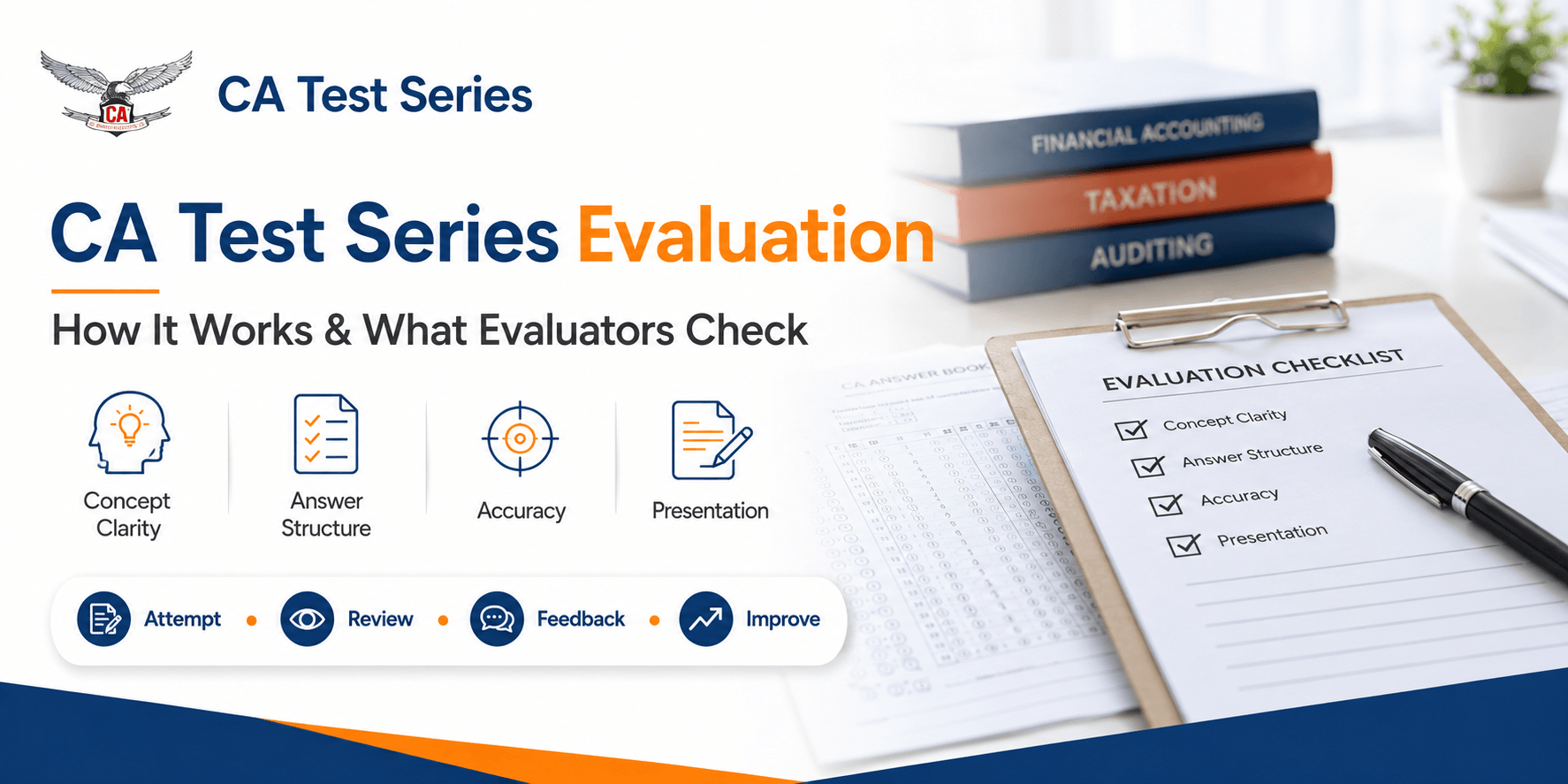
CA Test Series Evaluation is the process of checking a student’s written answer sheet after they attempt a CA test paper. The evaluator reviews each answer based on concept clarity, accuracy, presentation, working notes, use of correct provisions, and relevance to the question. The goal is not only to mark right or wrong answers but also to help students understand how their writing compares with exam expectations. This makes evaluation a useful tool for identifying weak areas and improving performance before the actual CA examination.
How CA Test Series Evaluation Works Step by Step
The evaluation process usually starts when a student attempts a test paper in exam-like conditions and submits the answer sheet for checking. The evaluator then reviews the paper question by question, checks the answer quality, awards marks, identifies mistakes, and shares feedback or a performance report. This step-by-step process helps students see the difference between what they know and how effectively they can write it in the exam. A good evaluation gives both marks and improvement direction, which makes preparation more focused.
What Evaluators Look For in a CA Answer Sheet
Evaluators look for answers that are clear, complete, accurate, and directly connected to the question asked. In practical papers, they check calculations, working notes, formats, final answers, and step-by-step methods. In theory papers, they focus on keywords, provisions, standards, case laws, logical explanation, and proper structure. A strong answer sheet shows that the student understands the concept and can present it in an exam-oriented way. Length alone does not help if the answer is vague, incomplete, or not relevant to the question.
How Marks Are Awarded in CA Test Series Evaluation
Marks are awarded based on answer quality, not just the final result. In practical subjects, students may receive step marks for correct formulas, formats, calculations, working notes, and logical methods, even if the final answer is partly wrong. In theory subjects, marks are usually based on relevance, correct concepts, important keywords, proper explanation, and presentation. Students often lose marks when they write general answers, miss working notes, make calculation errors, or fail to answer the exact requirement of the question.
CA Test Series Evaluation Criteria by Exam Level
The evaluation criteria change according to the CA exam level. CA Foundation focuses more on basic concept clarity, accuracy, and simple presentation. CA Inter requires stronger application of concepts, correct provisions, proper formats, and structured answers. CA Final expects deeper analysis, professional judgment, precise language, and advanced application of standards, provisions, and case-based concepts. As students move to higher levels, evaluators expect more maturity in answer writing, better presentation, and stronger subject command.
CA Level | Main Evaluation Focus | What Students Should Improve |
| CA Foundation | Basic concepts and accuracy | Fundamentals, clarity, and simple answer structure |
| CA Inter | Application and presentation | Provisions, formats, working notes, and keywords |
| CA Final | Analysis and professional judgment | Advanced application, precision, and exam maturity |
Common Mistakes Evaluators Find in CA Answer Sheets
Evaluators often find repeated mistakes such as incomplete answers, poor presentation, missing working notes, wrong interpretation of questions, calculation errors, and lack of technical keywords. Many students know the topic but lose marks because they do not write the answer in a clear and scoring format. Some students spend too much time on one question and leave later answers incomplete. These mistakes can reduce marks even when the student has studied well, so regular evaluation is important for correcting them early.
Common Mistake | Impact on Marks |
| Incomplete answers | Full marks become difficult to score |
| Missing working notes | Step marks may be lost |
| Poor presentation | The answer becomes harder to evaluate |
| Wrong question interpretation | The answer may become irrelevant |
| Calculation errors | Final answer and related workings may lose marks |
| Lack of keywords | Theory answers may look weak or general |
What Makes a Good Evaluated Answer Sheet?
A good evaluated answer sheet has a clear structure, proper headings, complete working notes, neat presentation, and a direct answer to the question asked. Students should avoid writing unnecessary information and focus on what the question demands. In practical answers, calculations should be shown properly with supporting working notes. In theory answers, important keywords, sections, standards, case laws, or concepts should be used where relevant. A clean, readable, and well-organized answer sheet helps the evaluator understand the student’s approach and award marks more easily.
How Students Should Read Their Evaluation Report
Students should not look only at the total marks after receiving an evaluation report. They should check marks question by question, read evaluator remarks carefully, compare their answers with suggested answers, and note repeated mistakes. This helps them understand whether they are losing marks due to weak concepts, poor presentation, missing keywords, incomplete working notes, or time management problems. After reviewing the report, students should create a revision plan based on the feedback instead of repeating the same preparation method.
How to Improve Your Score After Evaluation
To improve scores after CA Test Series Evaluation, students should rewrite weak answers, practice similar questions again, revise the concepts behind mistakes, and improve presentation style. If a student loses marks in practical questions, they should focus on formulas, formats, and working notes. If marks are lost in theory answers, they should work on keywords, structure, and relevance. Tracking progress across multiple tests also helps students understand whether their accuracy, speed, and answer-writing quality are improving over time.
CA Test Series Evaluation vs Self-Evaluation
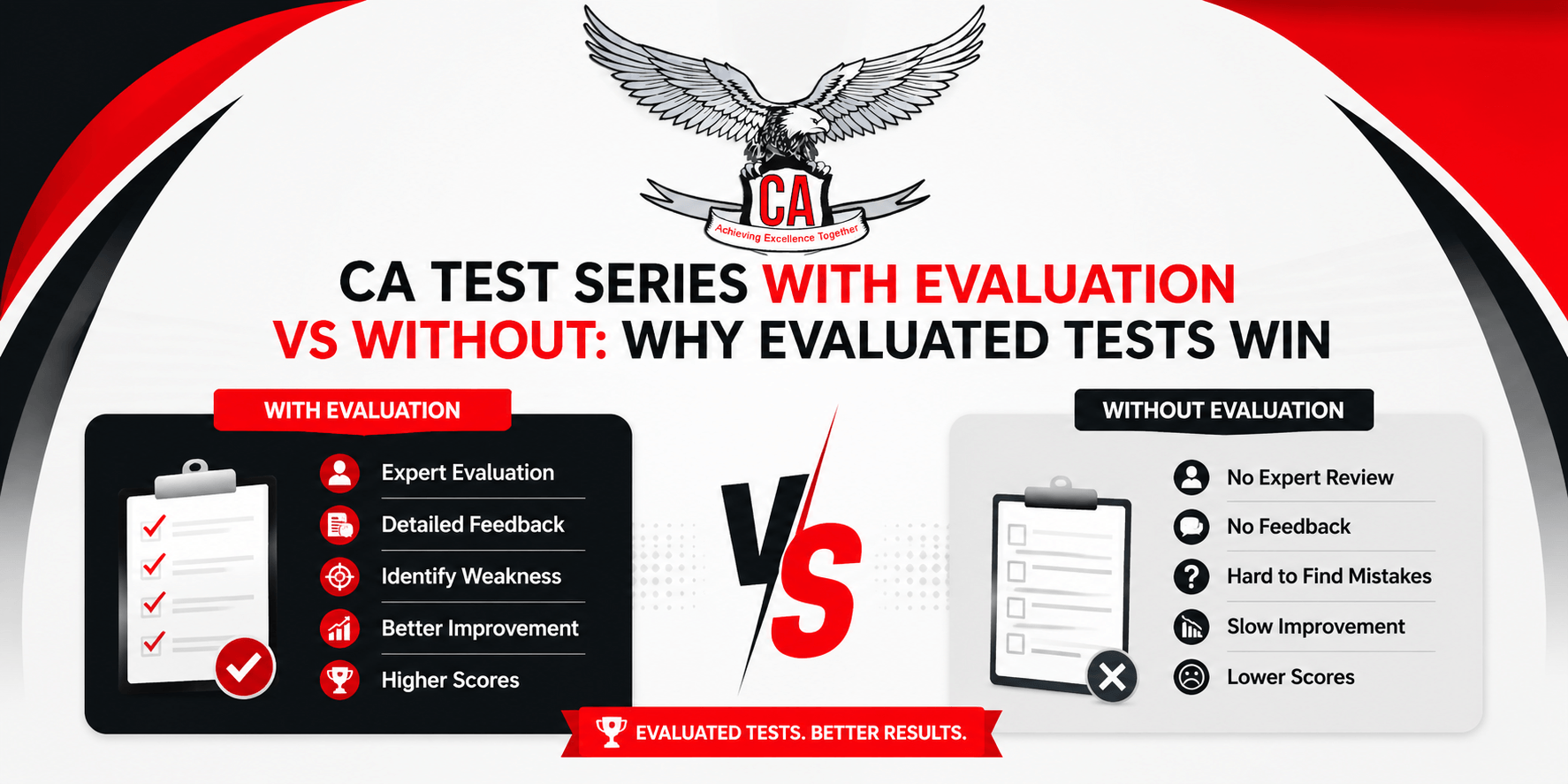
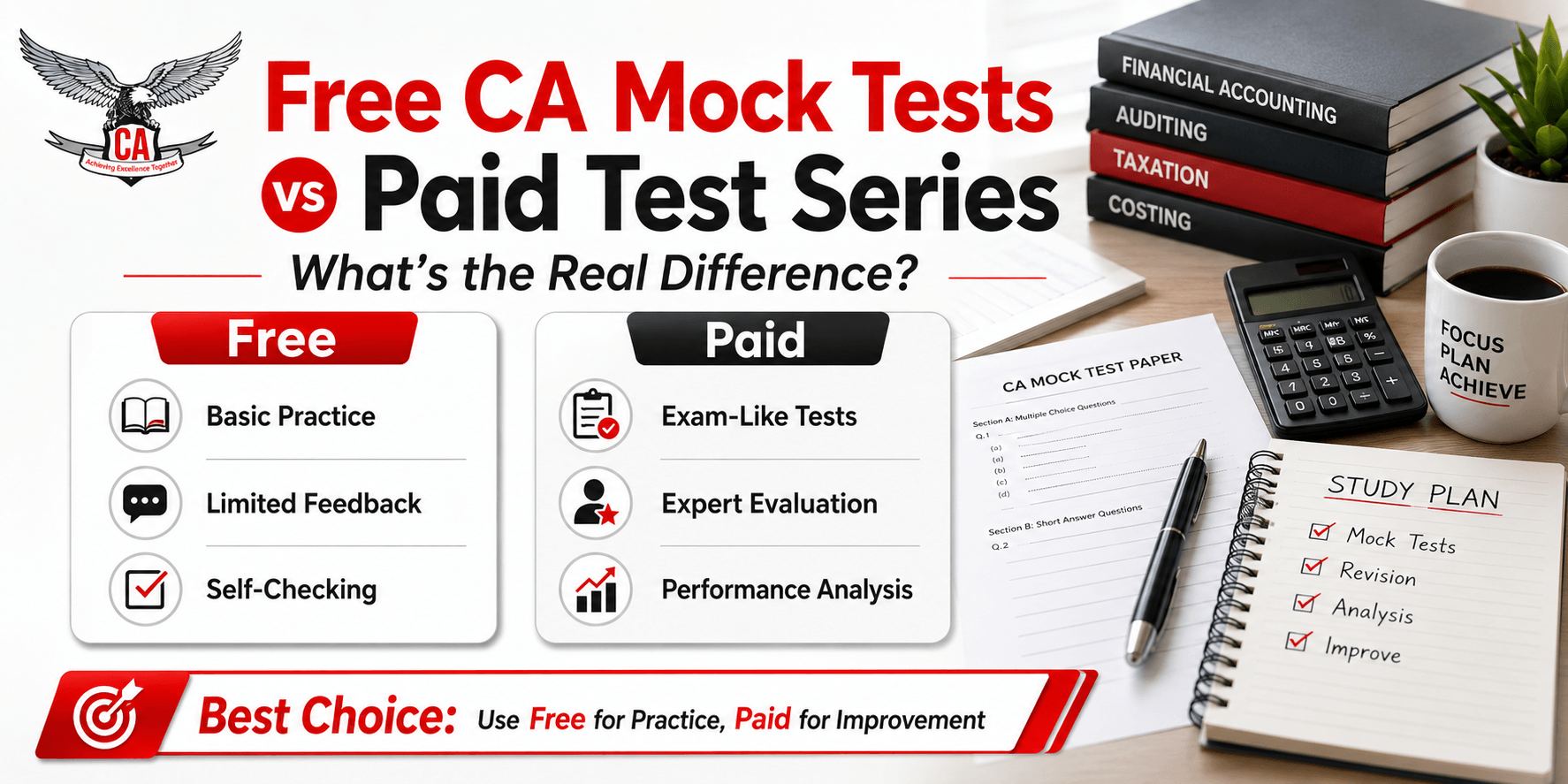
Self-evaluation is useful, but it is not always accurate because students may overlook their own mistakes or give themselves marks too generously. Expert evaluation provides a more objective review of answer quality, presentation, marking style, and exam readiness. An experienced evaluator can identify issues that students may not notice, such as weak explanations, missing provisions, poor structure, or lack of exam-oriented writing. The best approach is to use self-evaluation for regular practice and expert evaluation for deeper feedback and correction.
Why Expert Evaluation Matters in CA Exam Preparation
Expert evaluation matters because CA exams require more than correct knowledge. Students must know how to present answers, apply concepts, manage time, and write in a way that matches exam expectations. Expert feedback helps students avoid repeated mistakes and understand how to convert preparation into scoring answers. Regular evaluated tests can build final exam readiness by improving confidence, accuracy, presentation, and answer-writing discipline.
Best Practices Before Submitting an Answer Sheet
Before submitting an answer sheet for evaluation, students should attempt the paper in exam-like conditions, follow the time limit strictly, write complete answers, keep the paper neat, and review it before submission. They should avoid using notes while attempting the test because that does not show their real preparation level. A serious test attempt gives the evaluator a better answer sheet to check and gives the student more useful feedback for improvement.
CA Test Series Evaluation Process at a Glance
Step | Evaluation Stage | What Happens |
| 1 | Test Attempt | Student solves the paper within the time limit |
| 2 | Answer Sheet Submission | The completed answer sheet is submitted for checking |
| 3 | Evaluator Review | Each answer is checked based on quality and marking criteria |
| 4 | Marks Awarded | Marks are given for accuracy, steps, format, and explanation |
| 5 | Mistakes Identified | Weak areas and repeated mistakes are noted |
| 6 | Feedback Shared | Student receives marks, comments, and improvement guidance |
Conclusion
CA Test Series Evaluation is a valuable part of CA exam preparation because it helps students understand their real performance before the final exam. It identifies mistakes, improves answer writing, strengthens presentation, and teaches students how to write more scoring answers. When students read feedback carefully and apply it consistently, they can improve their confidence, reduce repeated errors, and increase their chances of performing better in the CA exam.