CMA Career Scope in India: Industries That Hire CMAs
The CMA career scope in India has grown significantly as businesses increasingly need finance professionals who can manage costs, improve profitability, analyze performance, and support strategic decisions. Cost and Management Accountants are no longer limited to traditional accounting roles. Today, CMAs can build careers in manufacturing, FMCG, banking, technology, consulting, healthcare, infrastructure, multinational companies, and the public sector. With the right combination of professional knowledge, practical experience, technology skills, and communication abilities, CMA professionals can pursue diverse career paths in India's evolving finance industry.
CMA Career Scope in India at a Glance
The CMA qualification can open doors to career opportunities in cost management, financial planning and analysis, budgeting, management accounting, internal audit, risk management, taxation, financial reporting, and business finance. Career progression depends on experience, skills, specialization, and industry exposure, but the qualification provides a strong foundation for both technical finance positions and long-term managerial roles.
What Career Opportunities Are Available After CMA?
After completing CMA, professionals can explore roles such as Cost Accountant, Management Accountant, Financial Analyst, FP&A Analyst, Cost Controller, Internal Auditor, Budget Analyst, Risk Analyst, Business Finance Analyst, Finance Manager, Financial Controller, and Management Consultant. Experienced professionals may also progress toward senior finance and leadership positions depending on their performance and career development.
Why Companies Hire CMA Professionals
Companies hire CMA professionals because they need people who can understand the financial impact of business operations. CMAs can analyze costs, prepare budgets, monitor profitability, investigate performance differences, strengthen financial controls, and provide useful information for management decisions. This combination of accounting knowledge and business analysis makes CMA skills relevant across multiple industries.
Career Area | Common Roles | Major Industries | Important Skills |
| Cost Management | Cost Accountant, Cost Controller | Manufacturing, FMCG | Costing, Variance Analysis |
| FP&A | FP&A Analyst, Finance Analyst | IT, MNCs, GCCs | Budgeting, Forecasting |
| Audit and Risk | Internal Auditor, Risk Analyst | Banking, Consulting | Controls, Risk Analysis |
| Business Finance | Finance Business Partner | FMCG, Technology | Analysis, Communication |
| Finance Leadership | Controller, Finance Manager | Large Corporates | Strategy, Leadership |
What Does a CMA Professional Do?
A CMA professional may perform different responsibilities depending on the company and job role, but common duties include cost analysis, budgeting, forecasting, financial reporting, performance analysis, risk assessment, and management decision support. The profession combines technical financial knowledge with analytical and commercial understanding.
Cost and Profitability Management
CMAs help businesses understand where money is being spent and whether products, services, projects, or departments are generating sufficient returns. They may analyze direct and indirect costs, investigate cost variances, review profit margins, and identify opportunities to improve efficiency.
Budgeting and Financial Planning: Budgeting and financial planning are important areas for many CMA professionals. They may help prepare budgets, estimate future revenue and expenses, compare actual results with plans, update forecasts, and provide management with financial information for future decisions.
Business Performance Analysis: CMAs can analyze financial and operational information to identify why business performance is improving or declining. By studying profitability, costs, margins, productivity, and budget performance, they can help managers identify problems and make informed improvements.
Risk Management and Strategic Decision-Making: CMA professionals may also contribute to financial risk management and major business decisions. Their analysis can support choices involving pricing, investment, expansion, cost reduction, outsourcing, and resource allocation while helping management understand possible financial consequences.
Top Industries That Hire CMA Professionals in India
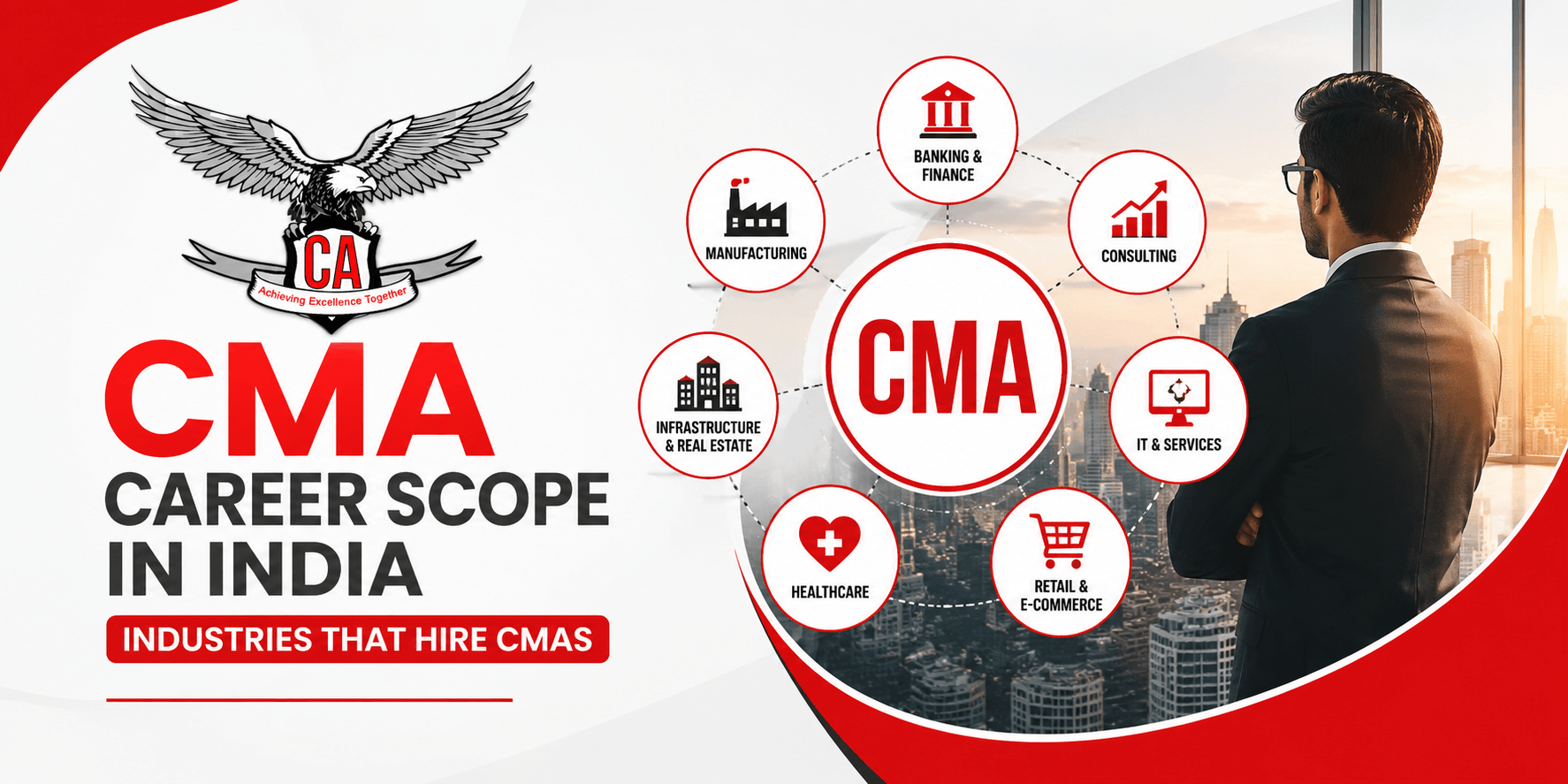
The CMA career scope in India extends across many industries because almost every major organization needs professionals who understand costs, budgets, profitability, financial controls, and business performance.
1. Manufacturing and Industrial Companies: Manufacturing is one of the strongest career sectors for CMAs because businesses need accurate product costing, inventory analysis, cost control, plant finance, and profitability monitoring. Common opportunities include Cost Accountant, Cost Controller, Plant Finance Analyst, and Management Accountant.
2. FMCG and Consumer Goods: FMCG companies operate with tight margins and complex supply chains, making cost and profitability analysis particularly important. CMAs may work in commercial finance, FP&A, costing, budgeting, pricing analysis, and finance business partnering.
3. Banking and Financial Services: Banks and financial institutions may offer opportunities in budgeting, risk analysis, internal controls, financial reporting, performance management, and business finance. Candidates interested in this sector should also develop knowledge of financial products, regulations, and risk concepts.
4. Information Technology and Technology Companies: Technology businesses require professionals to manage budgets, analyze project costs, forecast performance, and support business growth. CMAs may work in FP&A, commercial finance, project finance, reporting, and financial analysis roles.
5. Consulting and Advisory Firms: Consulting firms can offer careers in cost optimization, internal audit, risk management, financial advisory, process improvement, taxation, and business performance analysis. These roles are suitable for professionals who enjoy solving different business problems.
6. Global Capability Centres and MNCs: Global Capability Centres and multinational companies can provide opportunities in FP&A, controllership, reporting, analytics, and business finance. Strong communication, ERP knowledge, data skills, and experience working with structured finance processes can be particularly valuable.
7. E-commerce and Startups: Startups and e-commerce companies need financial professionals who can control spending, analyze unit economics, monitor cash flow, prepare budgets, and support growth decisions. CMAs working in smaller organizations may also gain exposure to a wider range of finance responsibilities.
8. Infrastructure, Energy, and Construction: These industries often manage large projects involving significant material, labour, equipment, and financing costs. CMAs can contribute through project costing, budgeting, cost monitoring, profitability analysis, and financial control.
9. Healthcare and Pharmaceuticals: Healthcare and pharmaceutical organizations need finance professionals for budgeting, cost analysis, procurement review, profitability monitoring, and financial planning. The responsibilities vary according to whether the organization operates in hospitals, manufacturing, research, or distribution.
10. Automobile and Engineering: Automobile and engineering companies offer opportunities in product costing, plant finance, inventory analysis, supply chain finance, budgeting, and management reporting. Understanding manufacturing processes can give CMA professionals an additional advantage in this sector.
11. Government and Public Sector Enterprises: Public sector organizations may recruit CMA professionals for finance, costing, budgeting, accounts, audit, and commercial roles, subject to specific recruitment rules. Candidates should always check official vacancy notifications for current eligibility requirements.
12. Professional Services Firms: Accounting, taxation, audit, and professional services firms may offer roles in compliance, cost accounting, taxation, internal audit, management consulting, and financial advisory.
Best Career Options After CMA in India
The best career option depends on a professional's interests, skills, industry preference, and experience. Instead of choosing a role only by job title or salary, candidates should consider responsibilities, learning opportunities, and long-term career growth.
Job Role | Main Responsibility | Suitable Industries | Career Level |
| Cost Accountant | Cost and variance analysis | Manufacturing, FMCG | Entry to Mid |
| FP&A Analyst | Budgeting and forecasting | IT, MNCs, GCCs | Entry to Mid |
| Internal Auditor | Controls and risk review | Banking, Consulting | Entry to Senior |
| Finance Manager | Planning and finance operations | Most Industries | Mid to Senior |
| Financial Controller | Reporting and controls | MNCs, Large Companies | Senior |
| Management Consultant | Business and finance advisory | Consulting | Mid to Senior |
CMA Career Opportunities by Experience Level
CMA career opportunities generally expand with experience. Freshers often begin in analytical or execution-focused positions, while experienced professionals may move into specialist, managerial, business partnering, and finance leadership roles.
Career Opportunities for CMA Freshers
Freshers can explore entry-level roles in costing, financial analysis, FP&A, internal audit, taxation, reporting, and finance operations. Practical knowledge of Excel, accounting concepts, communication, and financial analysis can improve employability.
Career Scope After Gaining Experience
After three to five years of relevant experience, professionals may move into roles such as Senior Analyst, FP&A Specialist, Cost Controller, Business Finance Professional, or Finance Manager. With further experience, opportunities may expand into controllership and senior finance leadership.
Most In-Demand Skills for a Successful CMA Career
A successful CMA career requires more than technical accounting knowledge. Employers increasingly value professionals who can combine finance expertise with analytical, technological, and communication skills.
Core Finance Skills: Important finance skills include cost and management accounting, budgeting, forecasting, variance analysis, financial analysis, management reporting, and performance management.
Technical Skills: Advanced Excel, ERP systems such as SAP, Power BI, financial modelling, and data analytics can strengthen a CMA professional's profile. These tools help finance teams analyze information efficiently and communicate insights more clearly.
Soft Skills: Communication, analytical thinking, problem-solving, leadership, and strategic decision-making become increasingly important as professionals move into managerial and business-facing positions.
How Technology Is Changing CMA Careers
Automation, artificial intelligence, analytics, ERP systems, and cloud-based finance platforms are changing how finance teams operate. Routine activities may become more automated, increasing the importance of professionals who can analyze information, interpret results, solve problems, and support strategic decisions.
Future Scope of CMA in India
The future scope of CMA in India remains closely linked to the growing need for cost optimization, financial planning, data analysis, risk management, and strategic decision support. Opportunities are likely to continue evolving in FP&A, business finance, Global Capability Centres, analytics, consulting, and technology-enabled finance functions.
CMA Career Scope in India for Freshers
Freshers can build strong careers by combining CMA knowledge with practical experience, internships, technology skills, and clear communication. Entry-level experience in costing, finance, audit, reporting, or analysis can provide the foundation needed to move into more specialized positions later.
How to Build a Strong Career After CMA
A strong career after CMA requires continuous learning. Professionals should build strong concepts, gain practical experience, learn industry-relevant finance tools, improve communication skills, choose a suitable specialization, create a strong professional profile, and prepare carefully for finance interviews.
Challenges CMA Professionals May Face
CMAs may face competition from professionals with other finance qualifications, changing technology requirements, difficulty choosing the right specialization, and challenges gaining initial experience. Building practical skills, staying updated with industry developments, and developing a clear career direction can help professionals manage these challenges.
Is CMA a Good Career Option in India?
CMA can be a strong career option for students interested in cost management, financial analysis, corporate finance, budgeting, business performance, and strategic decision-making. However, students should understand the syllabus, examination commitment, practical requirements, and career possibilities before making their decision.
Conclusion
The CMA career scope in India extends across manufacturing, FMCG, banking, technology, consulting, healthcare, infrastructure, multinational companies, startups, and the public sector. Career opportunities range from Cost Accountant and FP&A Analyst to Finance Manager, Financial Controller, and senior leadership positions. While the CMA qualification provides a strong professional foundation, long-term success depends on practical experience, technical skills, industry knowledge, communication, and continuous learning. Professionals who develop these capabilities can build rewarding careers in India's changing finance and business environment.