Case Study-Based Questions in CA Test Series: How to Practice Them
Case study-based questions test whether CA students can apply concepts instead of simply recalling theory. A student may know an accounting standard, tax provision, audit principle, or formula but still struggle to recognise it inside a lengthy scenario. Regular practice of case study-based questions in CA Test Series improves interpretation, accuracy, presentation, time management, and exam confidence.
What Are Case Study-Based Questions in CA Exams?
These questions present a practical situation and ask students to reach a calculation, opinion, conclusion, or recommendation. They may appear as MCQs, descriptive questions, numerical problems, or integrated cases.
Why Students Find Them Difficult: Case studies often contain multiple concepts, hidden conditions, similar-looking options, and strict time limits. Students struggle when they depend on memorisation or practise without reviewing mistakes.
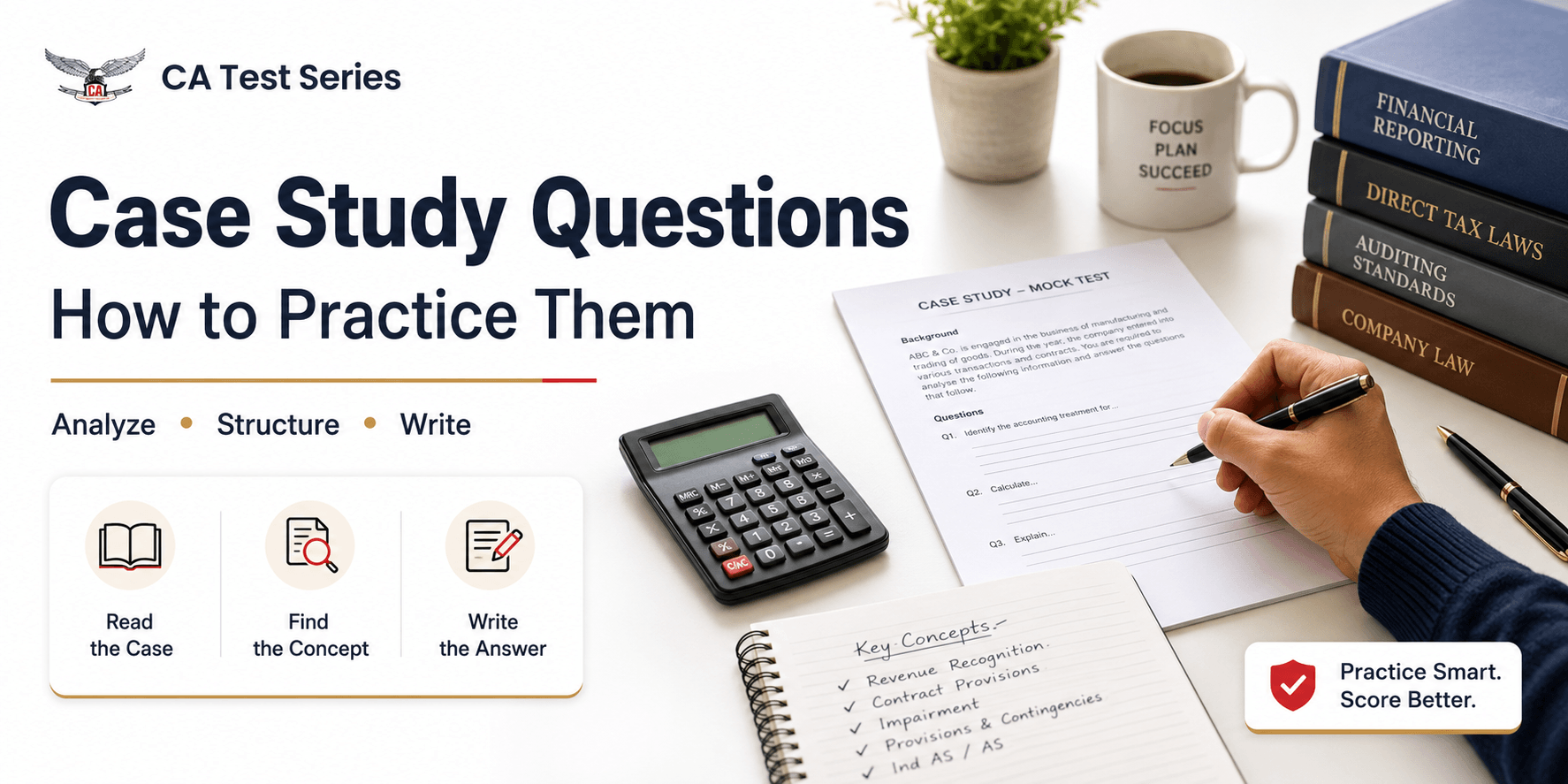
How to Practice Case Study-Based Questions in CA Test Series
Use the same solving process in chapter-wise tests, subject-wise mocks, and full-syllabus papers until it becomes a natural exam habit.
Check the Requirement First: Preview the questions before reading the full case and identify whether you must calculate, analyse, advise, justify, recommend, comment, or select an option. This helps you read with a purpose and prevents irrelevant theory or unnecessary calculations.
Read the Case in Two Stages: Use the first reading to understand the overall situation and main problem. During the second reading, highlight dates, figures, transactions, limits, responsibilities, conditions, exceptions, and facts connected with each requirement.
Divide the Case into Issues: When a case includes several concepts, prepare a short issue list. Match each issue with the correct accounting standard, legal provision, formula, audit principle, costing method, or strategic framework.
Plan Before Writing: Prepare a brief outline containing the applicable rule, required calculation, application to facts, and conclusion. A short plan improves flow, reduces repetition, and helps ensure that every sub-question is addressed.
Use the Correct Answer Format: Numerical answers should show formulas, assumptions, adjustments, units, and working notes, while descriptive answers should follow a logical analytical structure. The length and detail should match the marks available.
Issue–Rule–Application–Conclusion Method: For law, tax, audit, ethics, and other descriptive cases, state the issue, mention the applicable rule, connect it with the facts, and finish with a direct conclusion. This format keeps the answer focused and evaluator-friendly.
Review and Reattempt: Compare your concept, method, workings, application, and conclusion with the suggested answer or evaluator feedback. Record the mistake, revise the related topic, and reattempt the question later without checking the solution.
How to Solve Different Types of CA Case Study Questions
Identify the question type first so you can choose the correct solving and presentation method.
Case-Based MCQs: Read every option carefully, eliminate choices that conflict with the facts, and check dates, limits, exceptions, and conditions before selecting an answer. Do not add assumptions unsupported by the scenario.
Numerical Case Studies: Organise the figures, select the correct formula or method, show step-by-step workings, mention assumptions, use proper units, and include all adjustments. A reasonableness check can help identify an unrealistic result.
Law, Tax, Audit, and Ethics Cases: Mention the applicable provision or professional requirement, identify the relevant facts, apply the rule, and provide a justified conclusion. Always use the syllabus and amendments applicable to your examination attempt.
Accounting Standard and Integrated Cases: For accounting standard cases, identify whether the issue concerns recognition, measurement, classification, presentation, disclosure, or adjustment. For integrated cases, divide the scenario issue-wise and solve each part separately.
How to Manage Time During Case Study Practice
Use a marks-based plan for reading, analysing, writing, and reviewing every case.
Allocate Time According to Marks: Use the marks as a guide for answer length and solving time. Avoid long theoretical explanations for low-mark questions or incomplete answers to high-mark application-based requirements.
Set Reading and Answering Limits: Fix a maximum reading period so repeated analysis does not reduce writing time. When one requirement becomes too difficult, use the skip-and-return method and continue with another part.
Reserve Time for Final Review: Keep a few minutes for checking unanswered requirements, calculation errors, incorrect MCQ marking, missing working notes, and weak conclusions.
Four-Week Case Study Practice Plan
A four-week plan can move students from basic application to full exam simulation.
Week | Practice Type | Suggested Target | Review Method |
| 1 | Chapter-wise cases | 2–3 daily | Compare approach and structure |
| 2 | Mixed-chapter cases | 2 daily | Classify errors |
| 3 | Timed subject tests | 1 set daily | Track time and completion |
| 4 | Full-syllabus mocks | 2–3 weekly | Review feedback and reattempt |
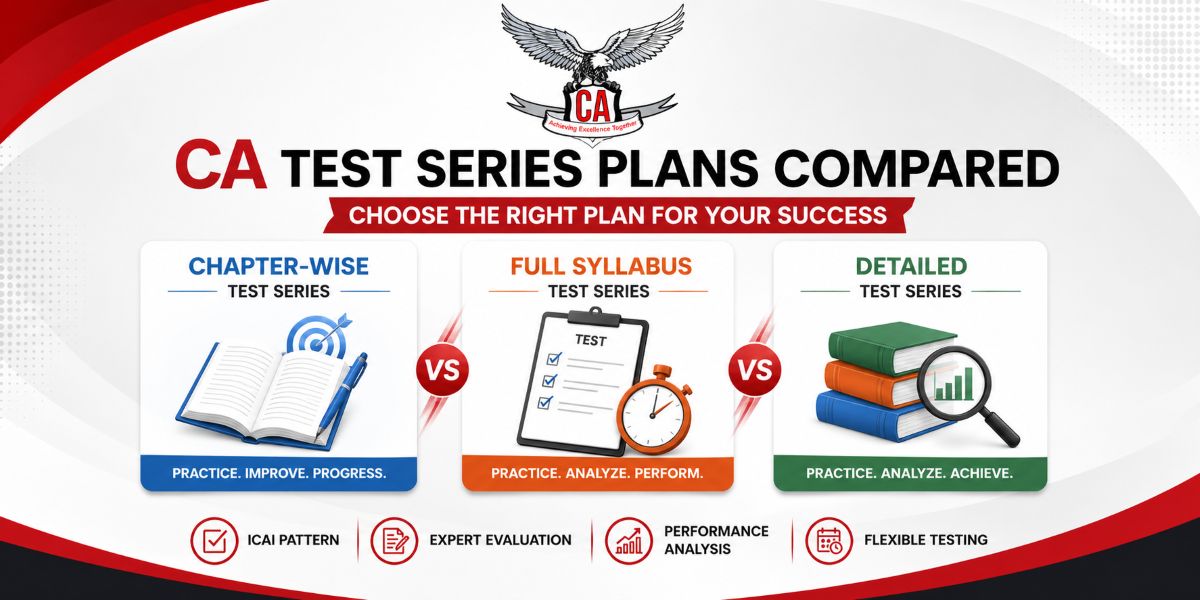
Move from Chapter-Wise to Full-Syllabus Practice: Begin with chapter-wise questions, then move to mixed-chapter cases, subject-wise tests, and full-syllabus mocks.
How Expert Evaluation Improves Performance
Expert evaluation can reveal missing application points, incorrect concepts, weak calculations, poor presentation, excessive theory, and inefficient time allocation. Feedback becomes valuable only when students apply it in the next test.
Track Improvement Across Tests: Track marks, accuracy, completion rate, solving time, repeated errors, and evaluator comments across several tests.
How to Analyse Mistakes After a Mock Test
Turn every incorrect answer into a revision task by recording the error, cause, correct approach, and reattempt date.
Error Type | Common Cause | Corrective Action |
| Conceptual | Wrong rule or formula | Revise and solve similar cases |
| Interpretation | Requirement misunderstood | Practise requirement-first reading |
| Calculation | Figure or adjustment missed | Recheck workings |
| Presentation | Weak structure | Use a fixed format |
| Time management | Too long on one part | Use marks-based limits |
| Careless | Date or exception overlooked | Use a review checklist |
Common Mistakes to Avoid: Avoid writing general theory without application, ignoring dates and exceptions, making unsupported assumptions, skipping working notes, giving conclusions without reasoning, checking only the final answer, and taking repeated tests without using evaluator feedback.
Best Sources for CA Case Study Practice
Use official ICAI resources and evaluate mock tests, but verify that each source matches the applicable syllabus and exam attempt.
ICAI Resources and CA Test Series: Use the latest ICAI study material, case scenario booklets, RTPs, MTPs, MCQ booklets, and previous questions. Chapter-wise tests strengthen individual topics, while full-syllabus evaluated mocks test overall preparation.
Self-Evaluation Checklist
Before finishing, confirm that you understood the requirement, selected the correct concept, considered exceptions, showed clear workings, wrote a direct conclusion, stayed within time, and recorded mistakes.
Conclusion
Success in case study-based questions in CA Test Series depends on disciplined application practice rather than memorisation alone. Students who identify requirements, separate relevant facts, apply the correct concept, manage time, review feedback, and reattempt weak questions can improve accuracy, answer quality, and confidence across CA examinations.