CA Inter Attempt Limit and Eligibility Rules: Everything Officially Confirmed
The CA Inter attempt limit and eligibility rules are important for every student preparing for Chartered Accountancy because they directly affect exam planning and long-term strategy. Many students are confused about how many attempts are allowed, how registration validity works, and what changes exist between different schemes. This guide, based on regulations from the ICAI, explains everything in a simple and clear way so that students can confidently understand attempt limits, eligibility conditions, and exemption rules before starting preparation.
CA Inter New Scheme vs Old Scheme (Focus Keyword Section)
The CA Inter New Scheme vs Old Scheme explains the major structural change in the CA Test Series The New Scheme is the updated syllabus introduced by ICAI with more focus on practical learning, case studies, MCQs, and application-based questions, while the Old Scheme (IPCC) was more theory-focused and memory-based. Understanding this difference is important because it affects preparation strategy, exam pattern, and study approach for students.
What is CA Inter New Scheme?: The CA Inter New Scheme is the updated syllabus structure that focuses on conceptual clarity, practical application, and analytical thinking, where students study two groups with modern exam patterns including MCQs and case-based questions.
What was the CA Inter Old Scheme?: The CA Inter Old Scheme, also known as IPCC, was the previous syllabus structure that mainly focused on theoretical learning, descriptive answers, and traditional exam formats with less emphasis on application-based questions.
Key Differences Between New and Old Scheme: The main difference between the New and Old Scheme lies in syllabus design, exam pattern, and learning approach, where the New Scheme focuses more on practical understanding, MCQs, and case studies while the Old Scheme was more theory-oriented and descriptive.
Which Scheme Applies to You?: Your applicable scheme depends on your registration date with ICAI, where new students follow the New Scheme while older or transition students may still fall under updated conversion rules based on their registration status.
CA Inter Attempt Limit – Official Rules Explained
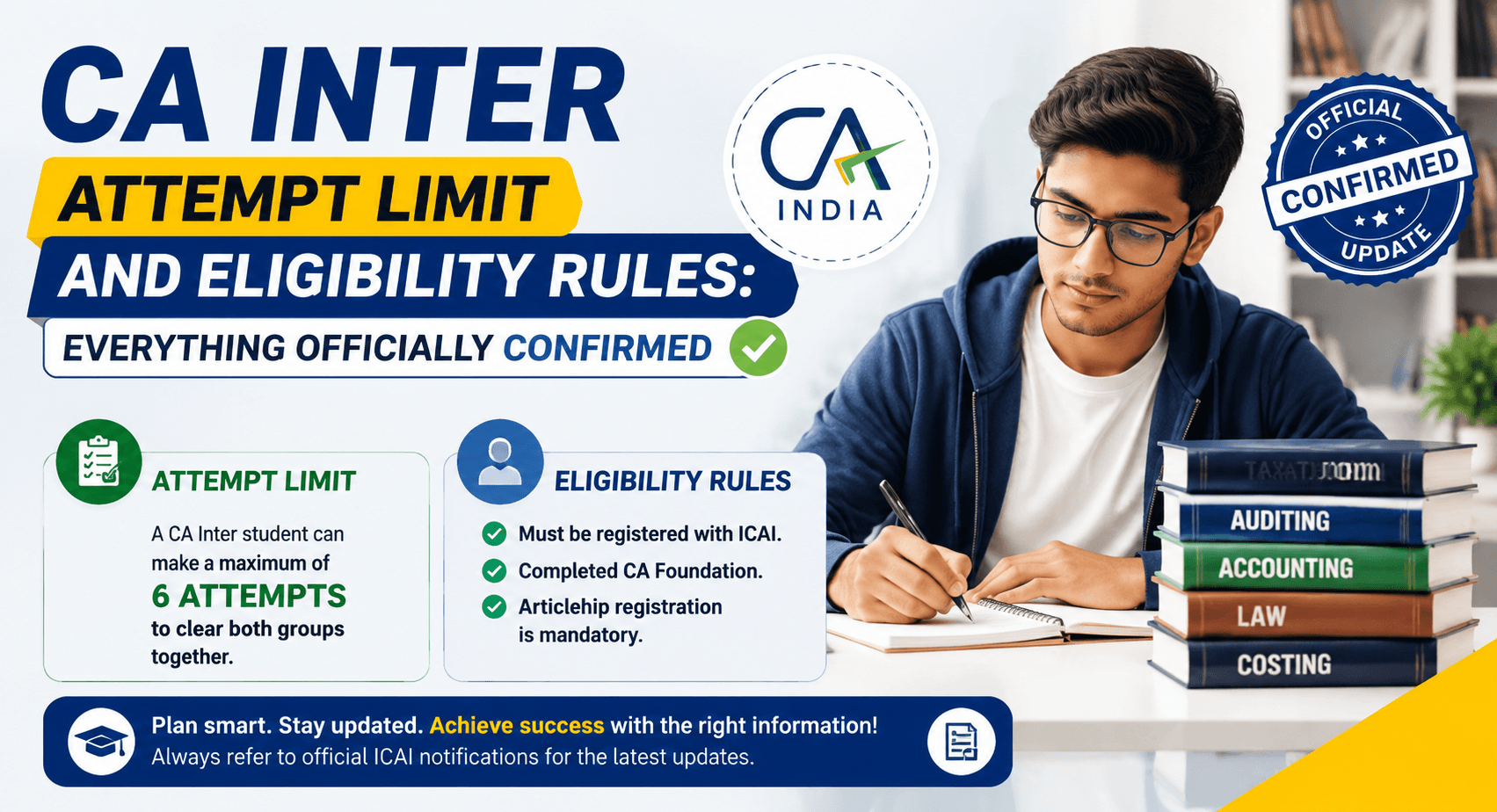
Is There a Maximum Attempt Limit in CA Inter?: There is no fixed lifetime attempt limit in CA Intermediate, and students can appear multiple times within their registration validity until they successfully clear both groups.
Registration Validity for CA Inter: CA Inter registration is valid for a fixed period defined by ICAI, and after expiry, students must renew or revalidate their registration to continue appearing in exams.
Attempt Flexibility in CA Inter: Students have full flexibility to attempt Group 1, Group 2, or both together depending on their preparation level, which allows strategic planning for clearing the course efficiently.
CA Inter Eligibility Criteria (Updated ICAI Guidelines)
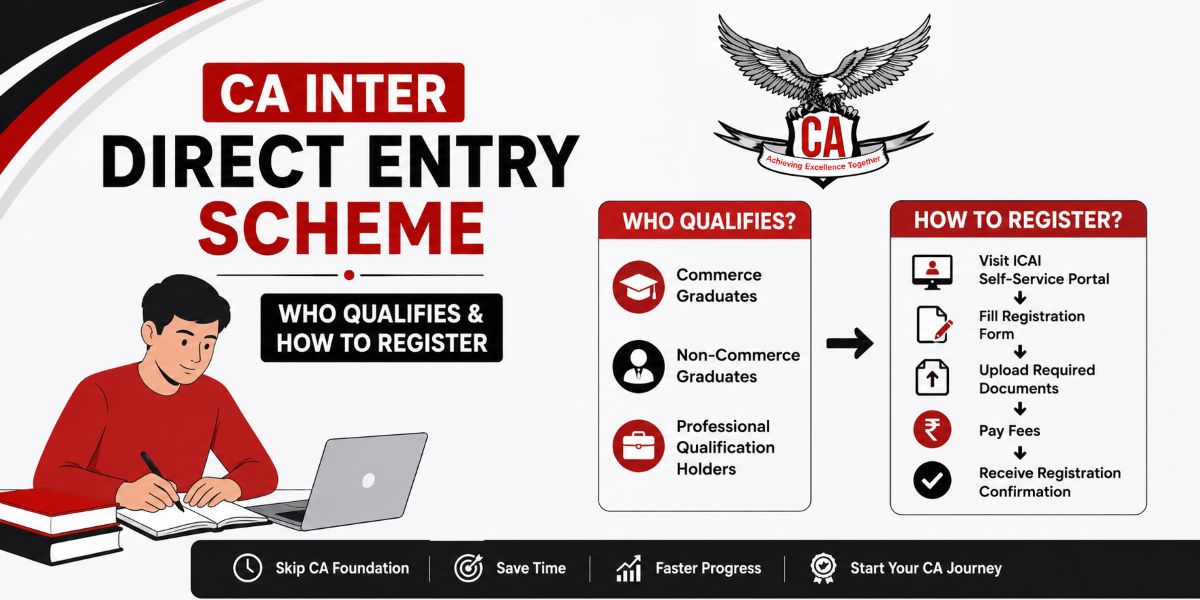
Academic Eligibility: Students can enter CA Intermediate either through the Foundation route after clearing CA Foundation or through the Direct Entry route after graduation or postgraduation as per ICAI eligibility rules.
Registration Requirements:To register for CA Inter, students must complete the ICAI online registration process with required documents like academic certificates and identity proof, and ensure registration remains valid for appearing in exams.
Exam Appearance Rules : Students must complete registration before the exam eligibility deadline and can choose to appear for one or both groups depending on their preparation level while following ICAI exam form submission rules.
CA Inter Exemption Rules (Very Important for Students)
What is Exemption in CA Inter?: Exemption in CA Intermediate allows students who score 60 or more marks in a subject but fail the group to skip that paper in future attempts, helping them focus only on remaining subjects.
Eligibility Criteria for Exemption: A student becomes eligible for exemption when they appear in all papers of a group and score 60 or more marks in any individual subject within that group.
Validity of Exemption: CA Inter exemptions are valid for three consecutive attempts, after which they expire if not utilized within that period.
Passing Conditions with Exemption: Even with exemption, students must secure at least 40% in each subject and 50% aggregate in the group, and exempted paper marks are included in the final calculation.
CA Inter Attempt Strategy – How to Clear in Fewer Attempts
Clearing CA Inter in fewer attempts depends on a disciplined and smart preparation strategy where students focus on conceptual clarity, structured revision, and regular practice instead of random study patterns. A well-planned approach helps reduce mistakes, improve retention, and increase exam confidence, making it easier to clear both groups efficiently within the registration validity period.
Smart Study Planning: Smart study planning in CA Inter means dividing the syllabus into manageable portions, prioritizing high-weightage subjects first, and following a fixed revision cycle so that every topic is revised multiple times before exams, improving accuracy and long-term memory retention.
Importance of Mock Tests: Mock tests play a crucial role in CA Inter preparation because they simulate the real ICAI exam pattern, helping students understand question trends, improve writing speed, and manage time effectively under exam conditions.
Common Mistakes to Avoid: Most students lose attempts due to avoidable mistakes such as poor revision planning, ignoring MCQs and case-study-based questions, and not analyzing past papers properly, which leads to repeated errors in the actual exam.
Role of Practice Platforms in Reducing Attempts
Practice platforms significantly reduce the number of attempts required in CA Inter by providing structured preparation, exam-oriented practice, and continuous performance analysis that helps students identify weaknesses early and improve systematically.
Why Mock Test Practice Matters: Mock test practice is essential because it creates a real exam-like environment, improves speed and accuracy, and allows students to track their performance progress over time, ensuring better preparedness for the actual ICAI exam.
How CA Test Series Helps Students: CA Test Series platforms help students by offering ICAI-pattern test papers, chapter-wise practice sets, full syllabus mock exams, expert evaluation, and detailed feedback reports that highlight strengths and weaknesses for continuous improvement.
Important Rules from ICAI You Should Never Ignore
Students must always follow key ICAI rules such as keeping track of registration expiry and renewal deadlines, planning exam attempts strategically, choosing groups wisely based on preparation level, and regularly checking official ICAI notifications for syllabus or exam updates.
Conclusion
CA Inter success depends more on strategy than the number of attempts, and students who follow structured planning, consistent revision, and regular mock test practice are far more likely to clear exams in fewer attempts. Understanding ICAI rules, managing preparation smartly, and avoiding common mistakes can significantly improve performance and reduce stress, helping students achieve success in a more efficient and confident way.