
Every CA Final aspirant has a study plan. Most of those study plans look similar: divide the syllabus by the number of months available, allocate subjects to weeks, and revise with increasing intensity as the exam approaches. This approach is not wrong. It is simply incomplete.
A study plan that organises content coverage without building in regular evaluated writing practice, analytics-driven revision, and a structured final phase is a plan that prepares you to know the syllabus. It does not guarantee that you can perform on the paper. This guide fills that gap.
The Framework Principle: Coverage Is Not Performance
Before any month-by-month breakdown, one principle needs to be established clearly.
CA Final examiners assess three layers in every paper:
- Technical accuracy of content
- Quality of applied reasoning in case study and scenario questions
- Professional clarity and structure of written answers
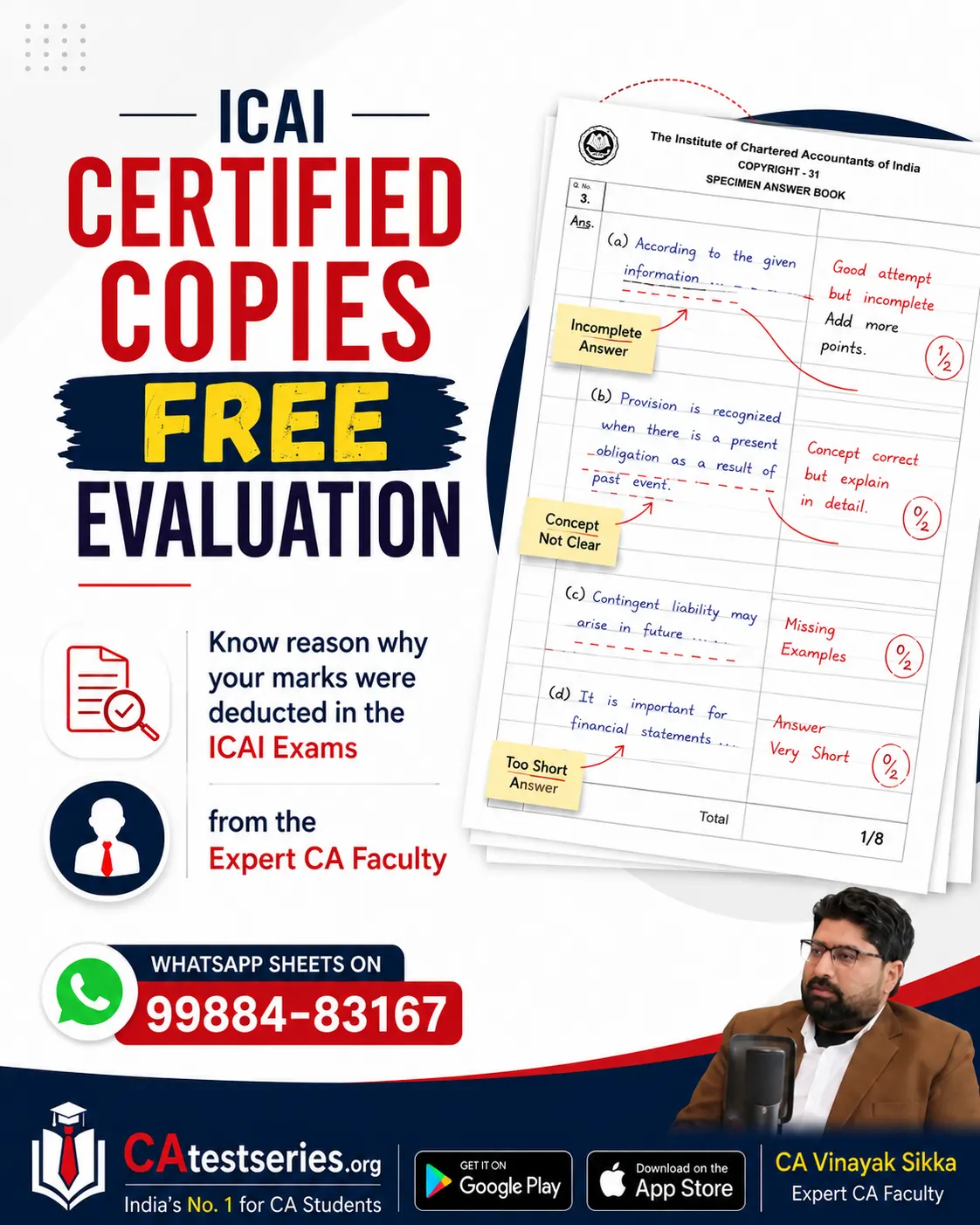
Most study plans address only the first layer thoroughly. The second and third layers are built through evaluated writing practice, not through reading and revision. A CA Final study plan that does not schedule regular mock tests with professional evaluation is a plan that prepares you for only one of the three assessment dimensions.
The month-by-month framework below is built around all three.
Month-by-Month CA Final Study Plan
Six Months Before the Exam: Syllabus Mapping and Early Testing
This is the foundation phase. The goal is not to complete the syllabus. It is to understand it accurately and begin building subject-level competence through early evaluated practice.
Week 1 to 2:
- Map the complete syllabus for both groups using the ICAI study material
- Identify your relative subject strengths and weaknesses from your Inter results and self-assessment
- Confirm the amendments applicable to your exam cycle for tax papers
- Enrol in your test series plan and confirm subject coverage at the Syllabus for Test Series page
Week 3 to 4:
- Begin detailed study of your most complex subjects first: Financial Reporting and Strategic Cost Management are strong starting points
- Attempt your first chapter-wise evaluated test on the topic you have covered
- Review the annotated feedback before moving to the next topic
The rule at this phase: study a topic, test it, fix what the evaluation reveals, then move forward.
Four to Five Months Before the Exam: Full Syllabus Coverage with Concurrent Testing
This is the longest phase and the one where the most preparation value is either built or lost.
- Cover every subject across both groups systematically
- Run chapter-wise evaluated tests concurrently with your study, not after it is complete
- Track which subjects are generating the most evaluation feedback and allocate additional revision time accordingly
- Do not study all subjects at the same pace. Data from your evaluated tests should direct where you spend more time.
At this phase, the most common mistake is maintaining a symmetric schedule regardless of what the evaluated performance data is showing. If your Advanced Auditing evaluated tests are consistently well-annotated with errors, but your SFM tests are improving, your schedule should reflect that.
Eight to Ten Weeks Before the Exam: Full Group Mock Phase
This is the transition from subject-level preparation to integrated paper performance.
- Attempt to complete Group 1 and Group 2 papers under timed conditions
- Three hours per paper, no reference material, submitted for professional evaluation
- Track group-wise score balance across multiple attempts
- If one group is consistently scoring below the other, redirect your remaining mock cycles
At this phase, stop introducing new study material. The syllabus coverage phase should be complete. Revision and writing practice are the only activities that improve your results in the eight weeks before an exam.
Final Four Weeks: MTP and RTP Evaluation Phase
This is the most important phase and the one that most directly calibrates your performance to the actual exam standard.
- Attempt ICAI-released Mock Test Papers and Revision Test Papers under full exam conditions
- Submit every paper for professional evaluation immediately after attempting
- Review every annotated sheet before attempting the next paper
- Rewrite every answer that received presentation-specific feedback
- Do not start new topics. Do not watch new revision lectures. Write, submit, review, rewrite.
For CA Final plans that include MTP and RTP evaluation, visit the CA Test Series for 2026 page.
Subject Allocation Within the Study Plan
CA Final has eight papers across two groups. Allocation of study time should be driven by complexity and your personal performance data, not by the number of chapters in a subject.
Subjects that typically require more time, given their complexity and application demands:
- Financial Reporting (high standards volume, complex application scenarios)
- Strategic Financial Management (calculation speed combined with strategic interpretation)
- Direct Tax Laws and International Taxation (amendment-heavy, changes with each Finance Act)
- Strategic Cost Management (advanced cost framework application to strategic contexts)
- Indirect Tax Laws and Practice (complex multi-transaction GST scenarios)
Subjects where revision and writing practice produce faster improvement:
- Advanced Auditing and Professional Ethics (scenario-based application improves rapidly with evaluated practice)
- Corporate and Economic Laws (structured answer formats built quickly through repeated, evaluated mock tests)
- Strategic Performance Management and Business Valuation (integration skills built through full paper practice)
The Revision Phase: How to Revise Effectively in the Final Two Months
Revision in the context of a CA Final study plan does not mean reading notes. It means:
- Reviewing annotated evaluated sheets from your previous mock tests
- Rewriting answers that received presentation-specific feedback
- Using revision lectures or condensed subject summaries immediately before a mock test on that subject
- Tracking which topics appear repeatedly in your weak-performance analytics
For Foundation students building toward Final-level preparation habits, the CA Foundation Video Lectures and Books page shows how structured lecture resources pair with test practice at the entry level of the programme.
For plan options and pricing across the CA Final evaluation programme, visit the Fee Structure of Test Series page.