
A test series only works if it is scheduled properly. Random, unplanned attempts spread thin across months rarely build the consistency needed to actually improve. This piece lays out a simple, adaptable week-by-week calendar you can apply to your own preparation window, whatever level you are at.
Why Does a Fixed Schedule Matter More Than Total Test Count?
Two students can take the same number of mock tests and get very different results, depending on how those tests were spaced out. Clustering ten mocks into the final two weeks leaves no time to fix mistakes between attempts. A steady, spaced schedule does.
Weeks 1 to 2: Chapter Foundation Testing
Take a one-chapter test immediately after finishing each topic
Keep tests short and focused, rather than full-length, at this stage
Log every weak area in a single running list, so nothing gets forgotten later
Weeks 3 to 5: Sectional and Group Testing
Combine two or three completed chapters into a single sectional test
Begin timed practice, even if only for half the usual paper length
Cross-check topic coverage against the current syllabus, since gaps are easier to fix now than later
Weeks 6 to 8: Full-Length Mock Tests
Attempt one full-length, strictly timed mock per week
Alternate between groups or subjects so no single area gets neglected
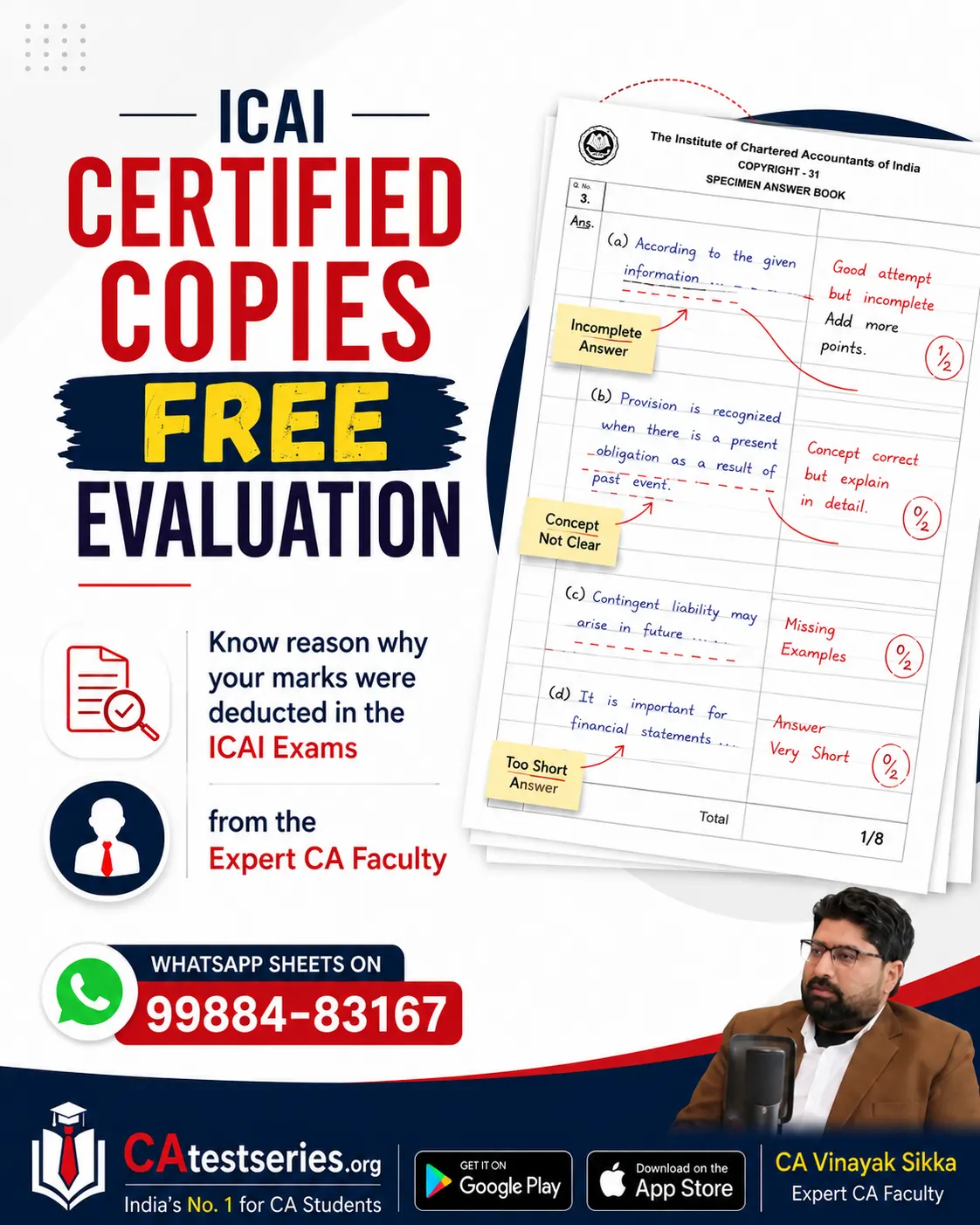
Review evaluator feedback within two to three days of each mock, not weeks later
Final 2 Weeks: Review, Not New Testing
This is the stage students most often get wrong, by continuing to take new tests right up to the exam. Instead:
Revisit every evaluated paper from weeks 6 to 8
Note recurring comments and fix them deliberately in a short revision pass
Take no more than one light test in the final week, focused on your weakest area only
Sample Weekly Structure During the Testing Phase
| Day | Activity |
| Monday to Wednesday | Study and revise upcoming test topics |
| Thursday | Attempt the test under timed conditions |
| Friday to Saturday | Review evaluator feedback and rework weak points |
| Sunday | Light revision, no new test |
How Should This Schedule Change Based on Exam Frequency?
CA Foundation and Intermediate now run three sessions a year, in January, May, and September, while CA Final runs twice a year, in May and November. A tighter three-session calendar means Foundation and Inter students should compress this schedule into a shorter window, while Final students, with more time between attempts, can stretch each phase out further.
Does Cost Factor Into How You Schedule Your Tests?
It can. Some fee structures are built around a fixed number of mocks, so pacing them properly across your calendar matters more than rushing through them early. Check the fee structure for your plan to see how many full mocks are included before mapping out your weeks.
Build your own version of this calendar around a structured CA test series instead of testing randomly without a plan.