
CA Himanshu Singla Costing Through Real-Life Business Stories
Costing is an important part of the CA Intermediate syllabus, but students often find it difficult because of formulas, calculations, adjustments, and practical questions. The real challenge is understanding why a particular costing method is used and how different figures are connected. A practical approach makes costing easier by relating concepts to real businesses such as a bakery, factory, restaurant, or automobile company. For example, in a bakery, students can identify material cost, labour cost, direct and indirect expenses, factory cost, total cost, selling price, and profit. Thus, instead of simply memorising formulas, students can understand costing through real-life situations, logical thinking, calculations, and business decision-making.
Why CA Students May Find Costing Challenging
Costing is not difficult simply because it contains calculations. The bigger challenge is understanding the relationship between concepts, figures, and business situations. A student may remember a formula but still make mistakes when the question changes slightly. For example, a question may involve:
Overtime.
Idle time.
Different overhead rates.
Changes in selling price.
Make-or-buy decisions.
Limiting factors.
Budgeted and actual results.
Common difficulties faced by students
Students may face problems such as:
Confusing direct and indirect costs.
Making calculation errors.
Applying the wrong costing technique.
Missing adjustments in practical questions.
Not understanding the wording of questions.
Spending too much time on lengthy problems.
Using Real-World Examples to Help You Understand Costing
Students find that costing is simpler when they relate it to regular company activities. Instead of only learning formulas by heart, they might first understand how expenses are computed and the reasoning behind each formula.
Understand
↓
Apply
↓
Calculate
↓
Practice
↓
Revise
Cost Sheet Using a Real-World Example
Imagine a bakery that makes cakes. The bakery buys flour, sugar, cream, chocolate, and eggs. It also pays chefs and assistants to make the cakes. Other expenses include kitchen rent, electricity, maintenance, cleaning, packaging, and delivery.
Now, students can easily understand the cost structure:
Cost Element | Simple Example |
Direct Material | Flour, sugar, cream |
Direct Labour | Chef making cakes |
Direct Expenses | Special expense for a cake |
Prime Cost | Material + Labour + Direct Expenses |
Factory Overheads | Rent, electricity, maintenance |
Cost of Production | Total factory cost |
Office Overheads | Administrative expenses |
Cost of Sales | Total cost of selling cakes |
Profit | Sales − Cost of Sales |
Using Business Stories to Understand Material Costs
For Example:
Anjali pays Rs.37/kg (Rs.5,920) for 160 kg of sugar. She didn't actually cost Rs.5,920.
Component | Amount (Rs.) |
Purchase price | 5,920 |
Add: Freight | 350 |
Add: Loading charges | 200 |
Less: Trade discount | (160) |
Landed cost | 6,310 |
Conclusion: The actual material cost is Rs.6,310 (Rs.39.43/kg), not the Rs.37/kg invoice rate; discounts lower the cost but freight and handling increase it.
Understanding Labour Costs Using an Example from the Workplace.
Labour cost is easy to understand through workplace examples
Imagine a garment factory where workers are paid either according to time worked or output produced. The business wants to maintain productivity while ensuring a fair wage system. This helps students understand different wage and incentive methods by asking:
What is the purpose of the incentive?
What kind of behavior should it promote?
Overheads: Understanding the Hidden Cost of Production
Overheads are the indirect costs needed to keep production running smoothly.
These include expenses such as electricity, maintenance, supervision, security, and cleaning.
Since these costs cannot be directly linked to one product, they need to be shared among products.
Allocation, apportionment, and absorption help distribute these common costs properly.
Standard Costing from a Management Point of View
Standard costing is easier to understand when we connect it with a real business situation. Suppose a company expects that making one unit of a product will require a fixed quantity of material at a fixed price. This expected cost is called the standard cost.
management queries:
Did the cost of the material go higher?
Was there insufficient production?
Variance analysis helps management find out why costs are different and where the business needs to improve its performance.
CA Himanshu Singla's approach focuses on understanding the logic behind formulas, helping students learn through reasoning rather than memorisation.
Budgetary Control Through Business Planning
Every business needs a plan. A company prepares a budget by estimating its expected:
Sales
Material costs.
Labour costs.
Overheads.
Cash requirements.
At the end of the period, actual results may be different from the budget. Budgetary control helps the company compare actual results with the budget and understand the reasons for the differences.
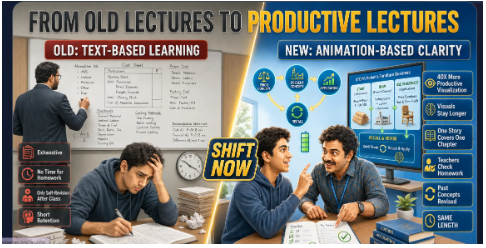
Animation Lectures and Costing
Animation lectures make costing concepts simple and interesting by showing difficult processes visually. For example, students can see how materials, labour, and overheads move through different stages of production.
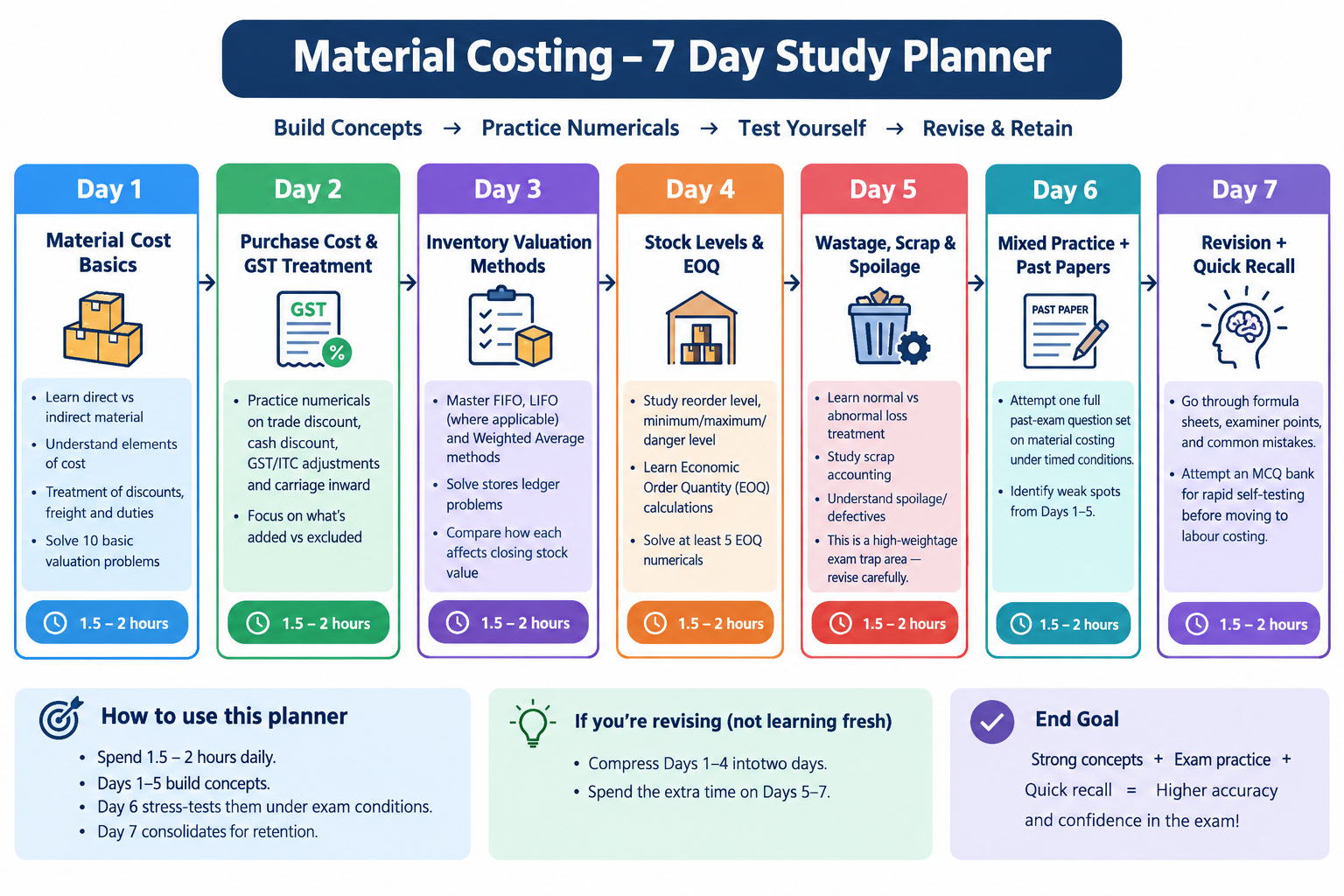
7-Day Costing Study Planner
Conclusion
When students make connections between mathematics and actual business examples, costing becomes simple. Students who take a practical approach are better able to understand topics, use formulas effectively, and confidently solve problems.
Register Now: CAtestseries.org