
CA Foundation is not an easy exam. Students often underestimate it because it is the entry point of the CA course, but the pass rates published by ICAI tell a different story. A significant number of students repeat Foundation once or more before clearing it. Most of those students studied hard. What they lacked was structured, evaluated practice.
A CA Foundation mock test series is the tool that bridges the gap between studying and scoring.
Understanding What CA Foundation Actually Tests
CA Foundation has four papers:
- Paper 1: Principles and Practice of Accounting (subjective)
- Paper 2: Business Laws (subjective)
- Paper 3: Quantitative Aptitude (objective)
- Paper 4: Business Economics (objective)
Papers 1 and 2 require written answers. Papers 3 and 4 are objective. This means your mock test practice needs to cover both formats, and the approach to each is different.
For objective papers, speed and accuracy are the targets. For subjective papers, structure, completeness, and presentation are what separate adequate answers from good ones.
Why Foundation Students Need Evaluated Practice, Not Just Answer Keys
The most common way Foundation students practice is by attempting past papers and checking against answer keys. This approach has a significant flaw: you are your own judge.
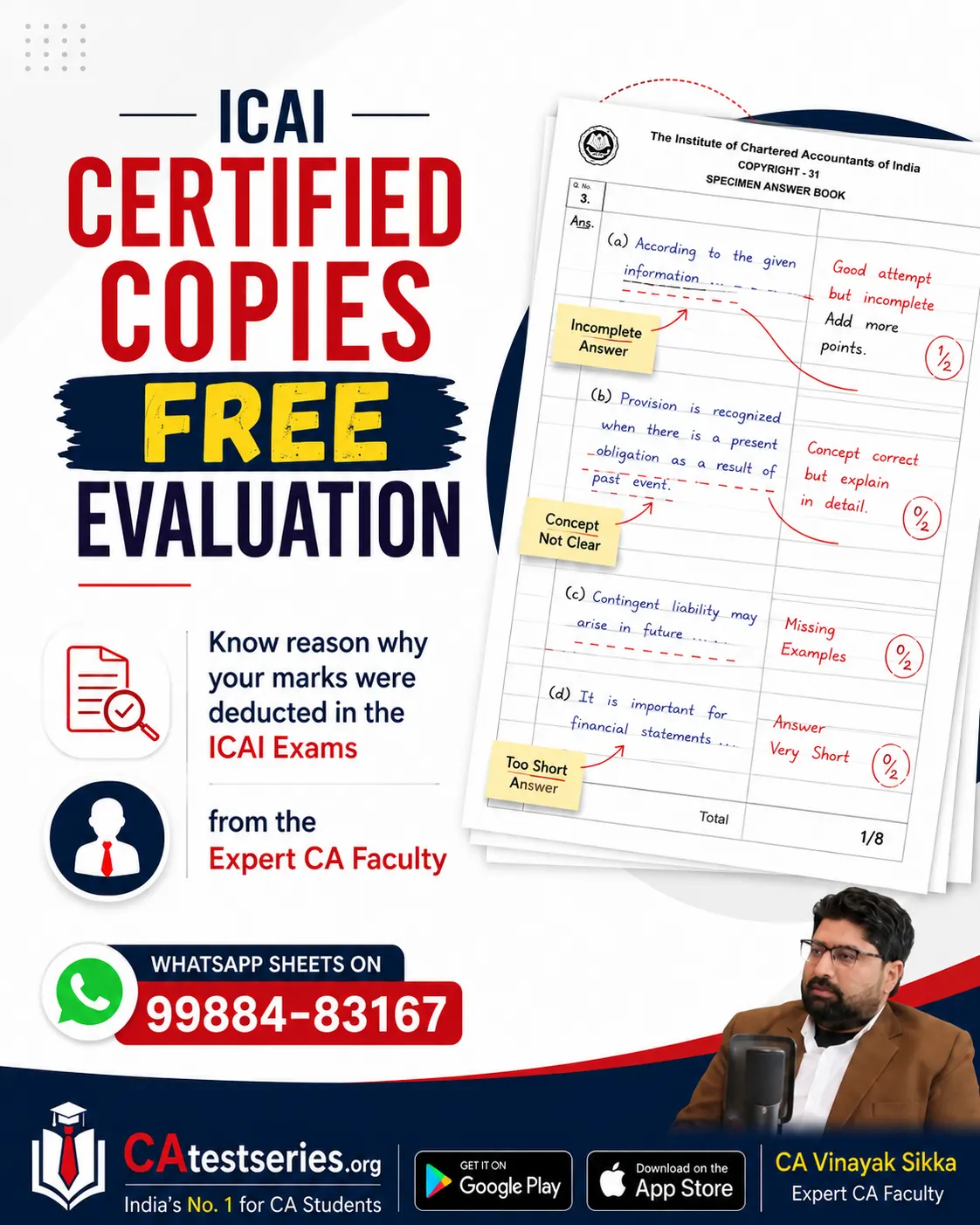
When you evaluate your own answer, you tend to give yourself marks for content you intended to write, even if it is incomplete. You overlook structural problems because you know what the full answer should look like. An evaluator reading only what is on the page cannot make those allowances.
Getting your Foundation papers evaluated by a practising CA removes that bias. You learn what your answers look like to someone reading them cold, which is exactly what happens in the actual exam.
The CA Test Series for 2026 includes Foundation-level plans with the same human evaluation model applied at Inter and Final levels.
Building the Writing Habit Early
One of the most important things a Foundation-level mock test series does is build a writing habit. Students who develop the discipline of writing full answers under timed conditions at the Foundation level find Inter and Final significantly less jarring in terms of exam format.
This is not about scoring. It is about building the instinct for:
- Planning an answer before writing it
- Using the right format (headings, working notes, calculations)
- Completing an answer within a time budget
- Moving on from a question rather than over-investing in one response
These habits take time to build. Starting at the Foundation level gives you more time to build them.
Pairing Your Mock Tests with the Right Study Resources
Mock tests work best when paired with solid conceptual preparation. If you are a Foundation student who is still working through your study materials alongside your test practice, the CA Foundation Video Lectures and Books page has structured resources from qualified faculty that complement the test and evaluation cycle.
The sequence that works well for most Foundation students:
- Complete a topic through lectures or study material
- Attempt a chapter-wise test on that topic
- Submit for evaluation and review the annotated feedback
- Revise the topic based on what the evaluation reveals
- Move to the next topic
This is slower than reading through the full syllabus first. But it produces stronger retention and fewer surprises in full mocks.
What Your Analytics Report Shows You at Foundation Level
After each evaluated test, your analytics report breaks down performance by subject and question type. At the Foundation level, watch specifically for:
- Which objective questions are you consistently getting wrong, and why?
- Are your subjective answers losing marks due to incomplete content or poor structure?
- Are you finishing papers on time, or regularly leaving questions incomplete?
The Syllabus for Test Series shows you exactly which topics and papers are covered in your Foundation plan. Use it alongside your analytics to identify which areas of the syllabus are underrepresented in your practice.
Free vs Paid Plans at Foundation Level
The free test series on the CA Test Series app offers MCQ-based tests with instant results. For Papers 3 and 4, which are objective, this is a useful revision tool.
For Papers 1 and 2, which require written answers, the free plan is not sufficient. You need subjective answer evaluation, which is only available in paid plans. If you are preparing for the Foundation and focusing heavily on Accounting or Business Laws, a paid plan that includes a written evaluation is worth the investment.
When to Start and How to Pace Yourself
A common question from Foundation students is when to start the test series. The honest answer is earlier than you think.
Recommended pacing:
- Start chapter-wise tests as soon as you complete each topic in your revision
- Do not wait until you have covered the full syllabus before beginning tests
- Aim for at least two to three full mock attempts before the exam, with evaluation on each
- In the final four weeks, focus on MTP and RTP evaluation
The Fee Structure of Test Series page shows plan options and pricing for Foundation, so you can select a plan that matches your timeline and budget.