
There is a specific phase in every CA Final preparation calendar where revision lectures become the most important tool you have. That phase is roughly six to ten weeks before the exam, after your first-pass study is complete but before you shift into full mock test mode. What you do in that window often determines whether your score moves up or stays flat.
This guide explains how CA Final revision lectures work, how to sequence them with your mock test series, and what to prioritise in that critical pre-exam period.
What Revision Lectures Are Actually For
Revision lectures are not introductory lectures watched a second time. They are condensed, application-focused reviews of a subject designed to be consumed quickly by someone who already knows the material.
The purpose of a revision lecture at the CA Final level is to:
- Reconnect you with topics you covered weeks or months earlier
- Remind you of common question patterns and how examiners frame them
- Highlight high-priority areas that are frequently tested
- Surface topics that are easy to overlook in a broad syllabus
Revision lectures are most effective when you watch them with a test in mind, not an exam months away. Watching a revision lecture the day before you attempt a full mock on that subject is dramatically more effective than watching it passively without a specific application goal.
The Sequence That Works: Lectures First, Tests Second
The sequence matters. Many students watch revision lectures and then return to their study notes. That is a missed opportunity.
The better sequence is:
- Watch the revision lecture for a subject or group of topics
- Attempt a chapter-wise or subject-level mock test immediately after
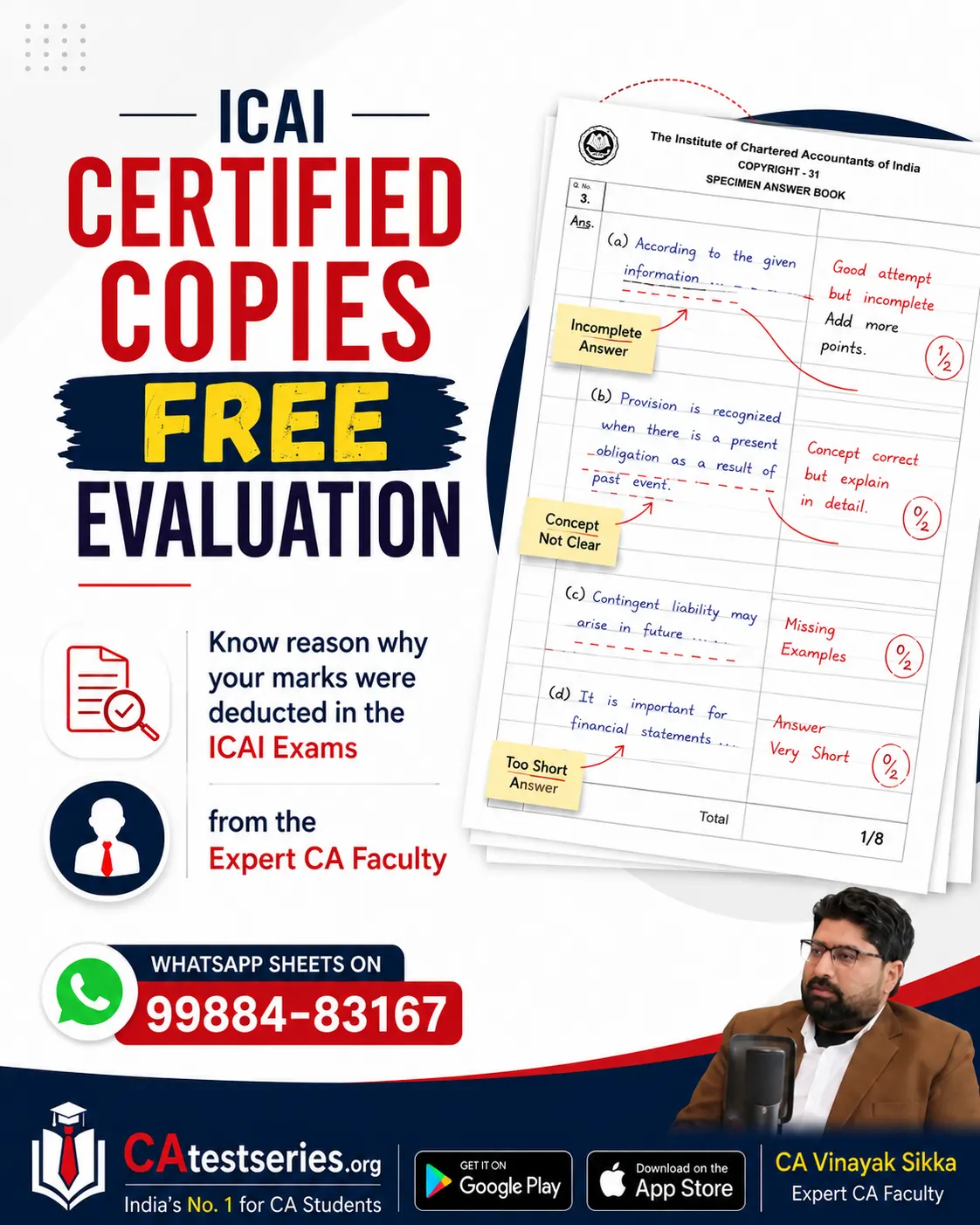
- Submit for evaluation
- Review the evaluated sheet when it returns in 2 to 3 working days
- Identify which specific points from the lecture were not reflected in your answers
- Watch the relevant section of the lecture again with those gaps in mind
This sequence converts passive learning into active output. The mock test forces you to produce an answer from what the lecture covered. The evaluation tells you where the lecture content has not yet translated into exam-quality writing.
What to Focus On in Each CA Final Subject
CA Final covers a large number of subjects across two groups. Not all topics within each subject carry equal weight. Revision lectures help you calibrate this, but here is a broad framework for prioritising at each stage:
Financial Reporting: Focus on advanced topics like consolidation, financial instruments, and IFRS comparisons. These are high-mark areas where presentation clarity determines scores.
Strategic Financial Management: Revision lectures here should focus on case-study application. Question formats change, but the underlying framework for valuation, risk, and derivatives stays consistent.
Advanced Auditing: Prioritise areas with recent standards updates and practical application questions. ICAI frequently tests newer standards at this level.
Direct Tax and Indirect Tax: Tax law changes annually. Revision lectures are particularly important here because they reflect the most recent amendments relevant to your exam cycle.
Corporate and Economic Laws: Revision at this level should focus on application-based questions rather than bare act reading. Lectures that walk through case applications are the most useful format.
Using Mock Test Analytics to Direct Your Revision Lecture Focus
One of the underused features of a test series is how it should direct your revision. After receiving your evaluated sheets and analytics report, use the following approach:
- Identify the two or three subjects where your scores are lowest
- Prioritise revision lectures for those subjects before your next mock
- Attempt the next mock on those subjects and compare the score change
This creates a directed revision cycle. You are not watching lectures because the schedule says so. You are watching them because your data shows you need them in a specific area.
You can confirm which subjects are covered in your plan at the Syllabus for Test Series page before building this schedule.
Connecting Revision Lectures to MTP and RTP Preparation
In the final four weeks before the exam, ICAI-released Mock Test Papers and Revision Test Papers become your primary practice resource. Revision lectures at this stage serve a specific function: they help you quickly recall the structure of an answer before you attempt an MTP or RTP paper.
The workflow at this stage:
- Review the relevant revision lecture for the paper you are about to attempt
- Sit for the MTP or RTP under timed exam conditions
- Submit for evaluation
- Use the feedback to identify whether your lecture-to-paper transfer is working
At this stage, every evaluated MTP and RTP is a final calibration. Do not attempt these papers without submitting them for evaluation. The CA Test Series for 2026 includes MTP and RTP evaluation as part of its higher-tier plans.
One Common Mistake to Avoid
The most common mistake CA Final students make with revision lectures is treating them as a comfort activity rather than a preparation tool. Watching a revision lecture feels productive. Writing an answer and submitting it for evaluation feels risky. That risk aversion is exactly what costs marks.
Revision lectures only translate into exam marks when they change how you write. The only way to know if they are changing how you write is to write, get evaluated, and compare.
For Foundation-level students considering how early study habits affect long-term CA preparation outcomes, the CA Foundation Video Lectures and Books page outlines the resource structure at that entry level.
Planning Your Revision Lecture and Test Series Calendar
Here is a practical structure for the six weeks before your CA Final exam:
Week 6 and 5: Revision lectures for all subjects in Group 1 and Group 2, paired with chapter-wise or subject-level tests. Submit every test for evaluation.
Week 4 and 3: Full group mocks for Group 1 and Group 2. Review the evaluated sheets as they return. Use analytics to redirect revision.
Week 2 and 1: MTP and RTP evaluation only. Focus on exam-condition writing and score consistency. Check the Fee Structure of Test Series to confirm your plan includes this level of access.