
Students searching for the best CA test series usually compare price and paper count first. Those two numbers matter, but they rarely tell you whether a test series will actually help you improve. What separates a genuinely useful test series from a mediocre one is easier to spot by looking for red flags rather than chasing a "best" label with no clear meaning. Below are six warning signs worth checking before you pay for any plan.
Red Flag 1: Scores With No Explanation
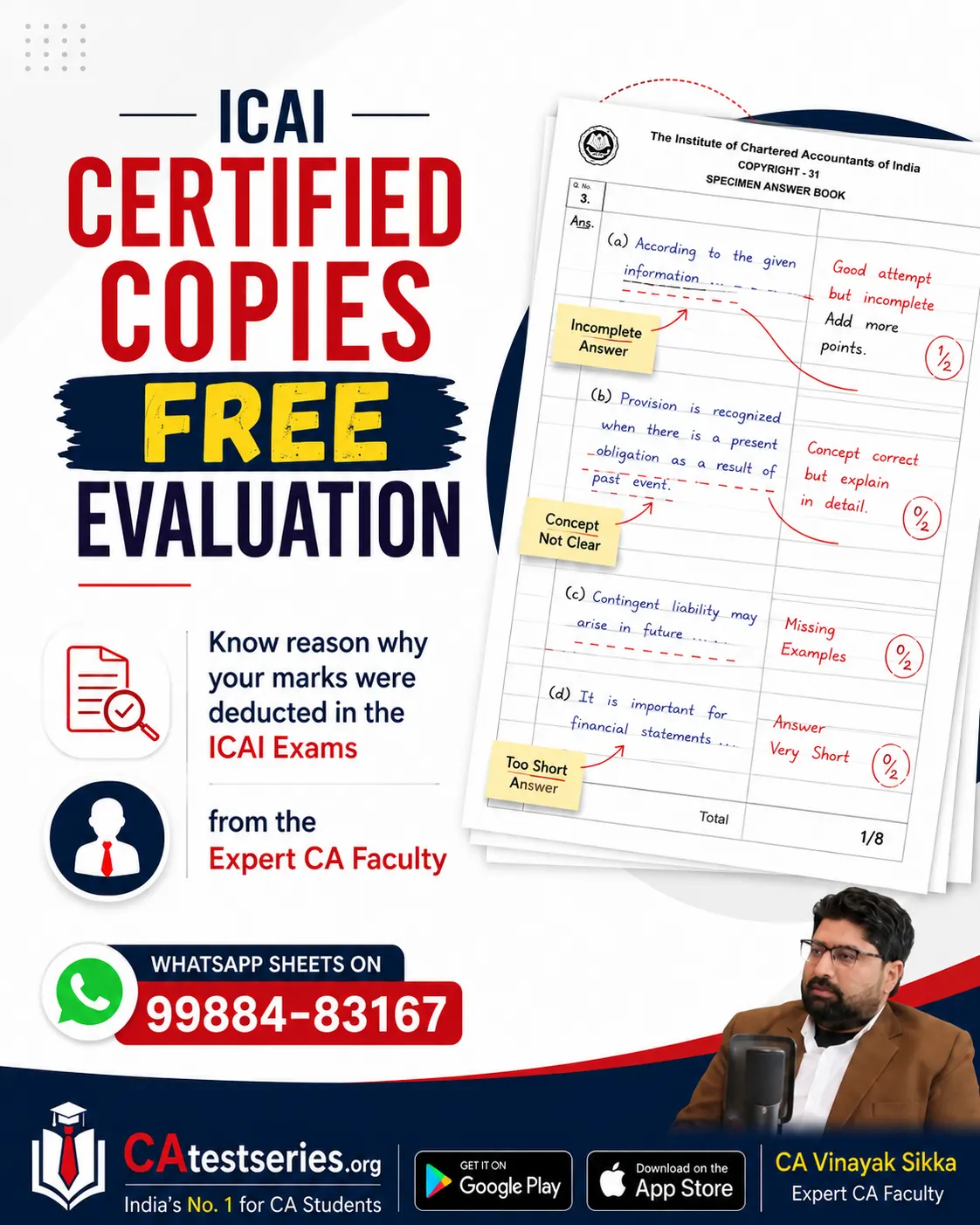
If your evaluated paper only shows a number, that is a problem. A score tells you where you stand. It does not tell you why you lost marks, whether it was presentation, missed provisions, or poor time allocation. Ask to see a sample evaluated paper before enrolling, not after.
Red Flag 2: Question Papers That Never Change
ICAI updates its exam pattern and topic weightage between sessions. A test series reusing the same static question bank year after year stops matching the real exam fairly quickly. Check whether the content is refreshed against the current syllabus before assuming it is current for your attempt.
Red Flag 3: No Group-Wise or Level-Wise Separation
CA Foundation, Intermediate, and Final each have different paper structures. Foundation has objective papers with negative marking. Inter mixes descriptive answers with case study MCQs. Final is fully descriptive with no objective section at all. A test series that treats every level the same way is not built with real attention to the exam.
Red Flag 4: Vague Marketing Language
Phrases like "highest success rate" or "guaranteed results" without any data behind them are marketing, not information. A credible test series will describe what it offers clearly: number of mocks, evaluation turnaround time, and what the fee actually covers. If you cannot find that detail, that itself is worth noticing.
Red Flag 5: No Clarity on Cost Before You Commit
Some platforms hide the real cost until late in the signup process, or charge separately for feedback that seems included at first glance. Review the fee structure directly before enrolling, and confirm what is bundled and what is not.
Red Flag 6: No Flexibility for Non-Traditional Students
Working professionals, articleship trainees, and self-study aspirants often cannot commit to fixed test dates. A rigid schedule with no self-paced option quietly excludes a large share of CA students. Flexibility is not a bonus feature; it is a basic requirement for many aspirants.
So What Should You Actually Look For?
Instead of chasing the loudest marketing claim, look for these three things together:
Detailed, written evaluator feedback on every paper
Content that matches your specific level and current syllabus
A fee structure and schedule that is clear and flexible from day one
Is Price the Right Way to Compare Options?
Not on its own. A cheaper plan with vague scoring and no feedback often costs you more in the long run, since you end up repeating the same mistakes without knowing why. Compare value per rupee spent, not just the headline price.
How Should You Test a Platform Before Committing Fully?
Where possible, attempt a single paper or trial test before enrolling in a full plan. This gives you a direct look at question quality, evaluation depth, and turnaround time without committing your full budget upfront.
Compare your shortlisted options against these six checks before choosing a CA test series, rather than going with whichever one markets itself the loudest.