
Debit and Credit Rules: The Logic Behind Every Journal Entry
Accounting courses teach the basics of journal entries, but many people learn the concepts without understanding the logic behind debits and credits. CA Vinayak Sikka, faculty at CAtestseries.org, explains the logic behind the double-entry system in detail.
This blog will take you through the entire concept of debit and credit in a structured way.
What is a Journal Entry?
A journal entry is the first accounting record of any business transaction. Every business transaction will have at least two accounts; that is the basic principle of the Double Entry System. In one account there is a debit entry, while in another account there is a credit entry, but total debits are always equal to total credits.
Total Debits = Total Credits
This formula is not accidental; rather, it has been derived from the accounting equation.
The Accounting Equation Concept Behind Debit and Credit Rules
All debit and credit concepts are explained following the accounting equation.
Assets = Liabilities + Capital
The equation stays balanced because every transaction affects at least two accounts by equal and opposite amounts; this is the basis of every debit and credit rule.
The Three Classifications of Accounts (Traditional Approach)
Account Type | Debit When | Credit When |
Personal Account | Receiver | Giver |
Real Account | What comes in | What goes out |
Nominal Account | Expenses & Losses | Incomes & Gains |
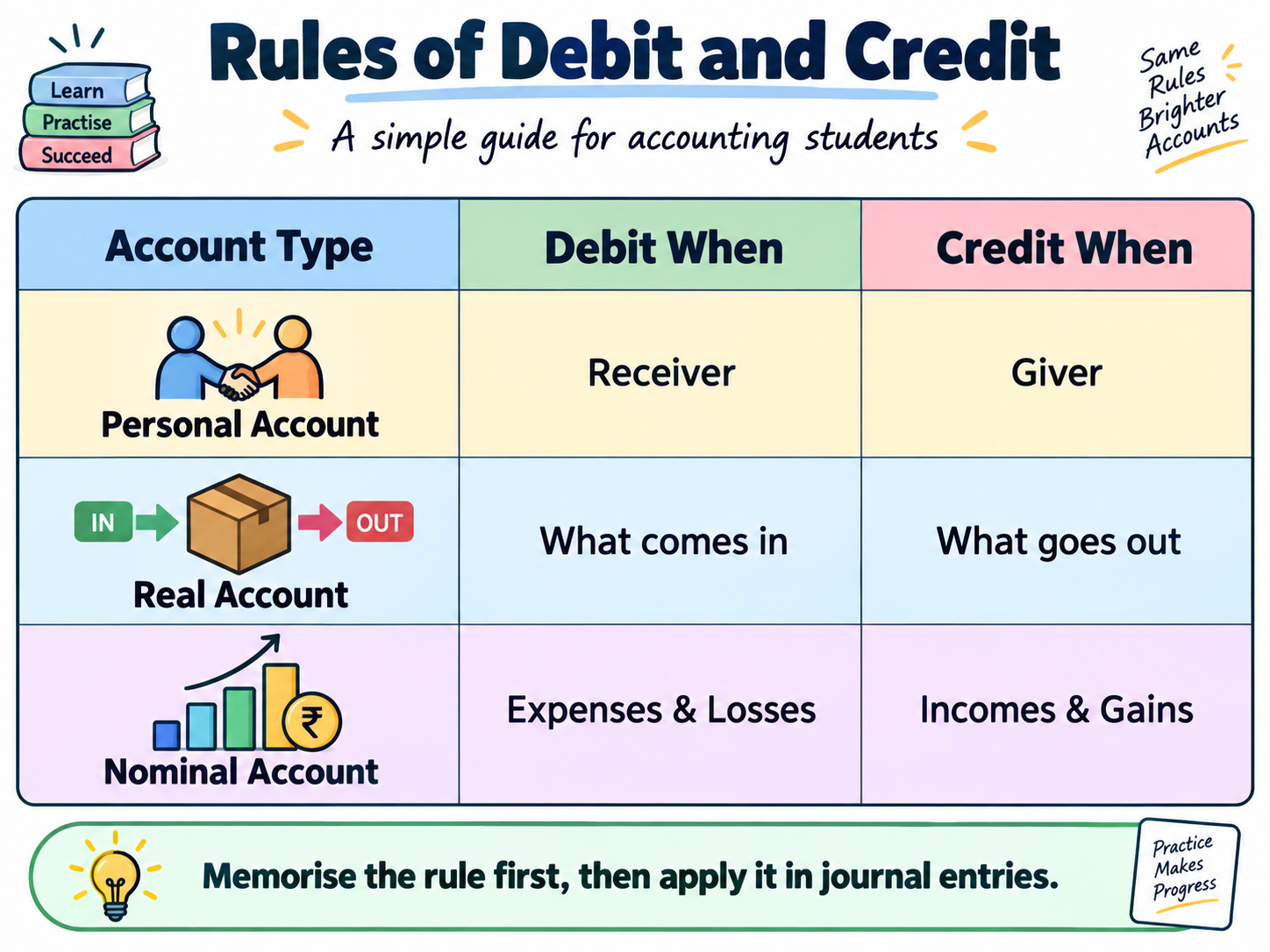
This is the classic "Golden Rules" approach still widely taught for building conceptual clarity before moving to the modern method.
The Modern (Accounting Equation) Approach
Account Category | Increase | Decrease |
Assets | Debit | Credit |
Liabilities | Credit | Debit |
Capital and Equity | Credit | Debit |
Revenue and Income | Credit | Debit |
Expenses and Losses | Debit | Credit |
CA Vinayak Sikka focuses on this approach, and it brings a direct link between the entries made and the accounting equation.
CA Vinayak Sikka: Accounting Expert

CA Vinayak Sikka is highly experienced in the application of accounting. The teaching approach adopted by him includes accounting principle practice. It covers the advantages of having knowledge of the subject based on his industry experience, case studies, and easier methods. He provides personal guidance to students on accounting compliance, accounting standards, tax practice, and professional documentation.
Highlights:
Corporate experience as Senior Manager, HDFC Bank (3 years)
Expertise: Accounts
Incorporates banking sector transaction-based perspective into accounts education
Develops practical accounting study material and question banks
Free Study Material Source
Concept Notes | |
Previous Year Papers | |
Important Questions | |
Question Bank | |
Charts and Notes |
Why This Logic Works: The True Reason
Credits and debits do not indicate movement of value. Each transaction has:
Credit = the source: where value comes from
Debit = the destination: where value goes to
Since value is not created or destroyed during a transaction but simply moved, the sum total of debits will always be equal to the sum total of credits.
Step-by-Step Method to Pass Any Journal Entry
Step | Action |
1 | Identify the two accounts involved |
2 | Classify each account (Asset, Liability, Capital, Income, Expense) |
3 | Determine if each account is increasing or decreasing |
4 | Apply the modern rule (Dr/Cr) accordingly |
5 | Check: Total Debit = Total Credit |
Practical Example of Accounting
Transaction | Accounts Involved | Journal Entry |
Started business with cash ₹1,00,000 | Cash (Asset), Capital | Cash A/c Dr 1,00,000 / To Capital A/c 1,00,000 |
Purchased goods for cash ₹20,000 | Purchases (Expense), Cash (Asset) | Purchases A/c Dr 20,000 / To Cash A/c 20,000 |
Sold goods on credit ₹15,000 | Debtors (Asset), Sales (Income) | Debtors A/c Dr 15,000 / To Sales A/c 15,000 |
Paid rent ₹5,000 | Rent (Expense), Cash (Asset) | Rent A/c Dr 5,000 / To Cash A/c 5,000 |
Received commission ₹2,000 | Cash (Asset), Commission (Income) | Cash A/c Dr 2,000 / To Commission A/c 2,000 |
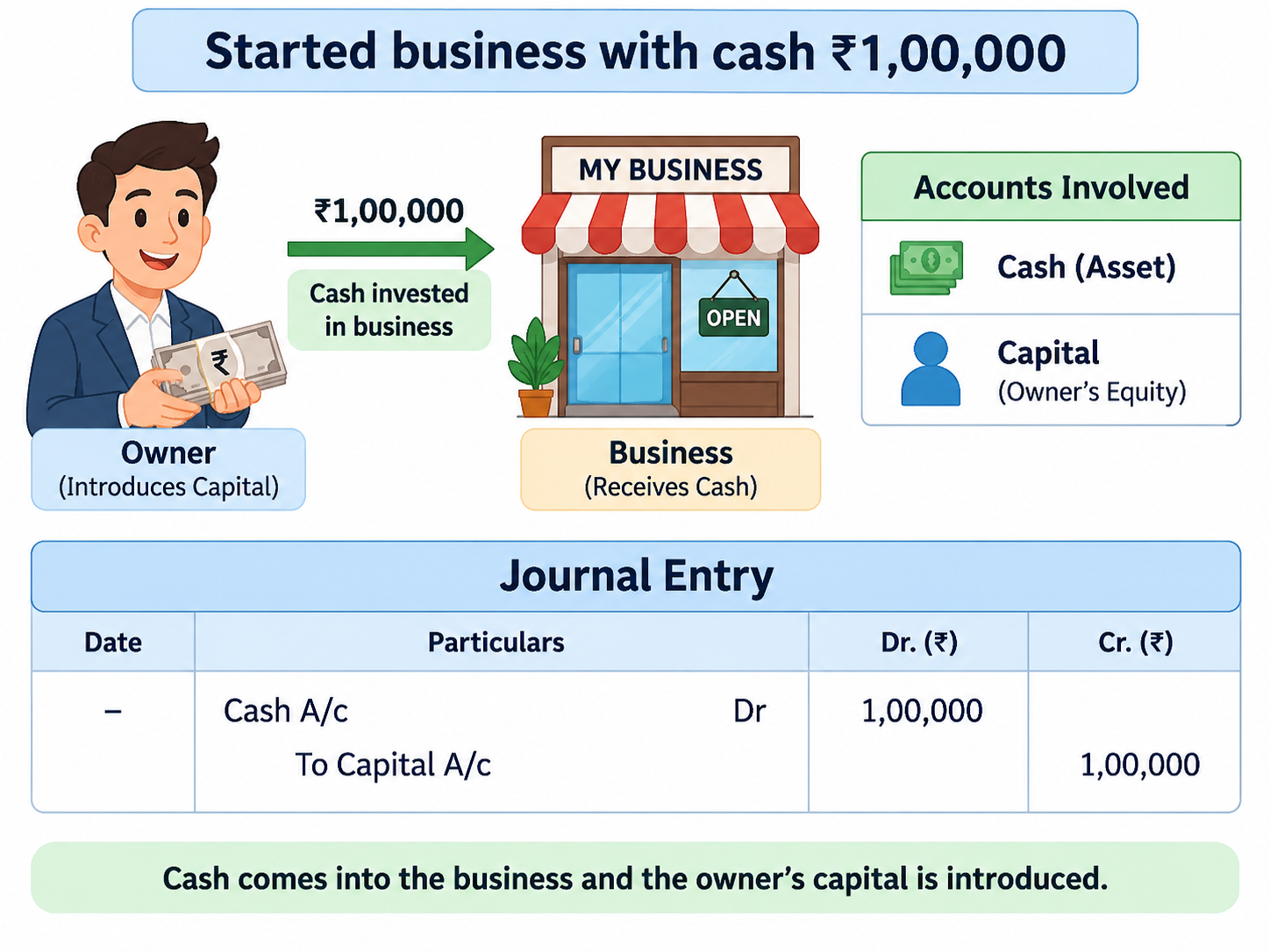
Examples of Adjusting Entries (Accrued, Prepaid, and Depreciation)
In adjusting entries, many students lose marks, as the "receives/gives" logic becomes faulty. Below is how the same five-step approach is applied to all three of them.
1. Accrued Income (commission earned but not yet received, Rs 3,000): The income has been earned and should be recorded regardless of the lack of cash receipt. "Accrued Commission" is a receivable (asset).
Accrued Commission A/c Dr. 3,000 / To Commission Received A/c 3,000
2. Prepayment Entry (advance payment for insurance, ₹12,000, for the next 12 months): Money has gone out of the business, but the expense is not used yet — hence its recording as an asset (prepaid insurance).
When the payment is made:
Prepaid Insurance A/c Dr. 12,000 / To Cash A/c 12,000
At the end of each month, the portion actually used (₹1,000) is moved from asset to expense:
Insurance Expense A/c Dr. 1,000 / To Prepaid Insurance A/c 1,000
3. Depreciation (machinery costing ₹50,000 depreciated at 10%): The value of machinery is declining; therefore, a cost is incurred, and the value of the asset goes down through a provision account.
Depreciation A/c Dr. 5,000 / To Provision for Depreciation A/c 5,000
Common Mistakes
Incorrect use of "receiver and giver" when using "who benefits" rather than "who receives the physical value"
Using golden rules without identifying the account type properly first
Failing to realise that capital rises when credit goes up (because credit is a liability of the firm to its owner)
Mismanaging expense and asset classification such as for prepayments or fixed assets
Why CA Students Must Learn This From the Beginning
Journal entries form the basic foundation for:
Ledger entries
Trial Balance Preparation
Final Accounts (Income Statement & Balance Sheet)
Advanced topics like Partnership Accounts, Company Accounts, and Consolidated Accounting
Failure to the fundamentals of debit and credit rules leads to compounding errors in all advanced topics, which is the reason why CA Vinayak Sikka stresses more on concept building than on any other memorising technique.
How Does CA Vinayak Sikka Teach This Topic?
Beyond textual descriptions of debit and credit, CAtestseries.org ensures that students understand the concept and do not just remember it for the duration of the test. Here are the features that are available to students:
Animated Video Lectures: These break down each transaction into animated, step-by-step visuals instead of plain text explanations.

Structured Notes: They also provide ICAI Exam Pattern-based, concept-wise notes that match the exam pattern, thus helping students prepare in an efficient manner.
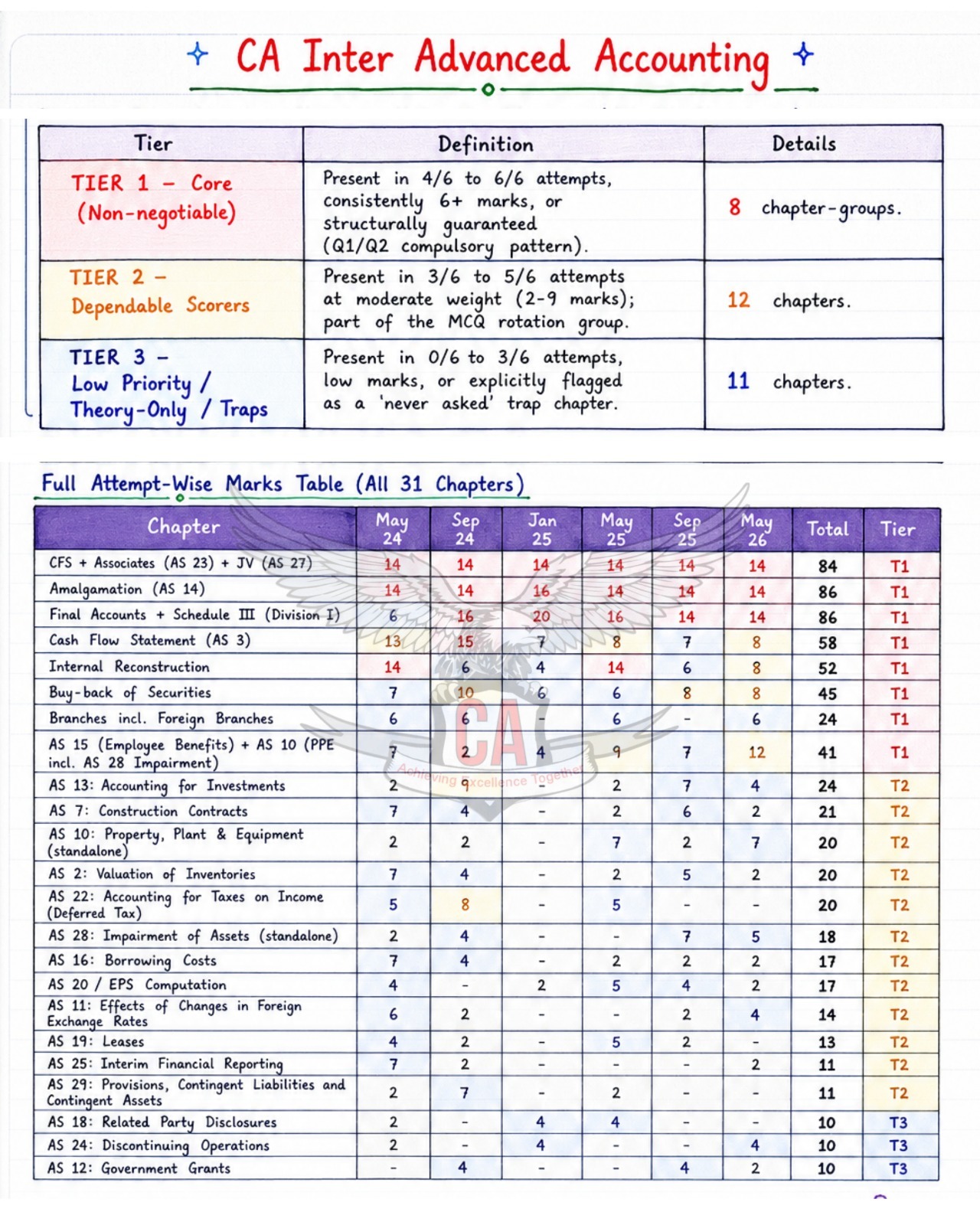
Practice Questions: An extensive bank of practice questions on journal entries that start from simple entries to compound and adjustment entries.
Doubt Clarification Help: Personal interaction to clear doubts regarding difficult journal entries (such as accrued income, prepaid expenses, and depreciation) from the faculty.

Practice Tests and Test Series: These tests help students identify their weak areas and correct them before the exam.
Conceptual Teaching by CA Vinayak Sikka: The mode of teaching by the expert is such that instead of learning rules by heart, each journal entry is taught practically.
This combination of visual learning, practice tests, and conceptual teaching is the reason why CAtestseries works wonders for students.
Important Numerical Question for Accounting
Question 1. X Ltd is commencing a new construction project, which is to be financed by borrowing. The key dates are as follows: i) 15th May, 20X1: Loan interest relating to the project starts to be incurred; ii) 2nd June, 20X1: Technical site planning commences;s iii) 19th June, 20X1: Expenditure on the project starts to be incurred;d iv) 18th July, 20X1: Construction work commences. Identify the commencement date for capitalisation under AS 16. a) 15th May, 20X1
b) 19th June, 20X1
c) 18th July, 20X1
d) 2nd June, 20X1
Ans: (b) Reason: According to AS 16 - Borrowing Costs, borrowing costs should be capitalised as part of the cost of a qualifying asset (in this case, the construction project). The key points for capitalising borrowing costs are: The commencement date for capitalisation is the date when the expenditure on the project starts to be incurred, and the activities necessary to prepare the asset for its intended use are underway.
Question 2. Which of the following statements is correct:
a) Entire exchange gain is reduced from the cost of the Qualifying asset.
b) Entire exchange loss is added to the cost of a Qualifying asset.
c) No adjustment is done for the exchange loss while computing the cost of the qualifying asset.
d) None of the above
Ans: (c) According to AS 16 - Borrowing Costs, exchange differences are dealt with in the following manner when they relate to a qualifying asset: Exchange Gain/Loss on Borrowings: When a foreign currency loan is used to finance a qualifying asset, the exchange gains or losses on the loan are generally not directly added to or deducted from the cost of the qualifying asset.
Question 3. If the amount eligible for capitalisation in case of inventory as per AS 16 is Rs. 12,000 and the cost of inventory is Rs. 40,000 and its net realisable value is Rs. 45,000; what amount can be capitalised as a part of inventory cost?
a)Rs. 12,000
b)Rs. 5,000
c) Rs. 7,000
d) Rs. 10,000
Ans: (b) Reason: According to AS 16 - Borrowing Costs, the amount eligible for capitalisation in the case of inventory is the borrowing costs incurred on the acquisition, construction, or production of inventory that can be directly attributed to the inventory. However, the capitalisation of such costs is limited by the lower of the cost or the net realisable value (NRV) of the inventory.
Question 4. As per AS 16, all the following are qualifying assets except
a) Manufacturing plants and Power generation facilities
b) Inventories that require a substantial period of time
c) Assets that are ready for sale.
d) None of the above (Study Material)
Ans: (c) Reason: According to AS 16 - Borrowing Costs, a qualifying asset is an asset that requires a substantial period of time to get ready for its intended use or sale. The main principle is that borrowing costs can be capitalised as part of the cost of a qualifying asset, provided the costs are incurred during the period necessary to bring the asset into use or sale.
Question 5. Capitalisation rate considers:
a. Borrowing costs on general borrowings only.
b. Borrowing costs on general and specific borrowings both.
c. Borrowing costs on specific borrowings only.
d. None of the above (Study Material)
Ans: (a) Reason: The capitalisation rate is used to determine the rate at which borrowing costs should be capitalised in the cost of a qualifying asset under AS 16 - Borrowing Costs. The capitalisation rate depends on the nature of the borrowings used to finance the asset and is determined as follows: Specific Borrowings: When a qualifying asset is financed by specific borrowings (loans directly attributed to the purchase, construction, or production of the asset), the actual borrowing costs on those specific borrowings are capitalised. These costs are directly attributable to the qualifying asset.
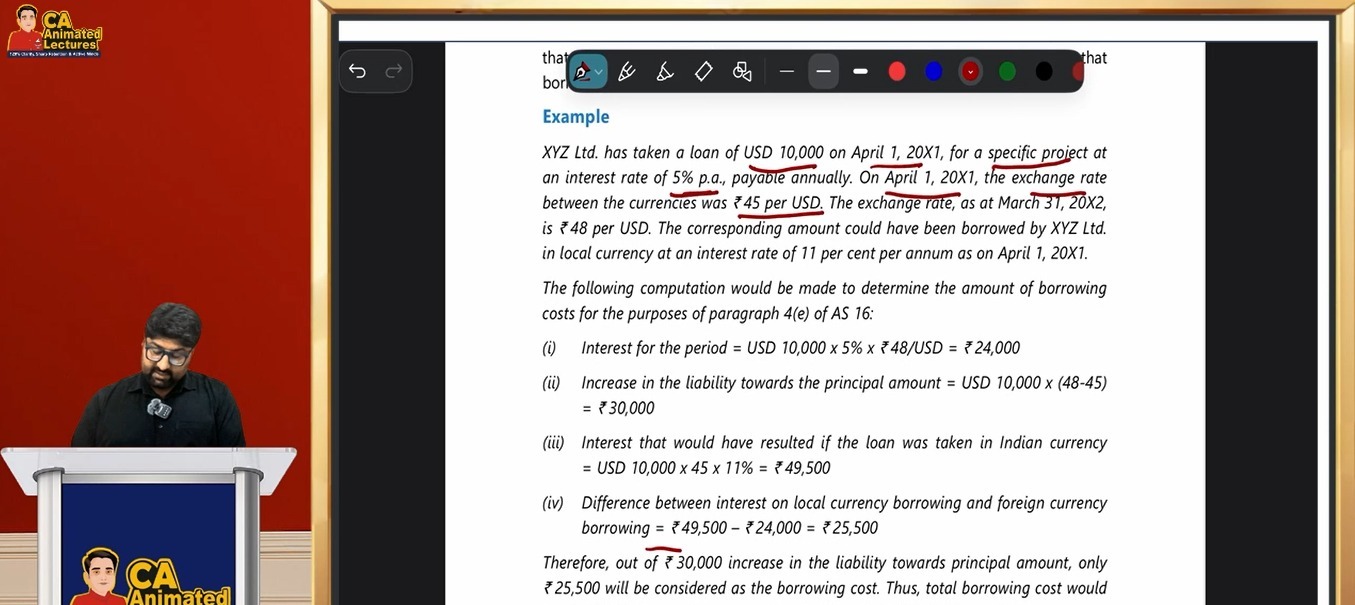
For more of these types of questions and practical examples, students can follow CA Vinayak Sikka.
CA Vinayak Sikka: CA Inter Advanced Accounting Exam Oriented Batch
Faculty | CA Vinayak Sikka |
Batch Type | Exam Oriented |
Lecture Duration | Approx. 31 Hrs |
Features | Instant Access, Expert Support, Latest Syllabus, Secure Checkout |
Cost | Rs 2000 only |
Click Here: Buy Now
Enrol Now: CAtestseries.org
Conclusion
Debit and credit rules are not random rules to be memorised; rather, they are a direct result of the accounting equation being in balance after each transaction. Once a student realises that every debit always denotes an incoming value (assets and expenses) and every credit denotes an outgoing value (liabilities, incomes, and capital), the whole process becomes clear. Understanding this point, as CA Vinayak Sikka explains in CAtestseries, forms the basis for accounting in the future.