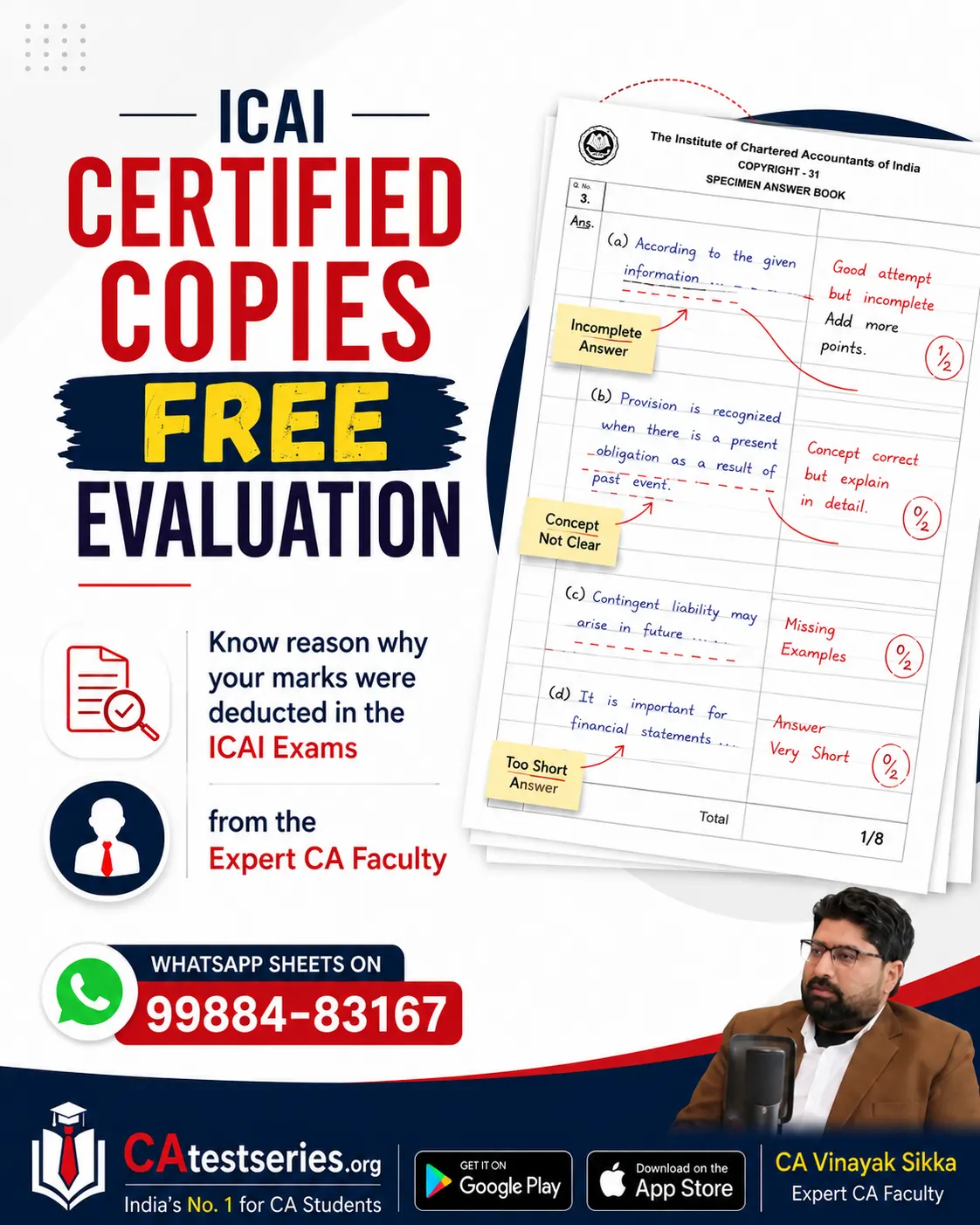
CA Final RTP May 2026 papers released by ICAI serve as your diagnostic checkpoint before the May 2-12 exam window. Unlike generic practice materials, these revision test papers embed the latest syllabus amendments and reflect actual exam difficulty. This guide walks you through strategic RTP usage, performance analysis, and integration with comprehensive test series platforms to maximize your final revision phase.
Understanding CA Final RTP May 2026: Structure and Strategic Value
The Institute of Chartered Accountants of India (ICAI) released the CA Final Revision Test Papers (RTPs) for May 2026 to help students reinforce their understanding of the core concepts of the CA Final syllabus. The RTP can be considered as a bridge between the study material and the actual examination, as it reflects the latest modifications and practical-oriented questions.
RTPs differ fundamentally from casual practice papers. Each RTP contains new questions and answers based on latest amendments and updates applicable for CA Final Exam. This distinction matters because ICAI embeds regulatory changes and emerging topics directly into RTP questions—making them predictive of exam content.
Why RTPs Matter More Than Generic Mock Tests:
- The CA RTPs for Final are a good way to understand the exam pattern, topic-wise weightage, marking scheme, etc.
- RTPs will aid in gaining clear concepts and proper presentation skills in subjective papers.
- Practicing in an exam-like environment will increase your speed and accuracy.
- Practicing RTPs of at least the past 2 years will help you identify the trends and important topics.
The timing of RTP release is critical. The Institute of Chartered Accountants of India usually releases RTPs two months before the CA Final exam attempt. For May 2026, this means RTPs arrived in March—giving you a compressed but high-impact revision window.
The 30-Day RTP Mastery Strategy: From Download to Exam Hall
Solving RTPs randomly wastes their diagnostic power. A structured approach extracts maximum learning per attempt. Here's the framework that separates high scorers from average performers:
Phase 1: Baseline Assessment (Days 1-3)
Attempt one full RTP under exam conditions—no notes, no breaks, strict time limits. This reveals your actual weak zones before revision begins. Record your score, time taken per question, and subjects where you lost marks.
Phase 2: Concept Reinforcement (Days 4-15)
After identifying weak areas, return to your study material and explore Catestseries comprehensive test series, which provides subject-wise breakdowns aligned with RTP difficulty levels. This platform bridges the gap between RTPs and full-length mock tests by offering chapter-wise practice that targets specific RTP question types.
Phase 3: Solution Analysis (Days 16-22)
Each RTP generally includes exam-style questions along with solutions and explanations for CA Final exams. The solutions explain the approach and reasoning behind each answer. This helps students learn exam presentation for CA Final exams. Spend 60% of this phase studying solutions, not re-solving questions. Understand why answers are structured a certain way—this is where presentation marks come from.
Phase 4: Full-Length Integration (Days 23-28)
Attempt remaining RTPs as part of full-length mock test cycles. This trains your stamina and decision-making under fatigue—a critical exam-day variable.
Phase 5: Final Calibration (Days 29-30)
Review only your mistake patterns. Don't attempt new questions; instead, revisit 3-4 questions from each subject where you made conceptual errors.
RTP vs. MTP vs. Past Papers: Which Tool Solves What Problem
Students often conflate RTPs, MTPs (Mock Test Papers), and past exam papers. Each serves a distinct purpose in your revision hierarchy:
Tool | Release Timing | Best Use Case | Difficulty Level |
| RTP (Revision Test Papers) | 2 months before exam | Identify weak topics; practice presentation | ICAI-aligned, moderate-to-high |
| MTP (Mock Test Papers) | 3-4 months before exam | Full-length simulation; time management | Slightly easier than actual exam |
| Past Papers (5+ years) | Always available | Trend analysis; question pattern recognition | Varies; older papers easier |
While it is an extremely useful resource, it should always be supplemented by other study materials like those issued by ICAI, MTPs, and previous year question papers. It is always recommended to prepare RTPs of the last 2-3 years. It will help you keep up with any changes in the examination trend.
The strategic sequence: Start with past papers (5 years) to understand baseline patterns → Move to MTPs for full-length stamina building → Finish with RTPs for final-stage precision and amendment awareness.
For students using CA Test Series for 2026, this platform integrates all three tool types into a cohesive progression, eliminating the fragmentation of downloading from multiple sources.
Integrating RTPs Into Your Broader Test Series Strategy
RTPs alone don't guarantee success—they're one component of a layered preparation system. The most effective students combine RTPs with structured test series that provide:
- Chapter-wise tests (for targeted weak-area drilling)
- Subject-wise full papers (for single-subject stamina)
- Full-length mock tests (for integrated exam simulation)
Practice ICAI Revision Test Papers with a smart 30-day strategy to improve accuracy, time management, and exam performance. Platforms like Catestseries embed this progression into their test series architecture, allowing you to move seamlessly from chapter-level practice to RTP-level difficulty to full-length mocks.
The integration sequence:
- Complete chapter-wise tests for all subjects (Weeks 1-4 of your 8-week revision)
- Attempt subject-wise full papers (Weeks 5-6)
- Solve RTPs under exam conditions (Weeks 7-8)
- Review RTP solutions and weak-area drills (Final week)
This layered approach ensures you're not jumping directly from textbook study to exam-level difficulty. Each layer builds the specific skill the next layer demands.
For students preparing across multiple CA levels, Syllabus for Test Series provides the exact topic mapping, ensuring your RTP practice aligns with the current ICAI curriculum.
Common RTP Mistakes That Cost Marks on Exam Day
Understanding what RTPs measure is only half the battle. Avoiding common mistakes during RTP practice prevents those same errors in the actual exam.
Mistake 1: Attempting RTPs Too Early
The best time to begin solving RTPs would be once you have completed your syllabus or while revising at last. Attempting RTPs before finishing your syllabus creates false confidence (you'll score low) or false despair (you haven't learned the material yet). RTPs are a revision tool, not a learning tool.
Mistake 2: Solving Without Reviewing Solutions
Many students treat RTPs like practice papers—solve, check the answer key, move on. This misses the entire value proposition. If one makes an appropriate use of these, then they can understand the pattern of the examination, develop their conceptual knowledge base, and become proficient in writing answers. Spend 2-3 hours reviewing each RTP's solutions, not 30 minutes solving it.
Mistake 3: Ignoring Presentation Feedback
RTP solutions show how to present answers—the exact format, working layout, and explanation depth ICAI expects. Copying this format during practice trains your muscle memory for exam day. Ignoring it means you'll invent your own format under exam stress, losing marks unnecessarily.
Mistake 4: Not Tracking Trends Across Multiple RTPs
Questions may not be directly asked, but there are certain similarities in the concepts and the way questions are phrased in both types of tests. After solving 2-3 RTPs, patterns emerge—certain topics appear repeatedly, specific question types dominate, particular subjects carry higher weightage. Documenting these trends guides your final-week focus.
Mistake 5: Treating All Subjects Equally
RTPs reveal subject-wise difficulty variation. If you're scoring 85% in Auditing but 55% in Financial Reporting, your revision should weight Financial Reporting 3:1. Yet many students spend equal time on all subjects. Let RTP data drive your allocation.
Accessing and Organizing CA Final RTP May 2026 Materials
RTPs are available from multiple sources, but quality and organization vary significantly.
Official ICAI Source (BOS Portal)
CA Final Revision Test Papers for May 2026 can be downloaded in PDF format from the official website of ICAI. The ICAI Board of Studies (BOS) portal releases RTPs subject-wise, with official suggested answers. This is the authoritative source but requires manual downloading and organization.
Third-Party Aggregators
Platforms like Catestseries compile RTPs from multiple years into organized, subject-wise folders with searchable databases. This saves 2-3 hours of manual downloading and organizing. Additionally, these platforms often provide:
- RTP compilers (all subjects in one document)
- Annotated solutions with additional explanations
- Performance tracking across multiple RTP attempts
- Integration with chapter-wise and full-length mock tests
Organization Best Practice:
Create a folder structure:
CA Final RTP May 2026/ ├── Group 1/ │ ├── Financial Reporting/ │ ├── Strategic Financial Management/ │ └── Advanced Auditing/ ├── Group 2/ │ ├── Corporate & Allied Laws/ │ ├── Indirect Taxes/ │ └── Direct Taxes/ └── Solutions/
This structure allows quick access during revision and prevents the chaos of scattered PDFs across your desktop.
For comprehensive test series that include RTPs alongside chapter-wise and full-length mocks, CS Test Series for Jun 2026 and CMA Test Series for Jun 2026 demonstrate how professional platforms organize multi-level test materials for seamless progression.
Final Checklist: Your RTP Mastery Action Plan
Use this checklist to ensure you're extracting maximum value from CA Final RTP May 2026:
Pre-RTP Phase (Before Attempting):
- Completed full syllabus revision at least once
- Downloaded all RTP PDFs from ICAI BOS or an aggregator platform
- Organized RTPs into subject-wise folders
- Identified your weakest 2-3 subjects from previous mock tests
- Set a target score (typically 70%+ indicates exam readiness)
RTP Attempt Phase:
- Attempted first RTP under strict exam conditions (no notes, time limits)
- Recorded score, time per question, and subject-wise breakdown
- Reviewed solutions for 2-3 hours per RTP (not just answer keys)
- Documented presentation gaps and conceptual errors
- Attempted 2-3 additional RTPs over 2-3 weeks
Analysis & Refinement Phase:
- Identified recurring weak topics across multiple RTPs
- Drilled weak-area questions using chapter-wise tests
- Practiced presentation format using RTP solution templates
- Tracked time efficiency improvements across RTP attempts
- Integrated RTP insights into your final-week study plan
Integration Phase:
- Attempted full-length mock tests after RTP completion
- Verified that RTP weak areas improved in full-length mocks
- Adjusted exam strategy based on RTP performance patterns
- Reviewed RTP solutions one final time (48 hours before exam)
Completion of this checklist ensures you're not just practicing RTPs—you're systematically converting RTP insights into exam performance gains.