10 Accounting Adjustments CA Inter Students Commonly Skip in Exams
What happens when you skip adjustments
Adjustments are important for preparing correct financial statements.
Skipping any adjustment can affect the final answer and conclusion.
Students should never treat adjustments as optional.
Every adjustment has an important impact on the final calculation.
Read all adjustment instructions carefully before solving the question.
Check each adjustment and apply it correctly in the answer.
How Vinayak Sikka assures you can’t skip accounting adjustments
The accounting adjustments students most commonly skip in exams are outstanding expenses, prepaid expenses, depreciation, closing stock, bad debts, accrued income, interest on capital and drawings, provisions for expenses, goods withdrawn for personal use, and managerial commission.
These adjustments are one of the most scoring and most error-prone parts of CA Inter Advanced Accounts. CA Vinayak Sikka, who brings strong industry experience to this paper, teaches it with an emphasis on theoretical understanding, practicality, and exam-oriented preparation. Theoretical understanding and cross-checking of both effects can help students avoid common mistakes in their exams. In this article, we have discussed each of these 10 adjustments in detail.

Why Do Students Miss Accounting Adjustments in Exams?
Reason | What Happens |
Reading Too Quickly | Students may miss important details in the question. |
Focusing Only on Trial Balance | Adjustments given separately may be ignored. |
Memorising Without Understanding | Students might use the wrong approach in case of a slight change in the wording of the question. |
Not Checking Both Effects | One effect may be recorded while the other is missed. |
Poor Time Management | Rushing may lead to missed adjustments and calculation errors. |
10 Accounting Adjustments CA Inter Students Skip in Exams
1. Outstanding Expenses
This refers to expenses that have been made in the present accounting period but have not yet been paid.
Mistake: The students remove the expense from the trial balance without considering the outstanding expense
Example: Trial Balance Salary = ₹70,000
Outstanding Salary = ₹10,000
Salary Expense Total = ₹80,000
Effect on Accounts:
This outstanding amount must be debited in the expense account.
This is because it is considered as a liability.
It is necessary to verify the outstanding expenses before preparing the accounting entries.
2. Prepaid Expenses
Prepaid expenses are those expenses which are prepaid in advance for some future period.
Mistake: Students take the total amount appearing in the trial balance as the expense of the current year.
Example: Insurance Paid = ₹70,000
Prepaid Insurance = ₹12,000
Expense of Current Year = ₹58,000
Accounting Treatment:
Subtract the prepaid amount from the expense.
Present it as a current asset.
Make sure that you always see the period referred to in the adjustment.
3. Depreciation
It is common practice to adjust for depreciation in accounting examination problems. Sometimes students miss this or use the wrong rate of depreciation or apply the depreciation to the wrong number.
Before calculating depreciation check:
Cost of the asset or carrying amount.
Depreciation rate or method.
New or disposed-of asset.Whether depreciation has been provided for.
Accounting Impact: It lowers the profit and the carrying amount of the asset.
4. Closing Stock
Closing inventory can be seen in accounting exams quite frequently. Students can either record it in one place or make mistakes with its valuation.
Check the following:
Amount of closing inventory.
Proper valuation method.
Damaged or obsolete items.
Wrongly included or excluded items.
Items held on behalf of others.
Effect on Accounting: Closing inventory influences profit, and it is also reported as an asset in the balance sheet.
Be sure to review the adjustment thoroughly before completing your accounts.
5. Provision for Bad Debts and Doubtful Debts
These types of provisions are often made and frequently lead to errors by students.
Mistake: Application of the percentage for provision to an incorrect figure.
Check the following before doing your calculation:
Closing Trade Receivables.
Bad Debts to be added.
Provision made previously.
Percentage to be charged.
Key Point: Make any adjustments necessary first before calculating the provision.
Working Note — Provision for Doubtful Debts
Step 1: Net Receivables = Trade Receivables (closing) − Additional Bad Debts
Step 2: Doubtful Debt = Net Accounts Receivable × Provision Percentage
6. Accrued Income
Accrued revenue refers to income which is earned for the current year but has not been received.
Mistake: Students include only the amount of revenue received but omit the receivable part.
Example: Interest Received = ₹30,000
Accrued Interest = ₹5,000
Total Income = ₹35,000
Accounting Treatment:
Increase the accrued figure in income.
Post it as an asset/receivable.
Remember to consider the treatment of the entry from both aspects.
7. Interest on Capital and Drawings
Students often fail to account for interest computations since they are more interested in the figures. Interest on capital/drawings must be computed according to the amount, duration, and interest rate.
Consider the following:
Opening capital.
Drawings made during the year.
Dates of the changes.
Interest rate.
Mistake: Computing the interest on the opening figure throughout the year without regard to changes.
8. Expenses or Liabilities Provision
Expenses or liabilities related to the current accounting period but to be paid later may be overlooked by students.
Mistake: Ignoring an expense because payment has not yet been made.
How to Avoid It: Check whether the expense or liability relates to the current year. If applicable, recognise it according to the relevant accounting requirements.
Remember: An expense may need to be recognised even if payment is made later.
9. Goods Withdrawn for Personal Use
Goods withdrawn for personal use by the owner or partner do not form part of regular business expenditure. They usually involve either drawings or purchases/inventory.
Mistake: The students do not make any adjustment to the purchase account but only forget about recording the withdrawal.
Look for words like
Goods withdrawn.
Goods withdrawn for personal use.
Goods withdrawn by proprietor.
Goods withdrawn by partner.
10. Managerial Commission
Managerial commission might cause problems since it may be based on profit before or after commission.
Mistake: Students apply a formula that they have memorised without paying attention to the language in the question.
Tips for Avoiding This Mistake:
Carefully read the question.
See whether commission is on profit before or after commission.
Determine the relevant profit amount.
Compute the commission.
Make the required journal entry.
Important Tip: Always determine the basis of commission calculation first.
Importance of Working Notes by CA Vinayak
The use of working notes allows the student to get the right answers to adjustment problems without errors. All important calculations must be shown separately rather than trying to calculate the answer directly.
Examples: Outstanding Expense = Present Expense + Outstanding Balance
Prepaid Expense = Expense Recorded - Prepaid Balance
For the receivables adjustment, see the working note under "Bad Debts and Provision for Doubtful Debts" above, since it involves a two-step calculation rather than a single formula.
Why Practice Is Important
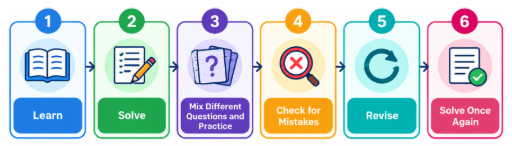
Practice adjustments regularly rather than waiting until the end of your revision. Work out different kinds of questions and analyse your mistakes to see why you failed to do the adjustment.
Basic Steps of Practice
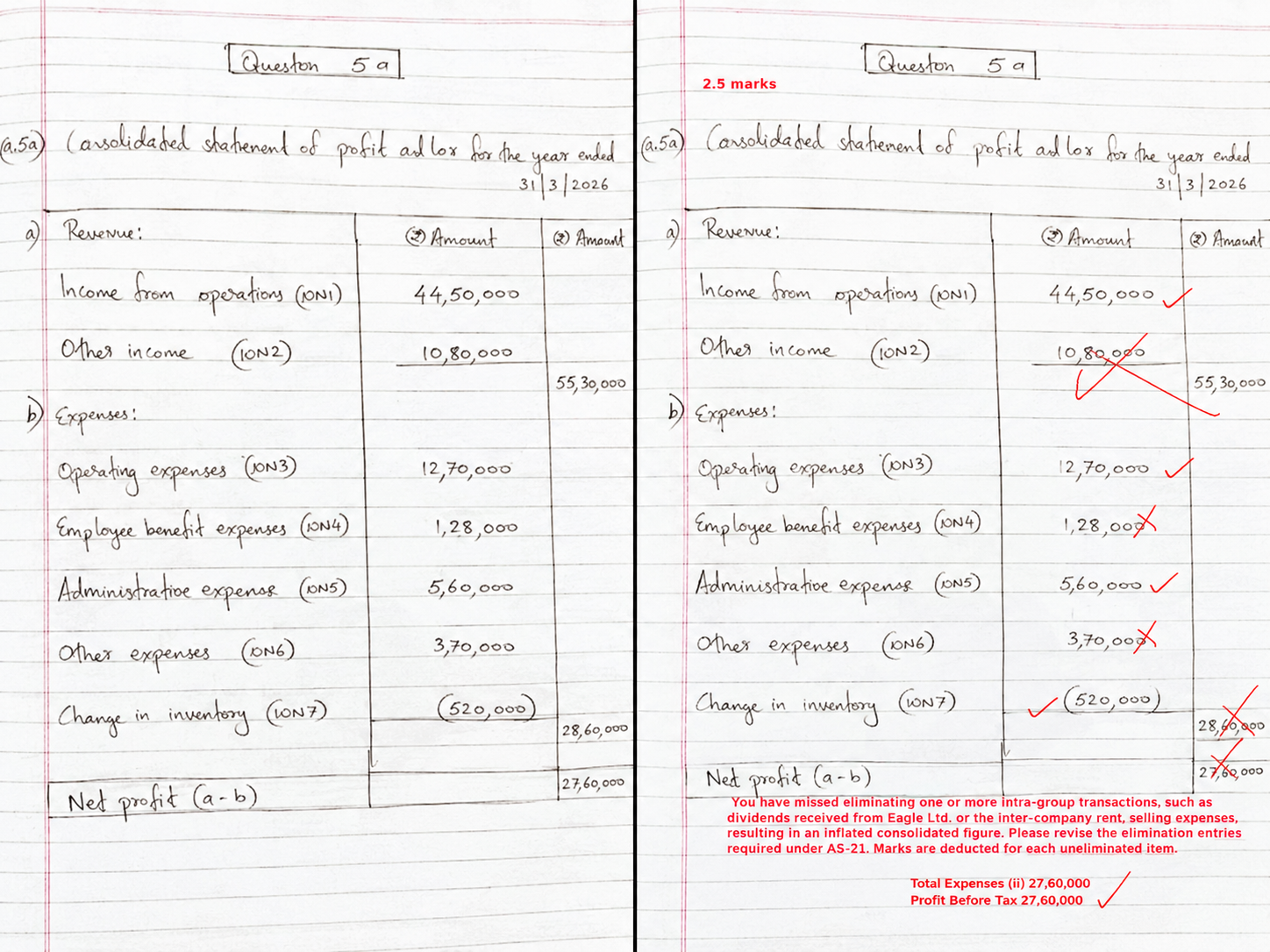
Checked Copies of Students With Real Examples
Checked copies of students can help CA advanced account students understand how mistakes actually occur in exams. Students can compare their own approach with the expected method and understand where marks may be lost. The correct answer can also show how a small mistake in one adjustment can affect the final accounts.
How to Avoid Skipping Accounting Adjustments
1. Careful reading: Read the complete question first before answering.
2. Adjusting entries: Both the trial balance and adjustments are equally important.
3. Understand Concepts: You must have a clear understanding of the concepts.
4. Check Both Effects: Check the effect on both profit/loss and assets/liabilities.
5. Manage Time: Divide time properly and keep time for checking.
Conclusion
Accounting adjustments carry real weight in the final result of accounting tests. It is recommended to read questions properly, comprehend their meaning, and make working notes. Continuous practice will help to spot the adjustments promptly and prevent mistakes.