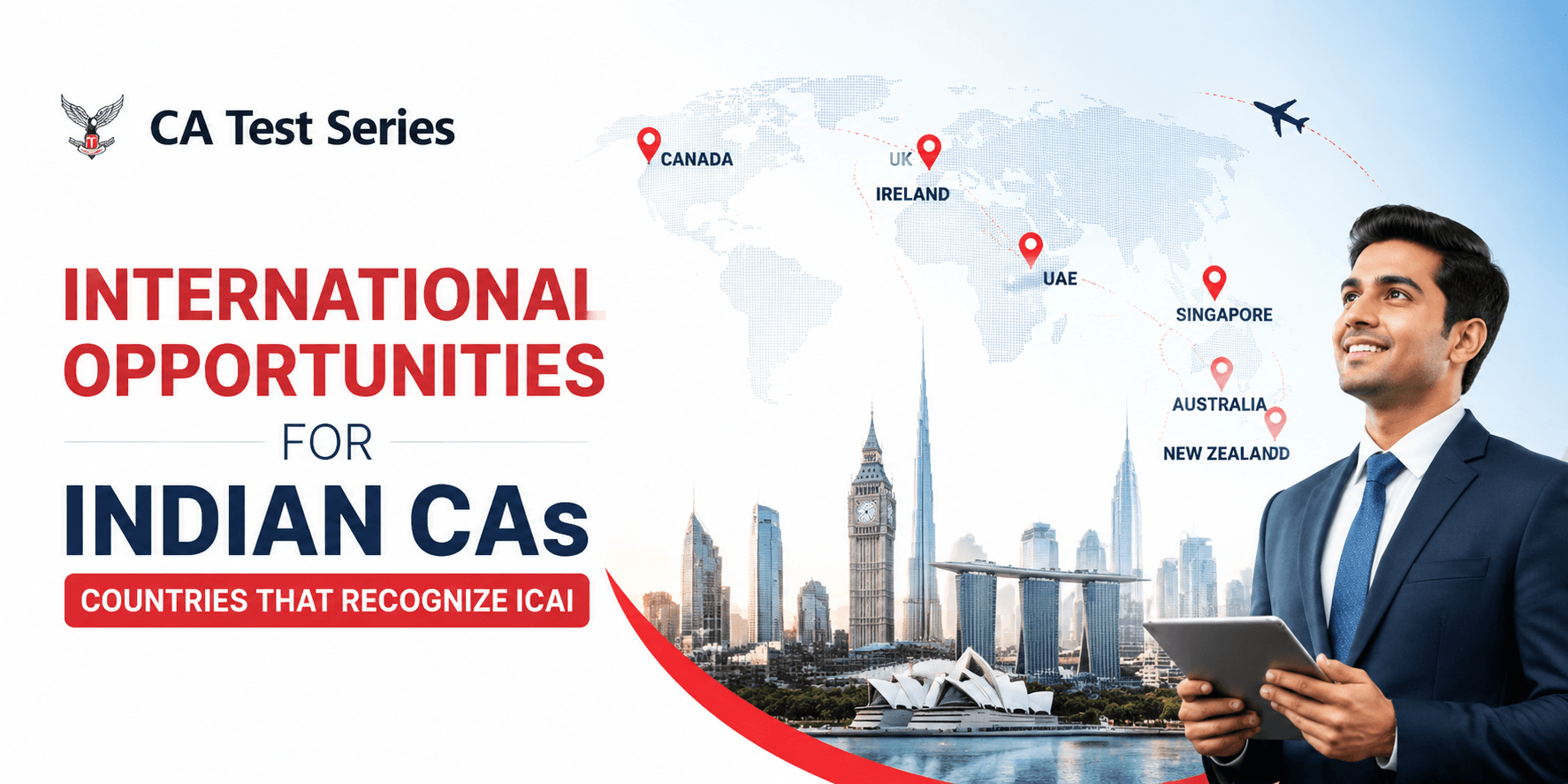
The Chartered Accountancy qualification from the Institute of Chartered Accountants of India (ICAI) can support careers beyond India in accounting, corporate finance, audit, taxation, consulting, risk, compliance, banking, and leadership. However, international recognition does not mean identical professional rights everywhere. Corporate employment may accept ICAI, while public practice or statutory audit may require additional membership, examinations, experience, registration, or a practising certificate.
International Opportunities for Indian CAs: Quick Overview
Country | ICAI Relevance | Additional Qualification | Corporate Finance Roles | Public Practice Licence | Major Opportunities |
UAE | Strong professional relevance | Depends on role | Yes | Yes | Finance, audit, tax, consulting |
UK | ICAEW pathways available | May be required | Yes | Yes | Audit, FP&A, finance, consulting |
Canada | ICAI-CPA pathway framework | Province-dependent | Yes | Yes | Accounting, finance, risk |
Australia | CPA Australia and CA ANZ pathways | Depends on pathway | Yes | Additional requirements | Finance, audit, advisory |
New Zealand | CA ANZ pathway for eligible members | Depends on eligibility | Yes | Additional requirements | Accounting, audit, finance |
Singapore | ICAI recognised for certain ISCA pathways | Local designation may help | Yes | Regulated requirements | Banking, finance, reporting |
Ireland | Professional pathways available | May apply | Yes | Yes | Finance, accounting, audit |
Is the ICAI CA Qualification Recognized Internationally?
Yes. The ICAI CA qualification has international professional relevance, but recognition can mean different things. An employer may accept ICAI for a finance role, another accounting body may offer exemptions or a membership pathway, or a regulator may recognise prior education and experience. Employment and public practice are different. An Indian CA may work in reporting, FP&A, internal audit, treasury, risk, taxation, or management without automatically receiving statutory audit or independent-practice rights.
Mutual Recognition Agreements: ICAI has reciprocal qualification arrangements with professional bodies in countries including Australia, Canada, the UK, Ireland, South Africa, Malaysia, New Zealand, and Nepal. These arrangements can reduce duplication for eligible members seeking another designation. However, an MRA is a facilitated pathway, not an automatic licence to practise.
Which Countries Offer Opportunities for Indian CAs?
UAE||: The UAE offers Indian CAs roles in accounting, corporate finance, internal audit, taxation, compliance, advisory, and financial management. Corporate employment is possible subject to employer and immigration rules, while registered audit practice is separately regulated.
United Kingdom: The UK offers opportunities in finance, reporting, FP&A, consulting, risk, tax, internal audit, and professional services. Indian CAs can explore ICAEW pathways, but statutory audit signing rights require additional qualifications, experience, and practising conditions.
Canada: Canada offers opportunities in corporate accounting, controllership, financial analysis, internal audit, taxation, risk, and reporting. ICAI and CPA Canada have a membership pathway framework, while provincial CPA bodies may also set requirements for regulated work.
Australia and New Zealand: Australia offers mobility through the ICAI-CPA Australia Mutual Recognition Agreement and CA ANZ pathways. New Zealand also provides opportunities in accounting, audit, reporting, finance, public-sector work, and advisory. In both markets, corporate employment and regulated public-practice rights should be considered separately.
Singapore: Singapore is attractive for Indian CAs interested in banking, fintech, treasury, reporting, risk, compliance, taxation, and multinational finance. ICAI is recognised for certain ISCA Associate pathways, but candidates should verify any additional requirements for their intended role.
Ireland: Ireland offers opportunities in financial services, technology, multinational finance teams, audit, taxation, accounting, and advisory. Candidates should confirm the current professional recognition pathway before applying.
Best Countries for Indian CAs by Career Goal
Career Goal | Countries to Consider |
Corporate Finance and FP&A | UAE, UK, Australia, Canada, Singapore, Ireland |
Audit and Assurance | UK, Australia, New Zealand, Canada, Ireland, UAE |
Tax | UAE, UK, Singapore, Australia, Canada, Ireland |
Banking and Financial Services | Singapore, UAE, UK, Canada, Australia, Ireland |
Consulting | UK, UAE, Singapore, Australia, Canada, Ireland |
MNC Roles | UAE, UK, Singapore, Australia, Canada, Ireland |
There is no single best country for every Indian CA. The right choice depends on specialization, experience, immigration options, local qualification rules, compensation, and long-term goals.
What Jobs Can Indian CAs Get Abroad?
Indian CAs can target roles such as Financial Analyst, Finance Manager, Financial Controller, Internal or External Auditor, Tax Consultant, FP&A Manager, Treasury Professional, Risk and Compliance Professional, Management Consultant, and senior finance positions. Finance roles may cover performance analysis, budgeting, controls, cash flow, reporting, forecasting, governance, and compliance. Tax specialists can work in transfer pricing, international tax, indirect tax, and cross-border transactions. Treasury roles focus on liquidity, banking, foreign exchange, debt, and financial risk. Experienced CAs may later move into consulting, finance transformation, or CFO-track roles.
Do Indian CAs Need Additional Qualifications to Work Abroad?
Not always. Many corporate employers may consider ICAI membership, relevant experience, technical skills, and legal work eligibility without requiring another accounting qualification. Additional qualifications matter more when a professional wants a locally recognised designation, statutory audit rights, public-practice authority, or a role where local membership is strongly preferred. Depending on the destination, Indian CAs may consider ICAEW ACA, CPA Australia, CA ANZ, ACCA, Canadian CPA pathways, or another local designation.
Working Abroad vs Practicing Abroad
Working as an employee is different from independently offering regulated accounting or audit services. A company may hire an Indian CA for reporting, budgeting, FP&A, treasury, tax, risk, internal controls, or commercial finance. Starting an accounting practice or signing statutory audit reports can require local membership, approved experience, examinations, insurance, regulator registration, a practising certificate, or other authorization. Indian CAs should check both professional-body and regulator requirements before practising independently.
Skills That Improve International Career Opportunities
Indian CAs can improve global employability by combining accounting expertise with technology and business skills. Important areas include IFRS, financial reporting, FP&A, financial modelling, international taxation, risk management, internal controls, data analytics, ERP systems, advanced Excel, Power BI, basic SQL, and automation tools. Communication also matters. International roles often involve managers, auditors, regulators, clients, and cross-cultural teams. CAs who can explain complex financial issues in clear business language can create greater value than professionals who focus only on technical compliance.
How Can an Indian CA Get a Job Abroad?
Start by selecting one or two target countries rather than applying randomly across many markets. Check whether your target role requires only ICAI membership or a local designation.
Next, target jobs that match your specialization, such as audit, FP&A, taxation, reporting, treasury, risk, commercial finance, or advisory. Tailor your CV to highlight measurable achievements, IFRS exposure, systems used, industries served, leadership responsibilities, and business impact. Focus on multinational companies, international banks, professional-services firms, specialist recruiters, and companies with Indian operations. ICAI overseas networks and professional contacts can also support networking. Finally, understand visa and work-permit requirements early because professional recognition does not automatically provide the legal right to work abroad.
Challenges Indian CAs May Face Abroad
Common challenges include unfamiliar regulations, local licensing, limited local experience, visa restrictions, competition from locally qualified accountants, and workplace-culture differences. Market research, relevant technical knowledge, communication skills, international reporting experience, and technology capability can help reduce these barriers.
Indian CA vs International Accounting Qualifications
Qualification | Main Relevance | Typical Career Use | Public Practice |
ICAI CA | India with international mobility | Audit, finance, tax, consulting | Local rules apply abroad |
ACCA | International | Accounting, audit, corporate finance | Depends on jurisdiction |
CPA | Strong in respective CPA markets | Accounting, reporting, tax, finance | Local rules apply |
Local CA | Strongest in home jurisdiction | Audit, advisory, finance, leadership | Subject to local authorization |
Conclusion
International opportunities for Indian CAs extend across finance, accounting, audit, taxation, banking, consulting, risk, compliance, and leadership. The UAE, UK, Canada, Australia, New Zealand, Singapore, and Ireland can offer attractive routes, but recognition, employment eligibility, professional membership, and public-practice rights are separate issues.m Before moving abroad, compare career demand, qualification requirements, licensing rules, immigration options, living costs, and long-term growth. A well-planned move based on the right country, role, and professional pathway can make the ICAI qualification a strong foundation for an international finance career.