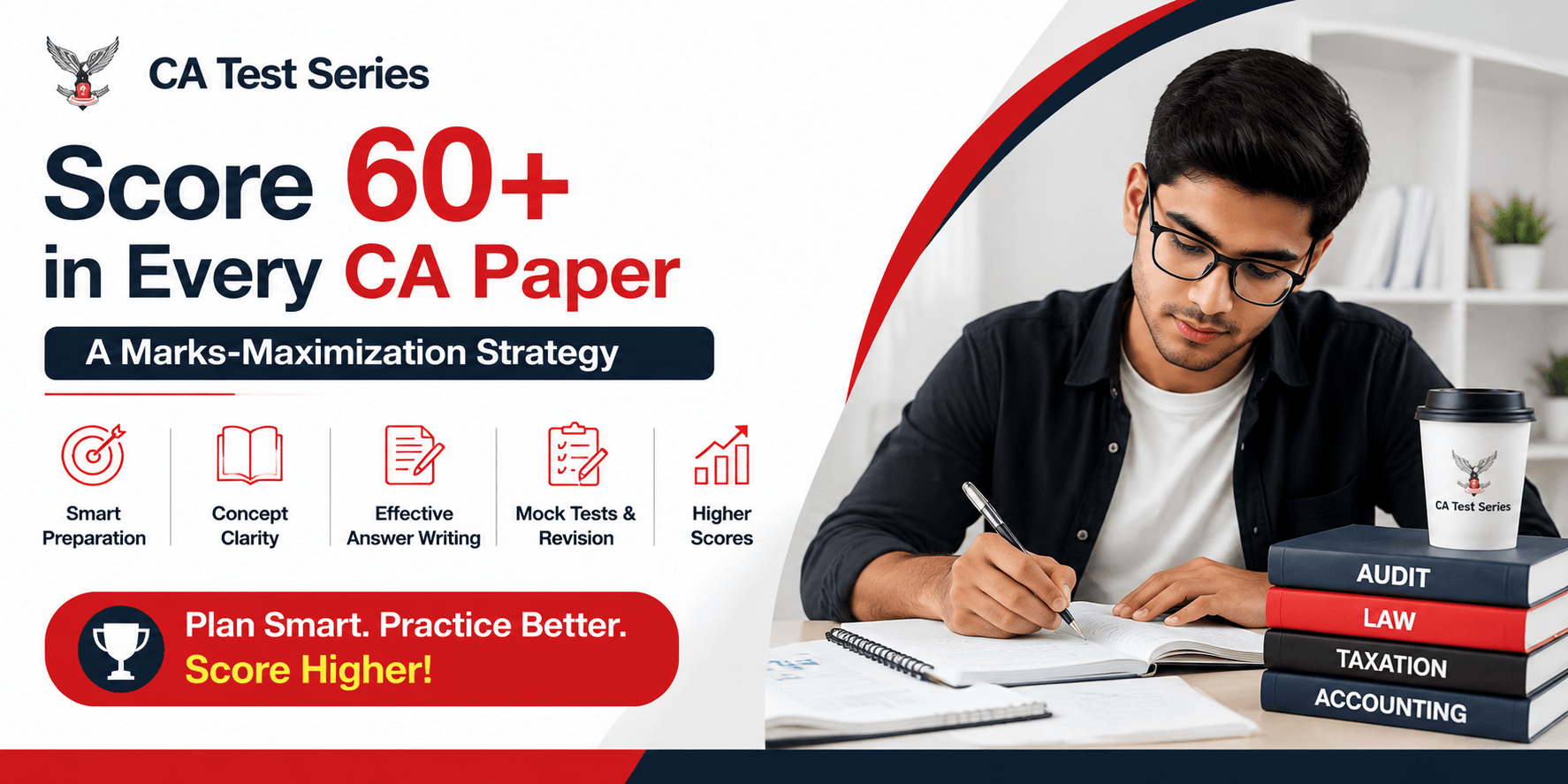
Scoring 60+ marks in every CA paper requires a strategic approach rather than only completing the syllabus. High-scoring students focus on conceptual clarity, smart revision, effective answer writing, and regular practice. While average preparation may help students clear the examination, achieving higher marks requires understanding ICAI expectations, prioritizing important topics, improving accuracy, and developing proper time management skills. A marks-oriented preparation strategy helps CA aspirants maximize their performance and achieve consistent results across different papers.
What Does It Take to Score 60+ Marks in CA Exams?
Understand the Difference Between Passing and Scoring High Marks: Passing CA exams requires basic preparation and sufficient knowledge to meet the minimum criteria, but scoring 60+ marks demands a more focused approach. Students aiming for higher scores must develop strong concepts, practice questions regularly, present answers professionally, and complete papers within the given time. High scorers understand the marking pattern, focus on accuracy, and prepare according to exam requirements instead of studying only for completion.
Follow a Marks-Oriented CA Exam Preparation Strategy: A marks-oriented CA preparation strategy focuses on studying topics according to their importance, weightage, previous exam trends, and individual strengths. Instead of spending equal time on every chapter, students should prioritize high-scoring areas and improve weaker topics through targeted practice. This approach helps in better time utilization and increases the chances of scoring higher marks.
The Ultimate CA Exam Preparation Strategy to Score 60+ in Every Paper
Step 1: Analyze the ICAI Syllabus and Exam Pattern: Understanding the ICAI syllabus and exam pattern is the foundation of effective CA preparation. Students should analyze paper structure, chapter importance, frequently tested concepts, and marking trends. Using ICAI study material, revision test papers, mock papers, and previous year questions helps students identify important areas and prepare according to the actual examination pattern.
Step 2: Build Strong Conceptual Understanding Before Practice: Conceptual clarity is essential for CA exams because many questions test application rather than memorization. Students should understand the logic behind accounting treatments, legal provisions, taxation concepts, and practical applications before attempting questions. Strong concepts help students solve complex problems confidently and reduce dependency on rote learning.
Step 3: Create a Realistic CA Study Plan: A practical study plan helps students complete the syllabus systematically and maintain consistency. The plan should include daily targets, weekly goals, revision schedules, and balanced time allocation between theory and practical subjects. A structured routine prevents last-minute pressure and ensures continuous progress throughout the preparation period.
Step 4: Master ICAI Answer Writing Techniques: Answer presentation plays an important role in scoring high marks in CA exams. Students should write answers with proper headings, working notes, relevant provisions, and clear explanations. Highlighting important points and maintaining professional presentation helps examiners evaluate answers easily. Regular writing practice improves speed, structure, and overall answer quality.
Step 5: Practice Through Mock Tests and Test Series: Mock tests and CA Test Series practice help students understand their actual preparation level and improve exam performance. They provide an exam-like environment where students can develop speed, accuracy, and confidence. Regular evaluation helps identify weak areas, improve presentation skills, and correct mistakes before the final examination.
Subject-Wise Strategy to Score 60+ in CA Papers
Strategy for CA Foundation Students: CA Foundation students should focus on building strong basics and developing consistent study habits. Regular practice of objective questions, revision of concepts, and solving previous exam papers improve accuracy and confidence. A strong foundation at this stage helps students perform better in higher levels of CA education.
Strategy for CA Intermediate Students: CA Intermediate requires effective management of multiple subjects along with strong conceptual application. Students should focus on chapter-wise preparation, practical question solving, writing practice, and regular revision. Testing preparation through mock exams and assessments helps identify weaknesses and improve overall performance.
Strategy for CA Final Students: CA Final preparation requires advanced conceptual understanding and practical application skills. Students should focus on case studies, professional judgment-based questions, ICAI study material, and multiple revision cycles. Consistent practice and exam-oriented preparation are necessary to achieve higher marks at this level.
How Many Hours Should You Study to Score 60+ in CA?
Effective Study Hours vs Long Study Hours: Success in CA exams depends more on productive study hours than simply studying for long durations. Focused learning, active revision, problem-solving practice, and regular analysis create better results than passive studying. Students should maintain concentration and avoid burnout by following a balanced preparation approach.
Ideal Daily Routine for CA Aspirants: An effective daily routine should include concept learning, revision, question practice, and performance analysis. Students should dedicate separate time slots for understanding new topics, revising completed chapters, solving practical problems, and reviewing mistakes. A disciplined routine improves retention and keeps preparation consistent.
Revision Strategy for CA Exams: The Key to Higher Marks
Follow Multiple Revision Cycles: Multiple revisions are necessary for scoring 60+ marks because they improve retention and confidence. The first revision should focus on concept strengthening, the second revision should emphasize problem-solving and recall, and the final revision should focus on quick review of formulas, provisions, important concepts, and exam-oriented topics.
Use Short Notes and Revision Material: Short notes make revision faster and more effective during the final preparation phase. Students should prepare formula sheets, summary notes, important provisions, and mistake trackers for quick reference. These resources help save time and improve recall before examinations.
Common Mistakes That Prevent CA Students From Scoring 60+
Studying Without a Proper Plan: Studying without a structured plan often results in incomplete syllabus coverage and poor revision. Students should prepare realistic schedules with clear targets to ensure consistent progress and proper utilization of study time.
Ignoring Mock Tests and Self-Evaluation: Avoiding mock tests prevents students from understanding their actual performance level. Regular testing helps identify weaknesses, improve speed, and develop confidence before the final examination.
Poor Time Management During Exams: Poor time management can reduce marks even when students know the concepts. Practicing time-bound papers helps students learn how to allocate time properly and complete maximum questions within the exam duration.
Not Practicing ICAI Answer Writing: Reading concepts alone is not enough for CA exams. Students must practice writing answers according to ICAI expectations to improve presentation, structure, and accuracy.
Leaving Revision for the Last Few Days: Last-minute revision increases pressure and reduces retention. Regular revision cycles throughout preparation are necessary for better understanding and stronger memory.
How Mock Tests Help Improve CA Exam Performance
Benefits of CA Test Series Practice: CA Test Series helps students experience real exam conditions and improve speed, accuracy, and confidence. It provides performance evaluation, helps identify mistakes, and trains students to present answers effectively according to examination requirements.
How to Analyze Your Mock Test Results: Students should carefully analyze mock test performance by reviewing mistakes, understanding marking patterns, identifying weak chapters, and tracking improvement. Proper analysis helps convert mistakes into learning opportunities and improves final exam performance.
30-Day CA Exam Preparation Strategy Before Exams
First 10 Days: Complete Important Topics and Weak Areas: The first 10 days should focus on completing important chapters and improving weak areas. Students should prioritize high-weightage topics and revise difficult concepts to strengthen their preparation.
Next 10 Days: Practice Questions and Full-Length Tests: The next phase should focus on solving questions, attempting mock tests, and improving speed. Full-length exams help students develop confidence and prepare for actual examination pressure.
Last 10 Days: Revision and Exam Simulation: The final 10 days should focus on quick revision, reviewing short notes, revising formulas, and practicing exam simulations. Students should avoid unnecessary new topics and concentrate on strengthening prepared areas.
Conclusion
Scoring 60+ marks in CA exams requires smart preparation, strong concepts, effective revision, regular practice, and proper exam techniques. Students who follow a structured strategy, analyze ICAI patterns, practice mock tests, and continuously improve their weaknesses can significantly increase their chances of achieving higher scores. Success in CA exams depends not only on the number of study hours but also on the quality and direction of preparation.