CA Intermediate Exam Strategy, Structure & Preparation Tips
"Success in CA Intermediate is not about studying harder—it is about understanding smarter."
The CA Intermediate is the second phase in the Chartered Accountancy Career. The CA Intermediate exams are held in September 2026. To get ready for CA Intermediate, one needs to plan well, use good study material and seek expert advice.

Modern CA Intermediate lessons focus on visualisation of concepts, charts, practice, homework, testing and individual tutoring. Through this comprehensive learning process, students remain focused throughout their preparation rather than cramming for examinations.
CA Intermediate Exam: Complete Strategy, Structure, Score Weightage and Tips
The CA intermediate exam becomes easy for students when they prepare in a well-structured manner. Students must check the complete syllabus and exam pattern for the inter exam. They must prepare a plan so they can score well in their exam.
CA Intermediate Exam Structure
Before you start preparing for the exam, students must go through the exam structure. They must know the pattern and make their plan accordingly. Below are the complete details of the CA exam:
Events | Details |
Exam Name | CA Intermediate |
Conducted By | |
Exam Level | National |
Exam Duration | 3 Hours |
Subjects Included | Advanced Accounting, Financial Management, Law, Taxation, Cost & Management Accounting |
Mode of Exam | Offline |
The above table helps students to understand the CA Intermediate exam pattern. By knowing the pattern of the exam, they can make proper study plans.
(last verified on 27 July 2026)
CA Intermediate Course Overview
The CA Intermediate exam is divided into two groups ie group 1 and Group 2. Each of these groups has different subjects. Students have the option to appear for either one or both groups in every attempt.
Group | Paper | Subject |
Group 1 | Paper 1 | Advanced Accounting |
Group 1 | Paper 2 | Corporate and Other Laws |
Group 1 | Paper 3 | Taxation |
Group 2 | Paper 4 | Cost & Management Accounting |
Group 2 | Paper 5 | Auditing & Ethics |
Group 2 | Paper 6 | Financial Management |
This is the overview of the CA Intermediate exam that helps students analyse the exam and make their study schedule.
Weightage of Marks and Pass Percentage
This is the part that no guide covers, but this actually influences your study time allocation strategy.
Criteria | Requirement |
Total marks per paper | 100 |
Passing marks per paper | Minimum 40% |
Aggregate to clear a group | Minimum 50% across all papers in that group |
Negative marking (MCQ portion) | None, as per current ICAI pattern — always verify against the latest ICAI notification before your attempt |
Paper format | Mix of objective (MCQ) and subjective (descriptive) questions; the split varies by paper and is specified in ICAI's official scheme |
Since the ratio of MCQs to subjective questions is determined by ICAI and may change, the data provided above is only an initial reference, which you need to check with the ICAI exam pattern at hand.
What Should Be Included in a Good Lecture for CA Intermediate?
A lecture should not merely be about giving explanations about the syllabus. It should provide all resources needed by the students, starting from the very first lecture till the final exam.
Feature | How It Helps Students |
Faculty with Practical Teaching | Makes difficult concepts simple and relatable. |
Visualisation-Based Learning | Improves conceptual clarity through diagrams, animations and practical examples. |
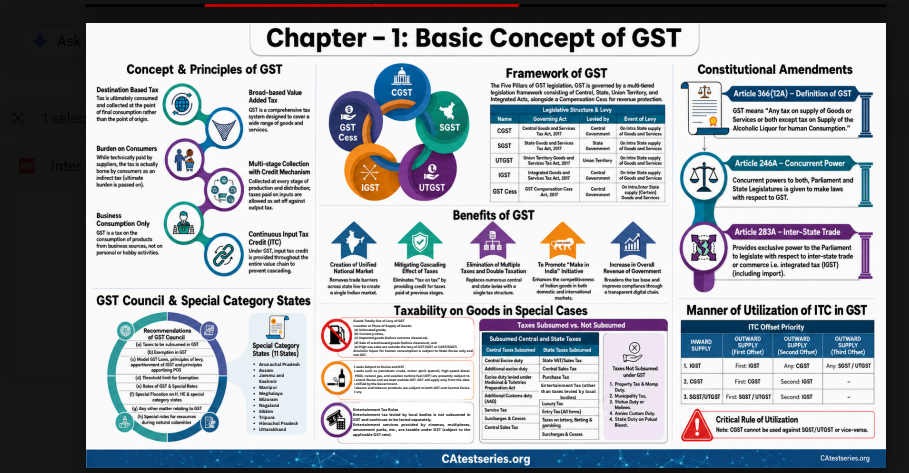
Chart Notes | Helps students revise quickly before exams. |
Concept Books | Covers every topic in a structured manner. |
Practice Questions | Strengthens application skills using ICAI-level questions. |
Homework | Keeps students consistent after every lecture. |
Regular Tests | Measures preparation and identifies weak areas. |
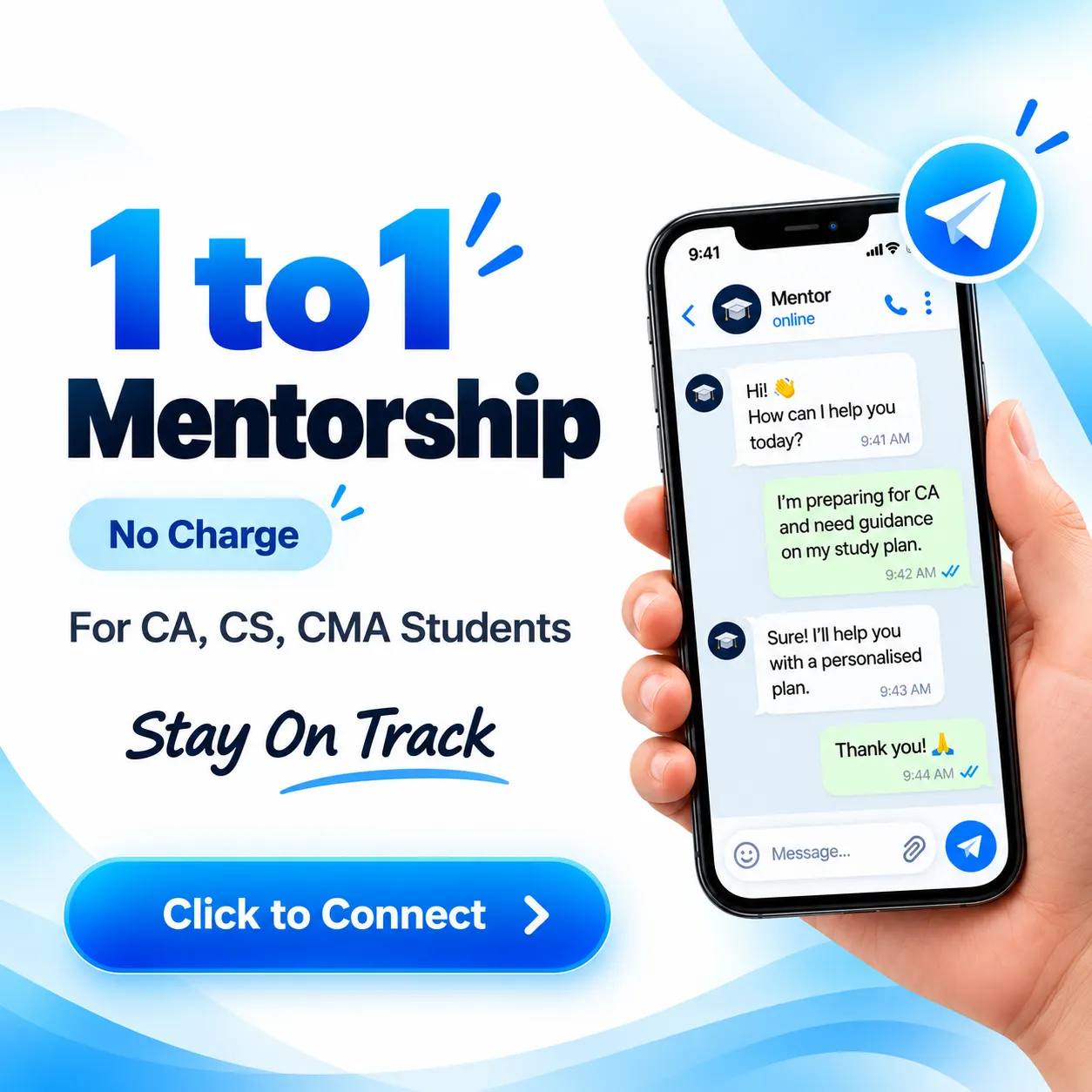
Personal Mentoring | Provides guidance whenever students face difficulties. |
All these elements put together in a single lecture offer students much more than mere video recordings.
Expert Faculty for the Intermediate Exam
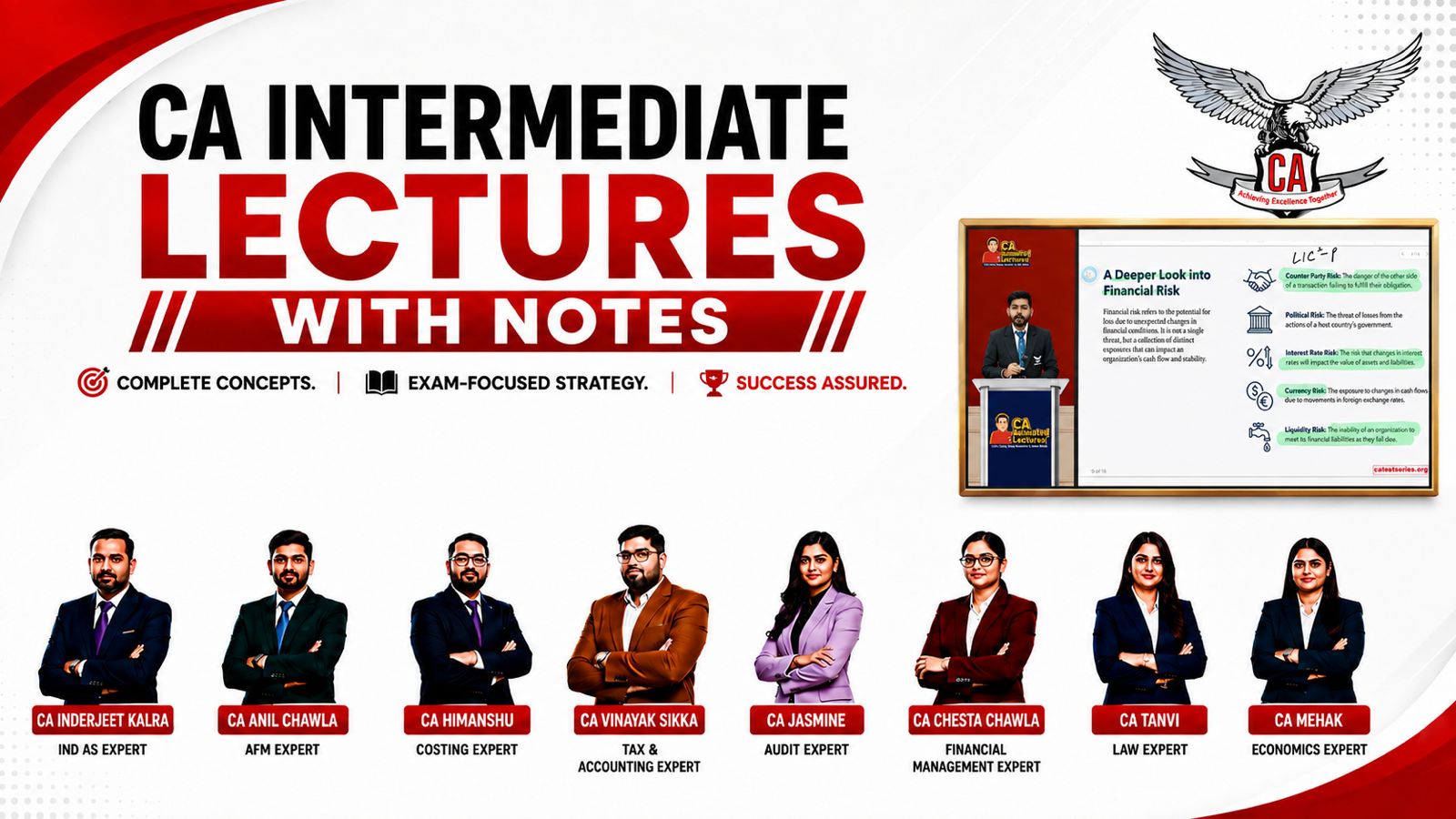
There are many faculty members for the CA exam, which helps the students in their CA exam journey. These experts provide free and paid classes for the students. Students can take the classes for better guidance. Below is the list of faculty for the CA intermediate exam.
CA Vinayak Sikka(Accounting): Experience in tutoring concepts of Accounting to CA students for more than 5 years. He is skilled at making difficult accounting provisions easy through examples.
CA Tanvi Singla(Business Law): Experience in tutoring Business Laws in an applied and easy way and able to explain legal provisions in business scenarios. She also teaches students the concepts of laws.
CA Chesta Chawla(Direct Tax): An experienced tutor in the field of Direct Tax. She is an expert in simplifying difficult tax provisions with practical examples. She trains students conceptually along with examination-based strategies and practice.
CA Vinayak Sikka(GST & Indirect Tax): Expert at tutoring GST and Indirect Tax with practical applications in business. Explains difficult provisions of GST with the help of examples and case studies and makes students learn concepts of tax along with examination-based preparation.
Concept Visualisation – The Basis for Smart Learning
The largest factor responsible for difficulties faced by students in CA Intermediate is rote learning of concepts without comprehending them.
Concept visualisation lectures address this problem with:
Concept animations
Flow diagrams
Real-life examples
Visualisation-based explanations
Examples
Students do not just learn the definitions of concepts but learn the reason behind their functioning.
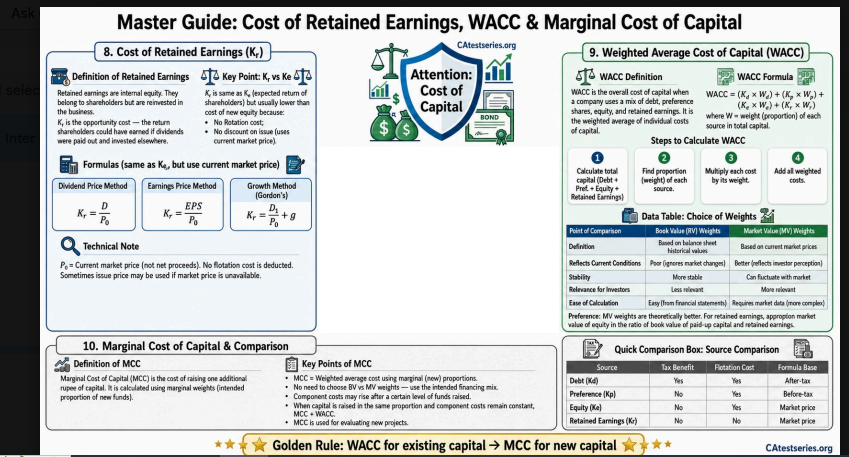
Students should always make revisions of their notes once after finishing each chapter rather than waiting till the last month of the exams.
CA Intermediate Exam Strategy
The right strategy can help students improve their understanding of the subjects. There are some points which helps the students score maximum in the exams.
Watching visualisation lectures: The first step for learning for CA exam students is to go through the daily video lectures. It is useful only when the students use these lectures in the right way and on a proper schedule. This is also made easy through the visualisation of animated concept videos.

Chart Notes: After watching the lectures, students must go through the proper short notes, which help them revise the topic in a short time. When students go through these notes within a day, it helps in improving their memory power.
Practice Questions: Practising previous year's questions can help in understanding the exam level and pattern of questions in the previous exams. Finish all the questions of the class before moving on to the next chapter.
Do Weekly Revision: After the one-week schedule, students must make a weekly revision of the chapter they have learned in a week. It is very important to revise the notes before moving to the next chapter. This weekly revision will help you avoid forgetting what you have already done.
Attempt Mock Tests: This is the most important part of CA preparation. By taking the mock test, students come to know about the mistakes they have made or understand their strengths and weaknesses in the particular subjects.
Learning Does Not Stop Once You Have Watched the Lecture
Watching only lectures is not sufficient. But after watching and learning, practice is also important. The ideal lecture should make students active during the whole lecture. This includes:
Daily homework
Practice questions
Chapter tests
Revision work
Mentorship
Evaluation
This will enable students to connect to each chapter right up to the exam day.
Flowchart for CA Intermediate Analysis
Start Chapter
↓
Watch Lecture(through visualisation method)
↓
Read Chart Notes
↓
Solve Class Questions
↓
Solve ICAI Questions
↓
Revise Notes
↓
Attempt Mock Test
↓
Analyse Mistakes
↓
Final Revision
How Students Should Assess Their CA Intermediate Lectures
Students usually select lectures on the basis of the popularity of the faculty member. However, they should assess the whole education process.
Evaluation | Why It Matters |
Understanding | Are concepts explained with visualisation and practical examples? |
Content Books | Are notes, charts and study material well organised? |
Revision System | Are revision lectures and chart notes provided? |
Tests | Are regular chapter-wise and mock tests conducted? |
Mentoring | Is personal guidance available whenever required? |
When a course gets good scores in all five aspects, the preparation becomes easier for the students.
Practice, Homework, and Tests Lead to Examination Confidence
Lectures alone are not sufficient. Students must constantly do the following things:
Practice class problems
Do homework after each lecture
Practice ICAI problems
Take chapter-wise tests
Write mock papers in examination-like situations
Each test will make one identify errors and thus provide enough time to work on those errors before the actual examination.
Importance of Mentorship During CA Preparation
Most students understand the syllabus but find it difficult due to a lack of guidance. A mentor helps students in:
Clarifying doubts related to preparation
Setting up schedules for study every day
Checking the consistency
Recognising areas which are weak
Motivating students during preparation
Improving the strategy of examination
Mentorship guides the students throughout their journey.
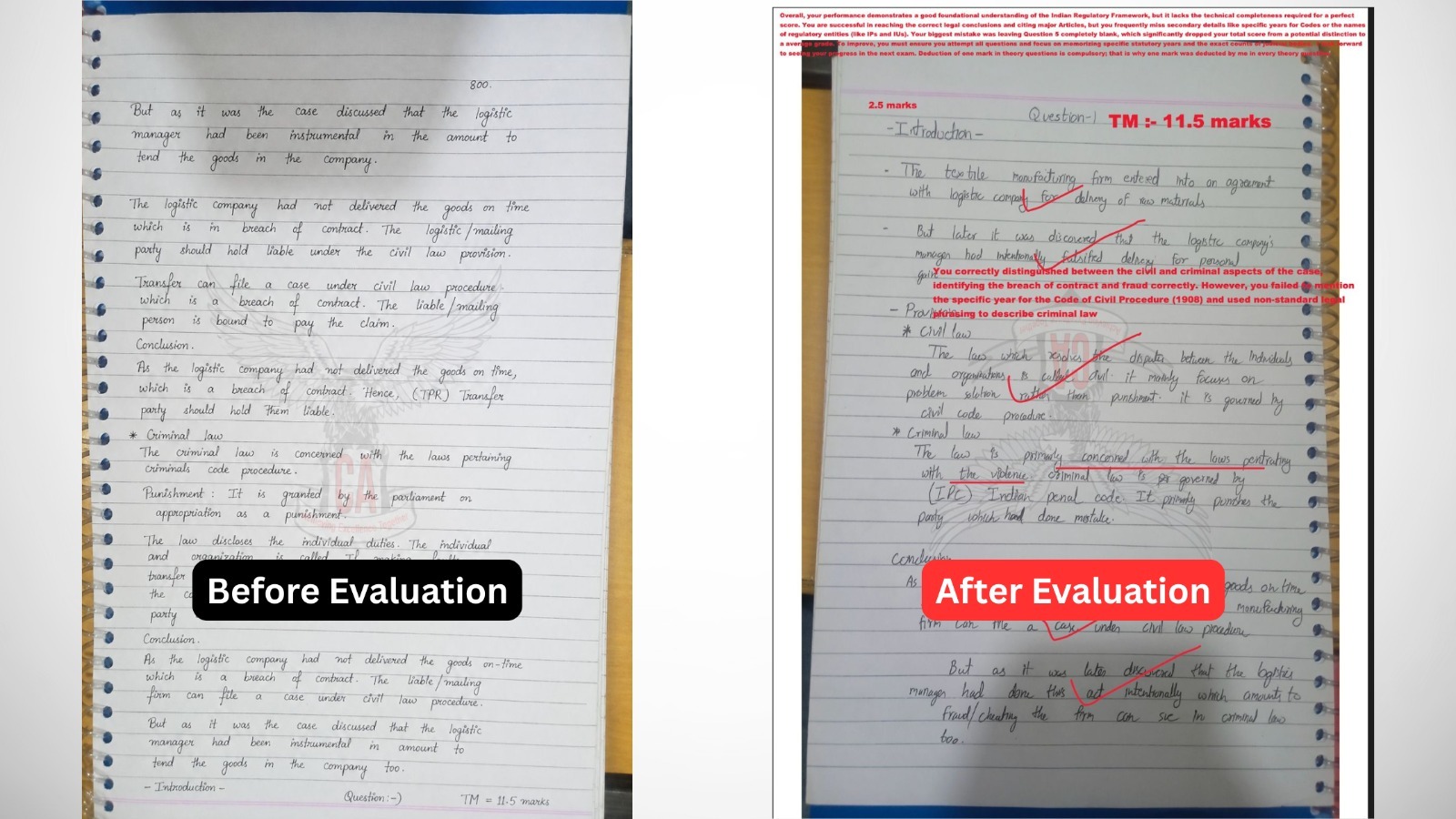
How We Actually Evaluated the Checked Sheets
The students' answer sheets are evaluated by the experts, which helps them to better analyse their mistakes. These sheets include the marking of each answer; negative marking is also shown on these sheets. These evaluated sheets include the following points:
Correct answer
Negative marking
Reasons for marks deducted
Suggested improvement in answers
The following are the actual evaluated and checked sheets by experts that show the before and after comparison:
Subjects/Chapters | Evaluated Checked Sheets |
Business Law Chapter 1 | |
Business Law Chapter 2 | |
Business Law Chapter 3 |
Common Mistakes Students Make While Preparing for CA Intermediate
Many students fail in the CA exam due to their wrong approach. The following are some common mistakes that students should avoid while preparing for the CA exam:
Lack of Conceptual Clarity: Learning without understanding concepts causes poor results in application-based questions.
Inconsistency: Lack of a consistent study routine makes it difficult to cover the syllabus.
No Practice of Questions: It becomes easy to forget important topics without practice.
Lack of Mock Exams: Without taking mock exams, it becomes difficult to increase speed and efficiency.
Bad Revision Strategy: One-time revision before exams increases the chances of forgetting topics.
Not Making Short Notes: Dependence on thick books during revision is a waste of time.
Conclusion
Cracking the CA Intermediate Exam depends on discipline, proper materials, and consistent revision rather than just putting in hours. Well-structured classes, along with notes from charts, make difficult topics comprehensible, while taking frequent mock tests ensures that theory translates to exam success. Doing this with weekly revision results in a well-rounded preparation strategy for both sets of students.