CA Inter Law Lectures: Pendrive vs Online — Which Should You Choose?
"The lecture format you choose today quietly shapes your revision speed, confidence, and consistency on exam day."
CA Intermediate Law is one of the toughest subjects, not because of its tough concepts, but because of its lengthy syllabus, extensive memorization, and practical application questions. Marks are deducted from students when they overlook important exceptions and conditions, do not revise properly, give vague answers without applying the provisions of law to the given situations, and do not do case scenarios. It is therefore equally important to know the right way of learning as learning itself.
Selection of the right platform for making videos is extremely important for securing good marks in CA Intermediate Law. Most coaching centers provide students with two kinds of video lectures—a Pendrive lecture and an online lecture. Learning about the difference between these two types of lectures can assist the student in selecting one of them.
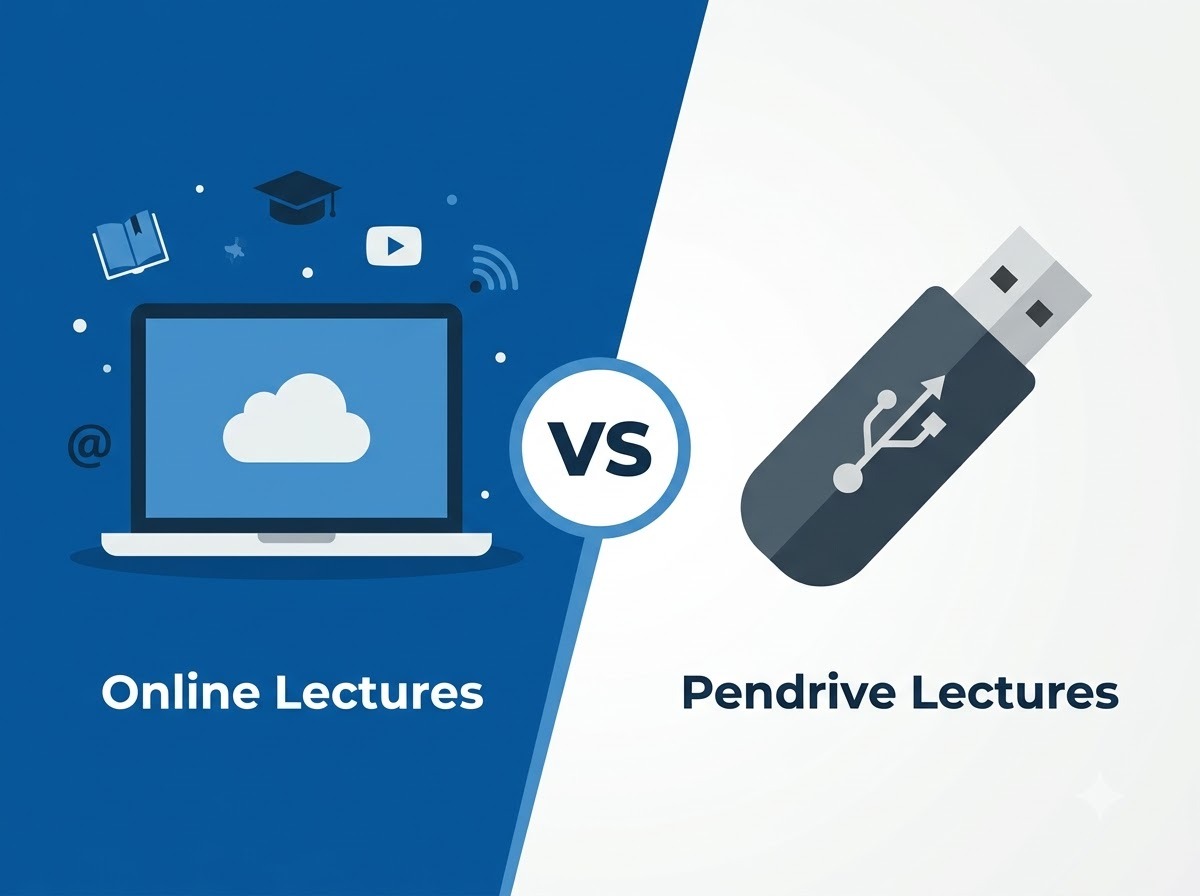
Pendrive vs Online: What's the Real Difference?
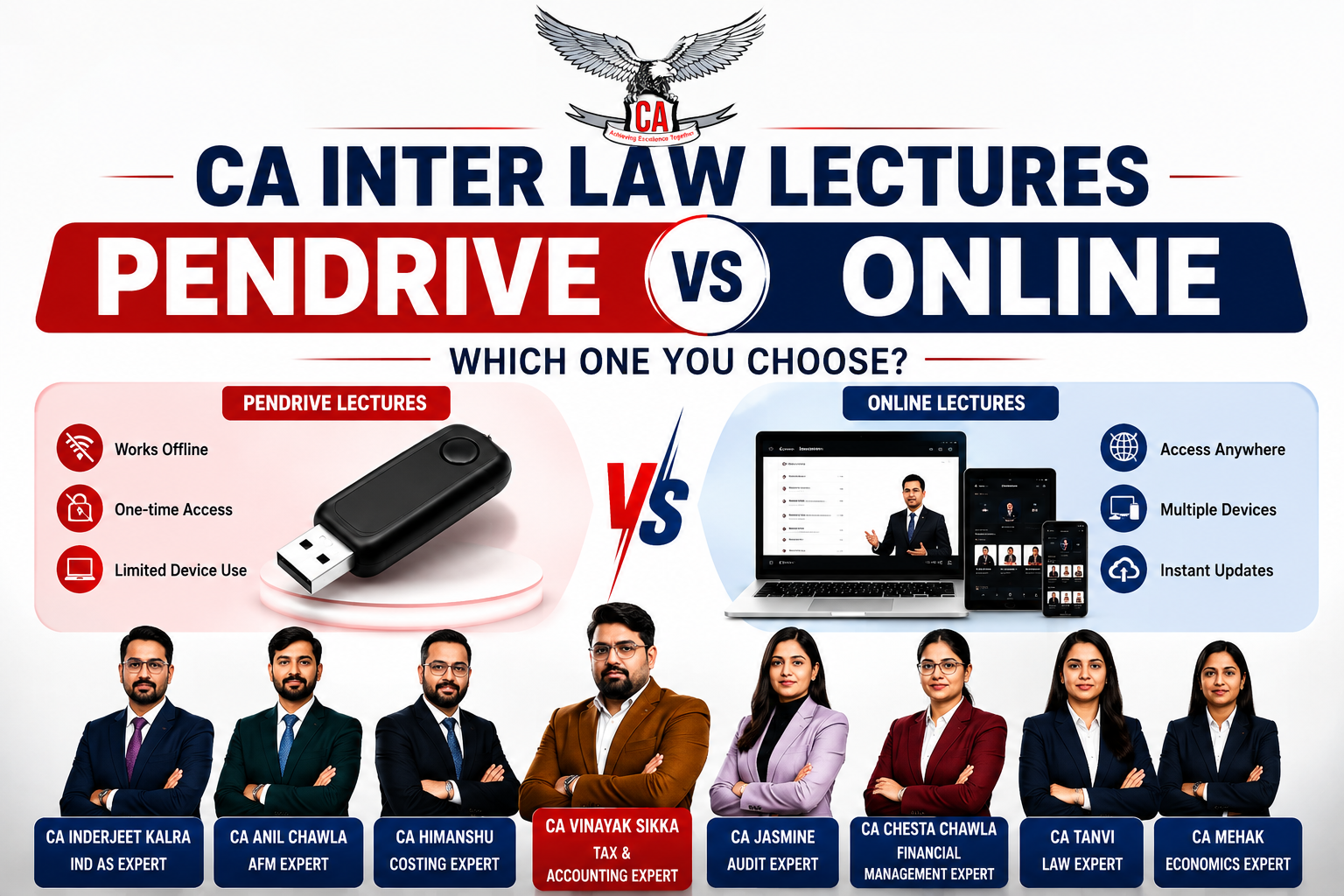
Pendrive Lectures
Pendrive lectures come as a physical USB drive preloaded with your CA Inter Law video course. The drive is protected with DRM software, so you install a player, activate it with a one-time code, and then watch lectures completely offline—no internet needed once set up. It's built for students who want a fixed, distraction-free, one-device study setup.
Key Features:
Operates entirely offline once activated, with no dependence on the internet
Restrictive and usable only on one/two activated devices
Requires just one-time purchase
Chances of loss and damage due to being tangible media
Limited or no mobile compatibility (mostly laptop/desktop)
Content updates (post-amendment) usually require separate support requests.
Online Lectures
Online lectures are accessed through a website or app using a login ID and password. Content is streamed or downloaded within the app, letting you study from any device—phone, tablet, or laptop—as long as you're signed in. It's built for students who want flexibility to revise anytime, anywhere.
Key Features:
Accessible across multiple devices with the same login
Mobile-first—ideal for quick revision on the go
Cloud-stored, so no risk of physical loss or damage
Adjustable playback speed, available in almost all apps
Requires internet for login/streaming (limited offline download in some apps)
Faster and easier validity extensions through the provider's portal
Content updates pushed instantly by the institute
Setup is quick — just app download and login, no activation codes
Pendrive vs Online Lectures: Full Comparison
Basis | Pendrive Lectures | Online Lectures |
Internet requirement | Not needed after activation | Needed at least for login/streaming; some apps allow limited offline download. |
Device flexibility | Locked to 1–2 activated devices | Usually works across multiple devices with the same login |
Storage | A physical drive can be lost or damaged | Cloud-based, no risk of physical loss |
Portability | Need to carry the pendrive and a laptop | Accessible from any device with the app/login |
Piracy/backup risk | If the pendrive is lost, the lectures are gone | Backed up on the provider's server |
Validity extension | Usually harder, may need to buy again | Often easier to extend via the provider's portal |
Watching on mobile | Difficult; many players are laptop-only | Built for mobile-first viewing |
Best for | Students with unreliable or costly internet access | Students who study across devices and locations |
Price Comparison
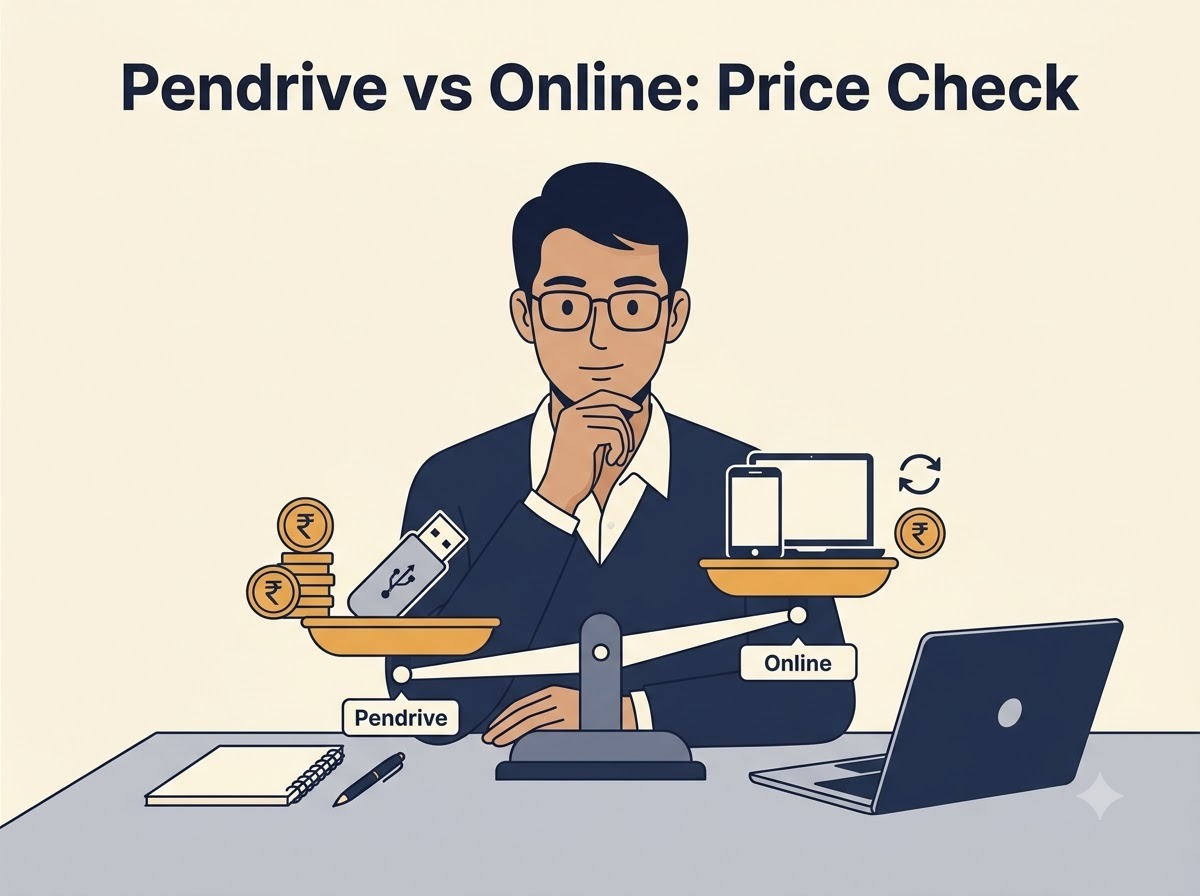
Pricing varies significantly by faculty, institute, and whether it's a full course, fast-track, or revision batch. Here's a general CA Inter Law course fees comparison pattern seen across providers:
Mode | Price Range (CA Inter Law only) | Notes |
Pendrive | Slightly higher | Extra cost covers the physical drive, DRM licensing, and shipping |
Online Video Lectures | Slightly lower to similar | No physical component; validity often shorter unless extended |
Combo (Pendrive + Online access) | Highest | Some providers bundle both for a premium, giving maximum flexibility |
Renewal/validity extension | Online is usually cheaper and faster to extend | Pendrive reactivation can involve extra charges or delays |
Which Option Suits a CA Inter Student?
Your ideal format really depends on your study environment, not on which one is "objectively better."
Pendrive lectures suit you if:
You live in an area with unstable or expensive internet
You prefer studying on one dedicated laptop/desktop
You want to avoid streaming buffering issues during long Law sessions
You're comfortable with a one-time setup and don't need frequent device switching
Online lectures suit you if:
You study across multiple devices — phone during commute, laptop at home
You want faster, hassle-free validity extensions
You prefer lighter, mobile-first viewing for daily CA Inter Law revision lectures
You don't want to risk losing lectures if a physical drive gets damaged or lost
For CA Inter Law specifically — a subject that benefits from repeated short revision bursts (case laws, sections, provisions) rather than only long sit-down sessions — many students find the mobile flexibility of online lectures genuinely useful for revision rounds, while still using a pen drive for the first full run-through on a laptop. This makes online access especially popular among students looking for CA Inter Law lectures for self-study, where fitting revision into small pockets of time matters more than a fixed study desk.
Pendrive vs Online Lectures: What Do Top Rankers Recommend?
When CA Inter and CA Final rank holders talk about this in interviews and YouTube videos, a few common themes come up:
Format matters less than consistency—most toppers say the mode of delivery mattered far less than sticking to a fixed daily lecture-and-revision schedule.
Online for revision, not necessarily for the first watch - A recurring pattern: many rankers use online/app-based access specifically during the final 30–45 days because it lets them revise short clips (a section, a case law) on mobile without opening a laptop.
Pendrive for distraction-free viewing — Some toppers specifically mention that pendrive playback (no notifications, no app switching) helped them stay focused during the first full course run.
Backup matters—a common piece of advice is not to rely on a pendrive alone without checking if the provider also gives app/cloud access as backup— losing a pendrive mid-attempt has cost some students weeks of lecture access.
The consistent takeaway: rankers optimize for focus and access reliability, not brand loyalty to one format.
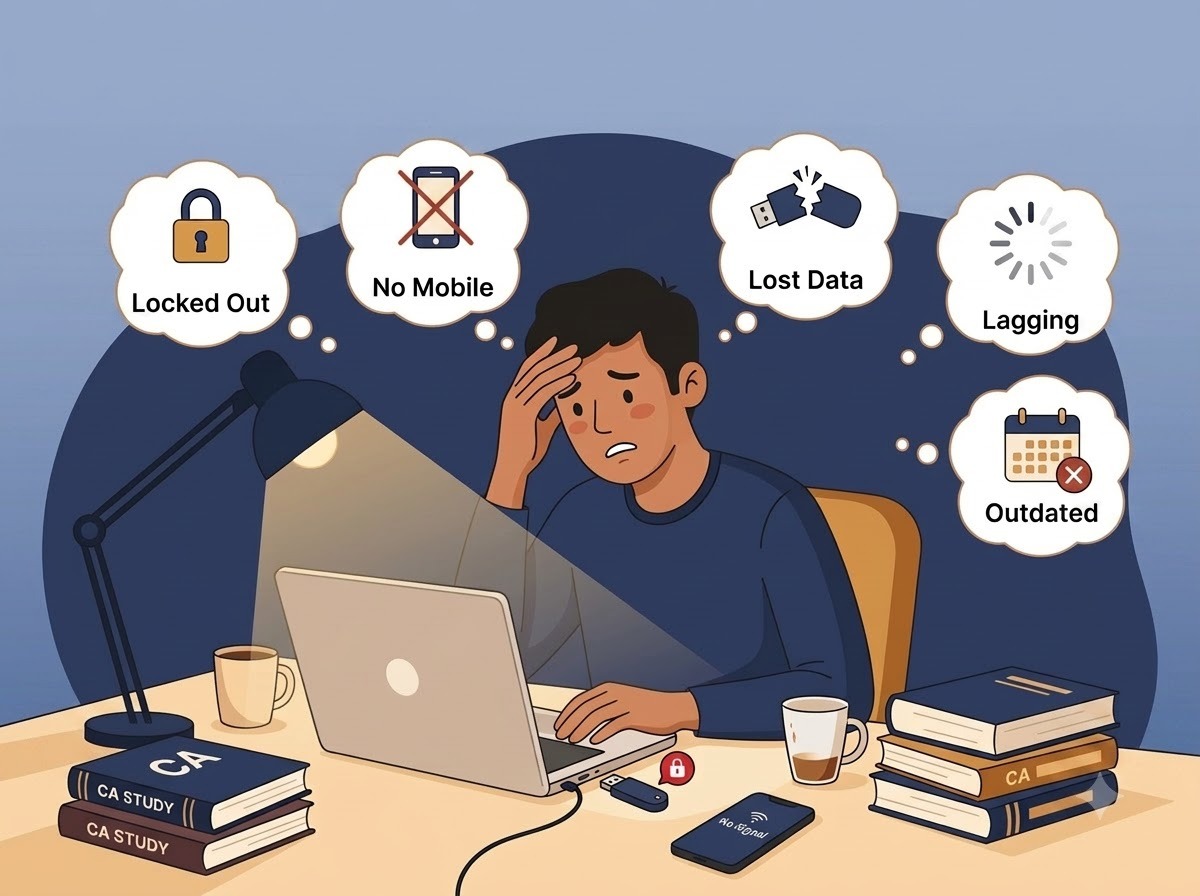
Common Challenges Faced in Pendrive Classes
Some common difficulties faced by students while choosing pendrive classes:
1. Limit on device activation — Pendrives permit activation on just 1-2 computers. Should your laptop fail to function or become formatted, it may take time for you to get reactivated.
2. No mobile playback — Many pendrive players are Windows-only or laptop-only, making it hard to revise on the go.
3. Physical damage or loss — A lost, corrupted, or virus-affected pendrive can mean losing access entirely, sometimes with no free replacement.
4. DRM/player compatibility issues — Some DRM software doesn't run smoothly on newer Windows updates or MacBooks, requiring troubleshooting.
5. No content updates — If the institute revises content after an amendment, pendrive users often don't get the updated lecture unless they contact support separately.
6. Difficult to carry — students also face difficulty carrying a pendrive with a laptop from one location to another.
7. Speed and playback bugs — Some cheaper DRM players have laggy interfaces, especially for HD lecture files.
None of them is going to make or break your decision, but here’s what you should know before making it, particularly if you’re planning to study on multiple devices/locations for your CA Inter preparation.
Conclusion
When it comes to lectures of CA Inter Law, pendrive/online, there is no such thing as a right answer because it depends on your learning style and availability of devices, in addition to how much freedom you require while studying/revising.
If your learning setup is stable on one device and you like to avoid any distractions or go offline, then a pendrive is the better option for you. However, if you tend to change devices and require a faster review on mobiles, the online lecture becomes a better choice for you.
Whichever format you choose, prioritize the CA Inter Law faculty video lectures' quality first — the delivery mode is a convenience factor, not a substitute for consistent study and regular revision of Law provisions, sections, and case laws. Ready to put your revision to the test?
Explore CA Inter Law Mock Tests on CATestSeries.org.