CA Inter FM Lectures with Practical Business Examples
If you are a CA Intermediate student exploring a suitable FM faculty, you may have come across CA Chesta Chawla on catestseries.org. Her CA Inter FM lectures may suit students looking for clear, practical explanations of formulas, concepts, and numerical problems. Her teaching approach is particularly relevant for learners who want to build a genuine understanding of FM rather than just memorising formulas.
This review helps you understand her teaching methods, concepts, study material, question bank, doubt-solving support, and tips to prepare for CA Inter FM, which you may want to consider before signing up. The reason is simple: a review that is completely biased towards positive points cannot serve its true purpose.
Who Is CA Chesta Chawla?
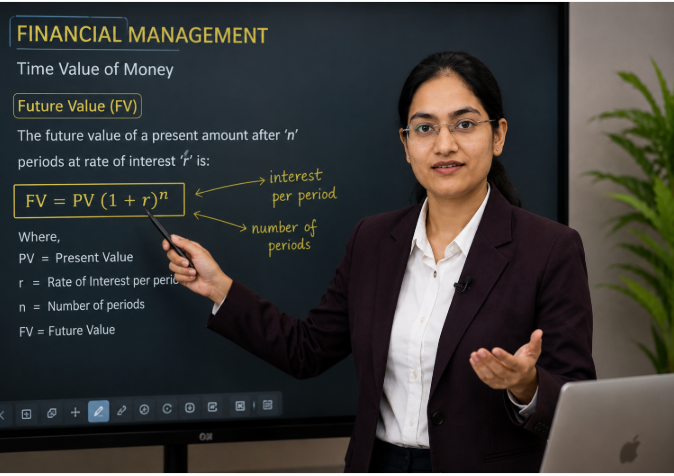
CA Chesta Chawla is a chartered accountant and CA Inter Financial Management educator who teaches CA Intermediate FM with a focus on concepts, numerical problems, and practical business examples. Her methodology provides a clear understanding of FM concepts by connecting them to practical application and reinforcing learning through planned revision. Rather than concentrating only on memorising formulas, the approach is intended to help students understand practical business.
Her approach makes FM more relatable while also helping students develop a stronger understanding of numerical problems and their applications.
Quick Profile Snapshot
Detail | Information |
Name | CA Chesta Chawla |
Qualification | Chartered Accountant, ICAI Member |
Subjects Taught | Financial Management (FM) |
Specialization | CA Inter FM |
Platform | catestseries.org — View FM Course Page → |
Corporate Experience | Acuity Knowledge Partners |
Teaching Style | Concept-based, exam-oriented, practical examples |
Teaching method
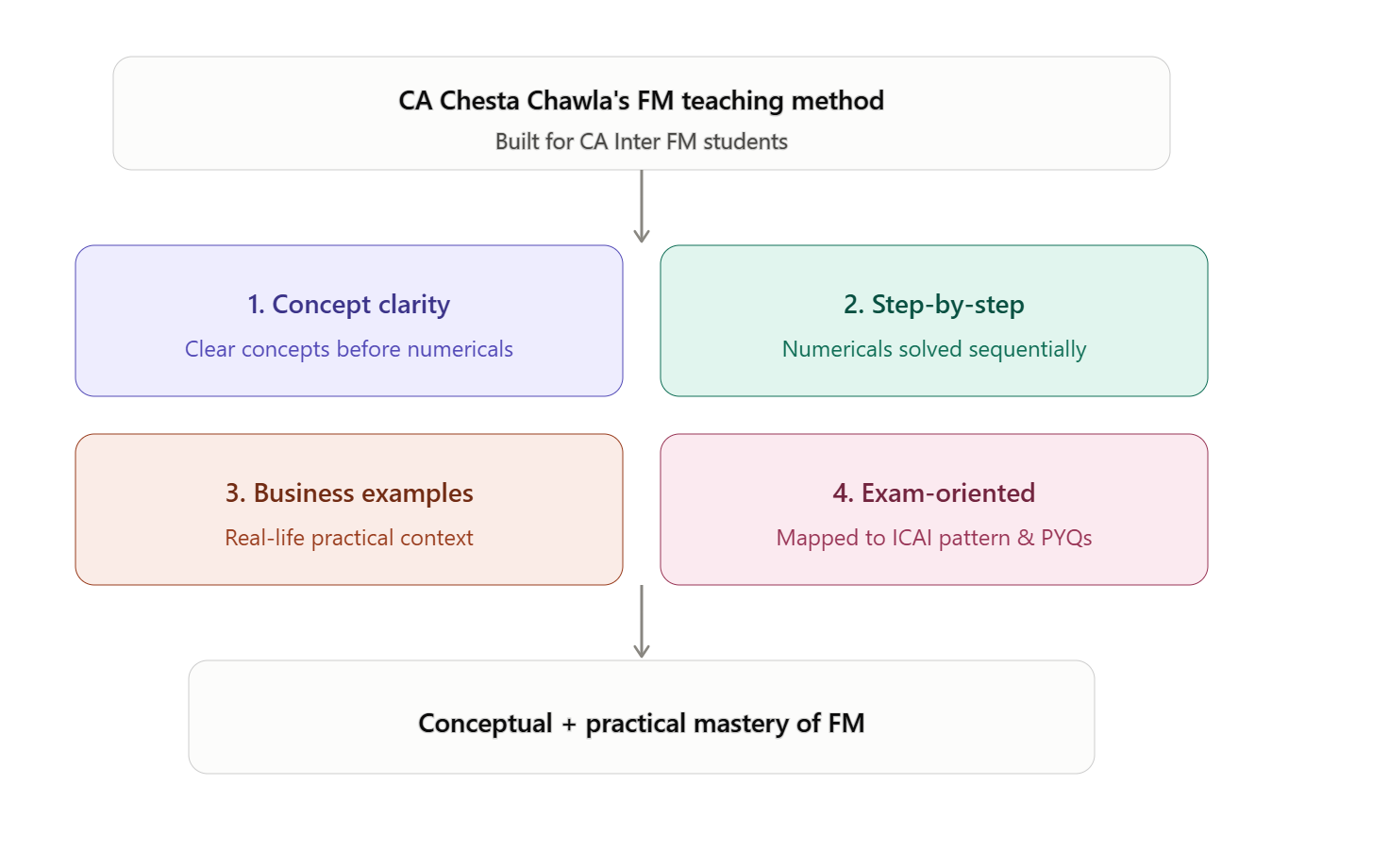
CA Chesta Chawla's core teaching method focuses on conceptual and practical application. Her FM lectures make numeric and financial concepts easier for CA Inter FM students to understand.
Her classes are built around three elements.
Concept clarity — Concepts are made clear before moving to numerical and practical parts.
Step-by-step — Numerical questions are solved step-by-step
Practical business examples — Topics are connected to real-life business situations to make them easier to grasp.
Exam-oriented discussion — Topics are tied back to ICAI's exam pattern and past paper trends.
Concepts: How CA Chesta Chawla Simplifies Financial Management
CA Chesta Chawla teaches Inter FM with an emphasis on making difficult concepts simple, clear, and approachable. Her structured, step-by-step teaching style can help students develop a better understanding of FM concepts. She connects financial management topics with real-life business situations, making them easier to relate to and understand. Rather than encouraging students to simply memorise formulas, she explains the reasoning and concepts behind them. Consistent practice, along with properly explained working steps, helps students approach complicated FM calculations with greater ease and confidence.
Questions: Study Material and Question Bank
Course material provided by CA Chesta Chawla includes:
Chapter-wise study material designed to complement live/recorded sessions
Questions for practices
Revision notes
Proper format for practical business.
Practical Business Examples for Understanding cost of capital and Working Capital
FM becomes much simpler when students focus on understanding the practical application of formulas rather than simply memorising them. An effective lecture should help students follow a clear learning flow:
Business concept →Real-world business → formula section → Numerical calculation → Final interpretation
This approach helps students understand not only how to calculate, but also why and when a particular formula is used. As a result, important FM topics such as Capital Budgeting, cost of capital, Leverage, and working Capital Management, and Ratio Analysis become more practical, understandable, and easier to revise before examinations.
For examples
Cost of Capital – Business Loan Example
Consider a company that borrows ₹10 lakh at an annual interest rate of 12% to meet its financing requirements.
Annual Interest Cost:
₹10,00,000 × 12% = ₹1,20,000
When the applicable tax rate is 25%, the interest paid on the loan provides a tax- saving benefit. Therefore, the actual cost of borrowing after considering this tax advantage is lower than the stated interest rate.
After -tax cost of Dept = 12% *(1-25%) =9%
Thus, while the company pays interest at 12%, the tax benefit reduces its effective borrowing cost to 9%
This example demonstrates how the cost of capital formula is applied to an actual business financing decision, helping students understand the practical significance of the concept.
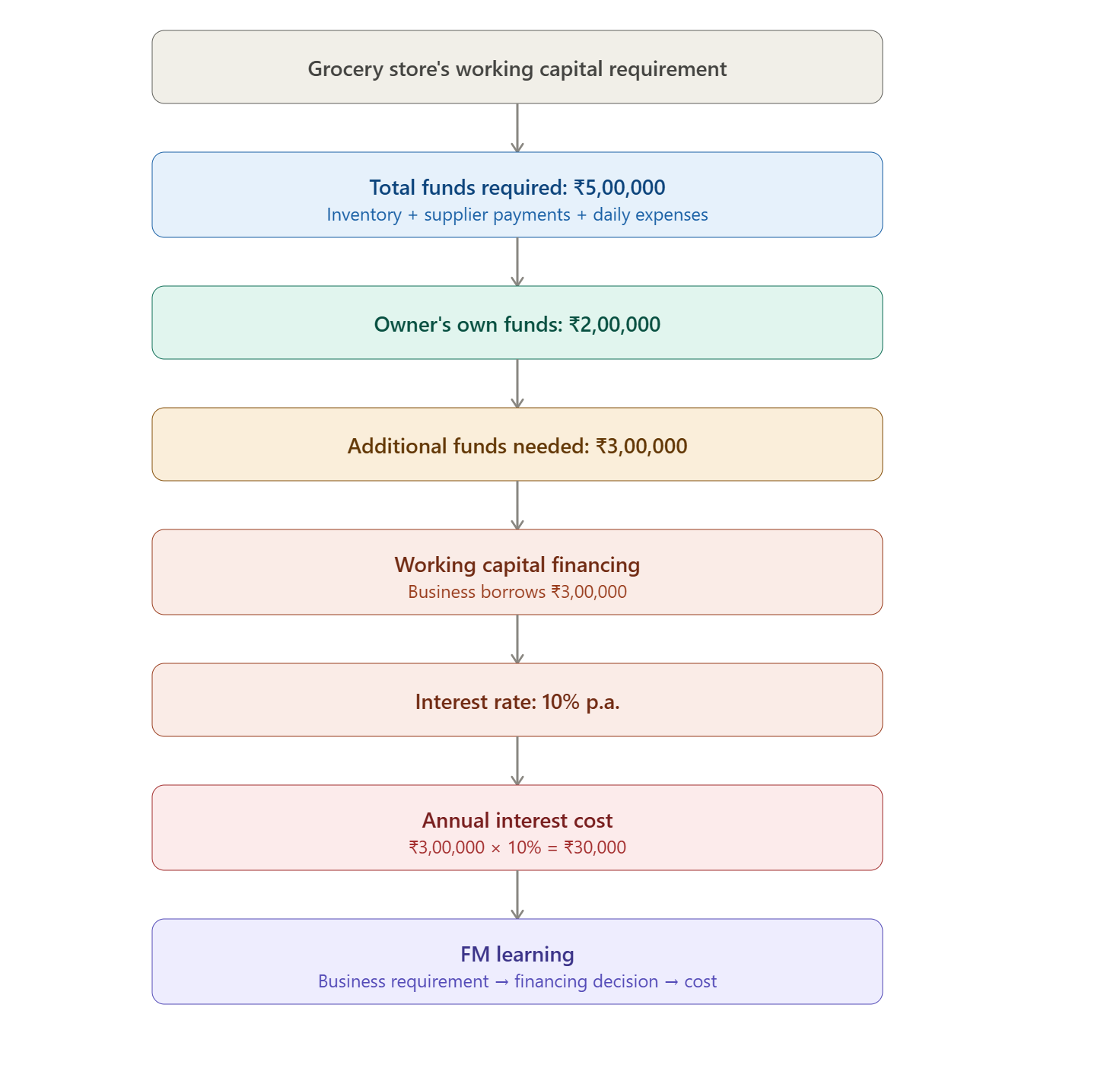
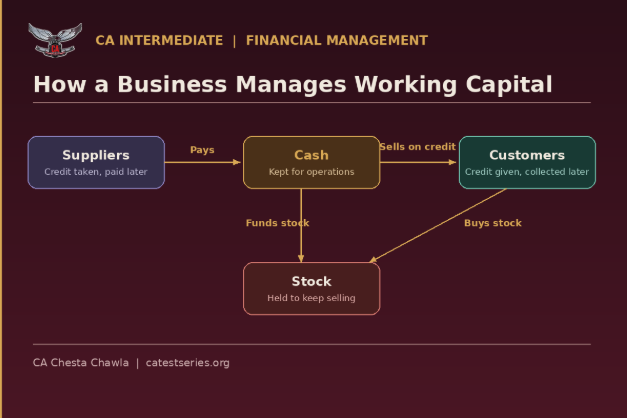
Working Capital – Grocery Store Example: Flow Chart
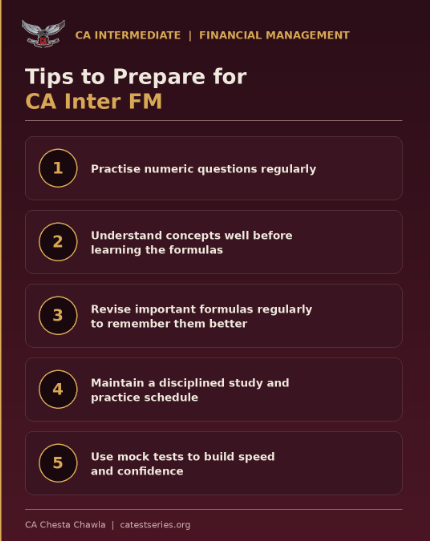
Tips to prepare for CA Inter FM
Practise numeric questions regularly
Understand concepts well before learning the formulas
Revise important formulas regularly to remember them better.
Maintain a disciplined study and practice schedule
Use mock tests to build speed and confidence
Study Resources
For CA Inter FM preparation, study material is your main source of preparation. Note down important formulas and concepts. Mark any question that you find difficult for later revision.
CAtestseries.org Content by Chesta Chawla | Resources |
FM Concept Strategy | |
Question Bank | |
Subject Strategy | |
Charts |
Pricing, Format, and Duration
Many students often look for answers to these questions before joining, so check catestseries.org for updates before signing up, since fees and formats change between attempts:
Detail | What to Confirm |
Course fee | Free or Paid Course |
Validity | 12 months |
Format | Live and recorded |
Language | Hindi and English |
Doubt-solving mode | WhatsApp, forum, live Q&A, one-on-one calls |
App/platform access | Website - catestseries.org |
Why real-world Business Examples Matter in FM
Real -word bussiness examples make FM easier to understand. Students can see how concepts are learned in real-life business. For example, when covering working capital, CA Chesta Chawla's lectures show how a retail business decides how much cash to keep on hand versus how much to tie up in inventory, how payment terms with suppliers affect its cash cycle, and how late payments from customer payments can strain day-to-day operations — connecting the working capital formula directly to a decision the business actually has to make.
Conclusion
CA Chesta Chawla's teaching style for CA Inter FM focuses on making concepts simple, practical, and easy to understand. Students can evaluate whether this approach suits their learning style by considering the available resources, course structure, revision support, and overall requirements before enrolling. Ultimately, consistent practice, regular revisiting of core concepts, and steady confidence-building remain the real keys to strong FM preparation.