
CA Inter Costing Teacher for Numericals | Himanshu Singla
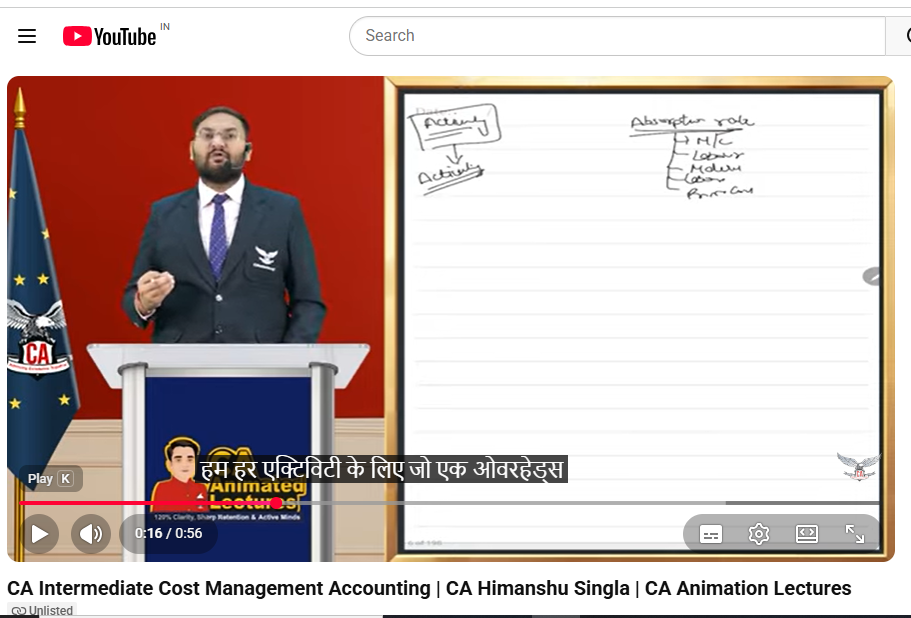
CA Himanshu Singla, a faculty member at CATestSeries.org, teaches cost & management accounting to CA Intermediate students. Concept clarity, visualization, numerical practice, homework, review, and exam-focused preparation are all key components of his teaching approach.
His concept-first method might be very helpful for pupils who struggle with costing figures. He urges students to grasp the reasoning behind the ideas and apply them to real-world problems rather than merely memorizing formulas.

One of the CA Intermediate curriculum's most practical and technically focused subjects is costing. Many CA Inter students struggle with numerical issues because they find concepts difficult to understand, formulas confusing, or lengthy problems difficult to approach, whereas some students may be naturally good with calculations. Choosing the right costing teacher may have a big impact on the students' preparation and confidence.
A competent costing instructor does more than just answer problems and clarify formulas. In showing learners how to apply those concepts to real-world and examination-based challenges, the right faculty first helps students acquire conceptual clarity. This approach is especially helpful for students who feel like they struggle with numbers.
Why Are Costing Numericals Difficult for CA Inter Students?
Many students think that because there are too many formulas and calculations, costing is challenging. However, a lack of conceptual comprehension is frequently the true issue. Even a slightly different question can become perplexing if a learner memorizes a formula without knowing why and when it is employed.
What Qualities Should Weak Students Seek in a Costing Instructor?
Students who struggle with math shouldn't pick a teacher just because other students like them. They ought to seek a teaching approach that begins with the fundamentals and progressively advances to more complex and exam-level issues.
The Advantages of Thorough Training
Sometimes, students who struggle with numbers make mistakes because they attempt to mentally answer the entire problem or jump right into calculations. This issue can be resolved using methodical approaches.
The teacher shows students how to comprehend the question's requirements, build the necessary formula or working note, substitute the available figures, complete the computation carefully, and present the results in an orderly fashion.
Test-Based Learning and Practice
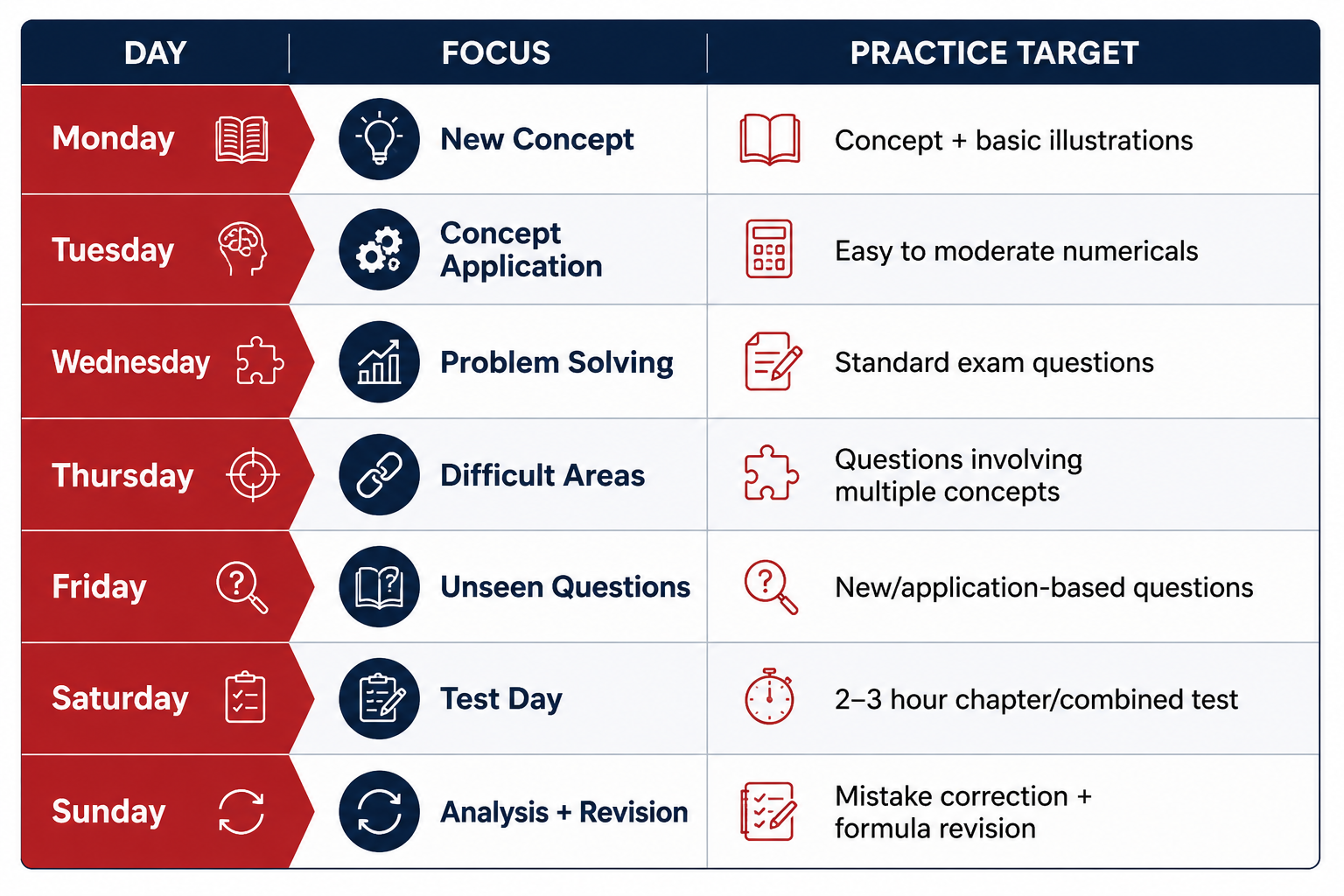
One of the best strategies from CATestSeries.org to enhance costing is consistent practice. Rather than delaying numerical exercises until the very end of their preparation, students should complete problems on a regular basis.
Students should take a chapter-by-chapter test after finishing a chapter and attempting various difficulty levels of questions. Test results can show whether the issue is with time management, conceptual grasp, computation accuracy, or question interpretation.
How to Learn Costing: MCQs, Chart Notes, and Concept Visualization
Students that use a systematic study approach find it easier to complete CA Intermediate Costing. Focus on comprehending things, visualizing them, creating brief notes, and routinely practicing multiple-choice questions rather than just memorizing formulas.
First, comprehend the idea
Before trying numerical questions, read and comprehend the fundamental idea.
Pay attention to the reasons behind and circumstances surrounding the implementation of a specific formula or technique.
Don't commit formulas to memory without knowing how to use them.
Complex numerical problems are easier to solve when concepts are clear.
Make Use of Concept Visualization
Transform complex ideas into flowcharts, diagrams, and straightforward tables.
Make numerical computation stages visually appealing.
For concepts that are comparable, use comparison charts.
Emphasize crucial formulas, modifications, and points.
Concepts are easier to recall during revision when they are learned visually.
Create Chart Notes
After finishing each chapter, make brief, succinct notes.
Add crucial formulas, ideas, formats, modifications, and shortcuts.
Don't copy the full study guide into your notes.
Make sure the charts are easy enough to review quickly.
Make regular use of these notes before exams and assessments.
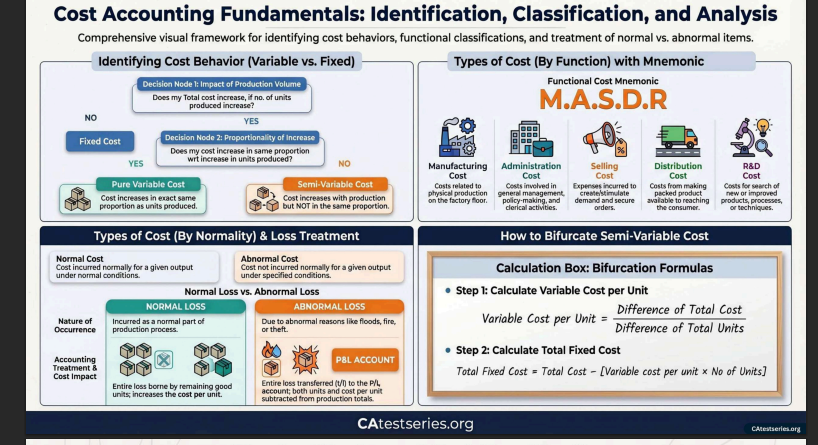
Work on Numerical Questions
Once you get the idea, begin with simple questions.
Make a gradual transition to exam-level and practical problems.
Answer questions without first glancing at the answer.
Instead of delaying numerical practice till the very end, practice on a regular basis.
Examine each error and determine the best course of action.
Work on CA Inter Costing Multiple-Choice Questions
After finishing all of the key topics, try answering multiple-choice questions.
Practice both calculation-based and conceptual multiple-choice questions.
Incorporate both case-based and application-based questions into your preparation.
Don't only concentrate on getting the right response.
Recognize the reasons behind the wrong choices.
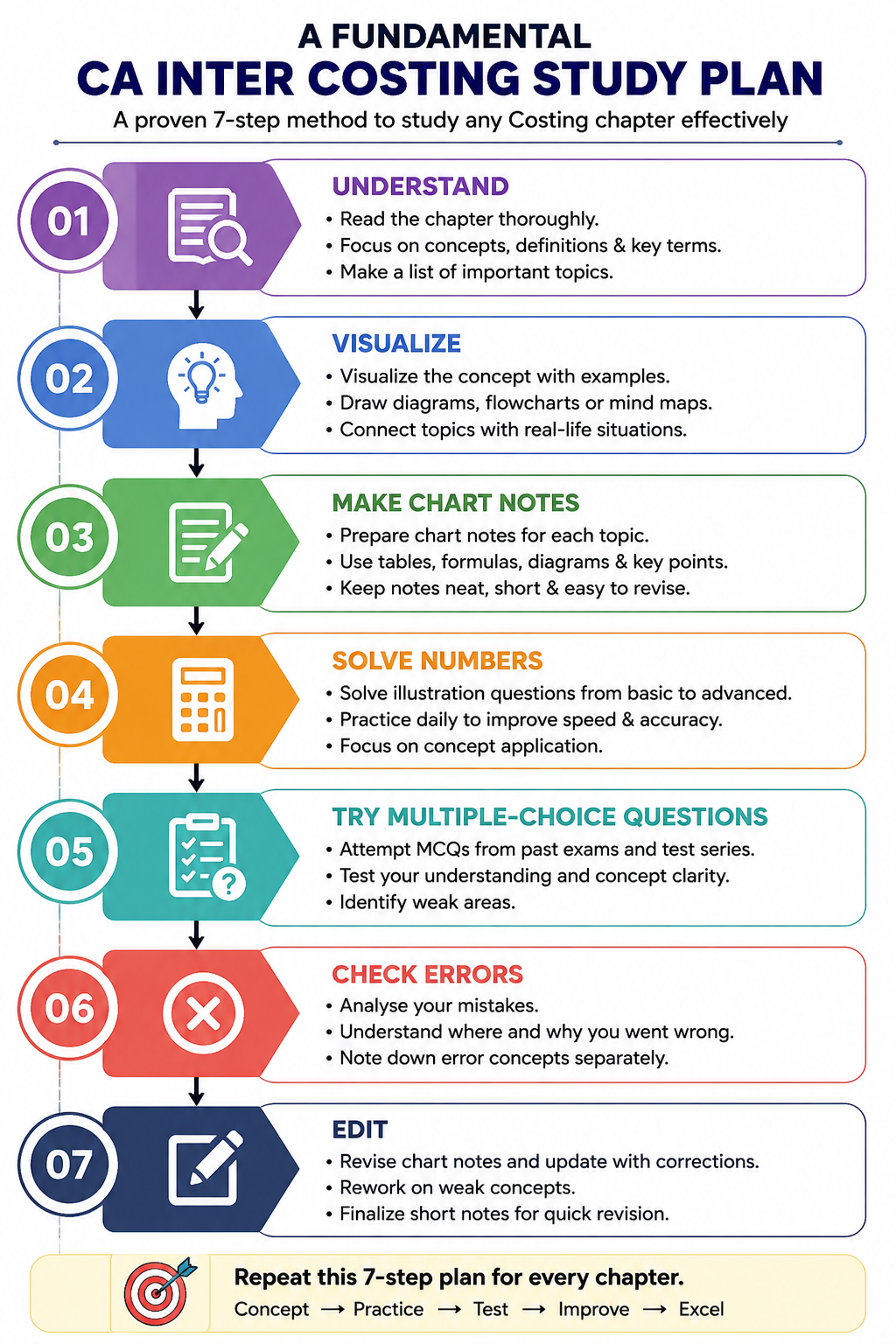
A Fundamental CA Inter Costing Study Plan
A well-structured CA Inter Costing study plan can be created using this order:
Understand
↓
Visualize
↓
Make Chart Notes
↓
Solve Numbers
↓
Try Multiple-Choice Questions
↓
Check Errors
↓
Edit
They will undoubtedly rely on more than simply passive learning with this method. They understand the concept, apply it with numerical questions, evaluate their comprehension with multiple-choice questions, and then fix their mistakes.
This simple CA Inter Costing study plan works for any chapter and can be repeated throughout your preparation.
What Makes Chart Notes Crucial for CA Inter Costing?
Quick Revision: Make quick revisions to key ideas and equations.
Improved Retention: Visual charts facilitate the retention of concepts.
Saves Time: Prevents making repetitive revisions to extensive study materials.
Simple Understanding: Makes difficult costing ideas easier to grasp.
Exam Ready: Aids in reviewing important concepts prior to assessments and tests.
Boosts Confidence: Makes the curriculum more structured and doable.
How the Right Teacher Builds Student Confidence
Lack of confidence is one of the main issues students who struggle with costing face. Students may begin to completely ignore numerical questions after making repeated blunders. As a result, there is a vicious cycle whereby less practice results in decreased confidence, which in turn causes even less practice.
By helping pupils feel at ease with the material, a good teacher may end this cycle. Students can gain confidence by starting with simple questions, clearly outlining ideas, progressively increasing difficulty, and giving them frequent practice.
Practice: Assignments, Guidance, and Exams
I) Assignments
Students who complete homework on a regular basis are better able to review material covered in class.
It ensures learners can solve problems independently.
Aids in early error detection.
Enhances the capacity to solve problems numerically.
Increases the accuracy and speed of calculations.
Enhances consistency in cost preparation.
Helps students get familiar with different question formats.
Lessens reliance on teacher explanations and solved instances.
II) Guidance
Gives students individualized advice.
Aids in identifying personal shortcomings.
Monitors progress over time.
Provides performance comments on a regular basis.
Holds pupils responsible for their preparation.
Aids in developing a focused revision plan.
Encourages pupils to be consistent.
Teaches pupils how to do better on tests.

III) Exams
Tests broken down per chapter aid in assessing each chapter's performance.
Real exam practice is provided with full-length exams.
Enhances time management.
Enhances the ability to choose questions.
Increases the speed at which numerical problems are solved.
Aids pupils in comprehending their degree of readiness.
Finds errors that are commonly made.
Enhances the presentation of the response.
Increases self-assurance prior to the CA exam.
Why Is Homework Important for CA Inter Students?
Students shouldn't view homework as an extra responsibility or just a task the instructor assigns. It is a crucial component of the learning process for CA Intermediate students, particularly in numerical courses like costing.
When students complete their homework on their own, they find out if they truly grasp the material or if they are just observing the teacher work through a problem. Acknowledging a solution and being able to generate it on your own are very different.
Conclusion
Students who have difficulty with math should choose their costing teacher based on teaching approach, not popularity. A teacher that places a strong emphasis on conceptual clarity, rigorous numerical solving, regular practice, exam-oriented questions, and mistake analysis can help a challenging student far more.
Costing does not have to be a challenging topic. Students can progressively increase their numerical proficiency, accuracy, and confidence with the correct instruction, focused practice, and regular assessments. The objective should be to comprehend the ideas sufficiently to apply them correctly in various exam questions rather than just memorizing formulas.