Best Faculty for CA Inter Law: How to Select the Right Teacher
Best Faculty for CA Inter Law: How to Select the Right Teacher
Choosing the best faculty for CA Inter Law can make a big difference in how easily you understand and prepare for the subject. CA Inter Corporate & Other Laws includes numerous provisions, sections, case laws, and practical concepts, which can feel difficult without the right guidance. A good CA Inter Law teacher should not only explain legal concepts in simple language but also help you understand their practical application, practise case-based questions, improve answer writing, and prepare effectively for the exam. In this guide, we will discuss the key factors to consider when choosing the best teacher for CA Inter Law, including teaching style, course structure, study material, revision support, practice, and doubt-solving facilities.

Why CA Inter Law Can Be Challenging for Students
A common challenge students face with CA Inter Law is figuring out how to manage the vast number of provisions and sections. The subject encompasses various laws, rules, sections, definitions, and case law. Initially, the volume of content can seem overwhelming, especially for students studying Law systematically for the first time.
The language of law presents yet another major challenge. The language used in legal texts tends to be technical; therefore, although the students can read the law, they could have difficulty comprehending its meaning. Without proper conceptual comprehension, it would be difficult to differentiate between similar laws.
Another common issue is that students tend to view Law only as a subject requiring rote memorisation. In reality, if concepts are explained using simple examples, remembering the provisions and solving questions becomes comparatively easier.
Therefore, for CA Inter Law, it is beneficial to choose a faculty member who focuses not only on conceptual clarity but also on exam-oriented preparation, case laws, and answer-writing skills.
CA Inter Law Course Details
Particulars | Details |
Subject Name | |
Paper Number | Paper 2 |
Group | Group 1 |
Maximum Marks | 100 |
Exam Duration | 3 hours |
Syllabus Structure | Part I - Company Law & LLP Law, Part II - Other Laws |
Part I Weightage | 70 marks |
Part II Weightage | 30 marks |
Exam Frequency | January, May and September |
What Makes a CA Inter Law Class Effective?
A high-quality CA Inter Law class should not focus solely on completing the syllabus. Effective teaching ensures that students not only grasp the concepts but also learn how to apply them to exam questions.
Explanation in Simple Language: Legal language may appear technical initially. In that case, when the faculty uses simple language and relatable examples to explain complicated clauses, then it will be much easier for the students to comprehend the ideas.
Focus on Conceptual Clarity: Instead of only making students rote-learn sections or provisions, it is crucial to explain their underlying meaning and purpose, and practical application. When concepts are clear, confusion between similar provisions is minimised.
Proper Explanation of Case Laws: Case-based questions are significant in CA Inter Law. Effective teaching involves explaining the basic facts and legal points of case laws in a simple manner, rather than just asking students to memorise them.
Question Practice: Understanding a concept must be followed by practice. Solving various types of questions helps students understand how a specific provision can be applied in an exam setting.
Guidance on Answer Writing: In Law, presentation is just as important as subject knowledge. Faculty should guide students on how to structure their answers, cite relevant legal provisions, and present conclusions for case-study-based questions.
Regular Revision: Revision is essential for retaining legal concepts and provisions. Tools such as concise revision notes, charts, key points, and practice questions can help students with quick revision before the exam.
Ultimately, an effective CA Inter Law class is one where the student gains clarity not just on what to study, but also on why to study it, how to understand it, and how to write the answers in the exam. This combination makes Law preparation more organised and manageable.
Key Factors to Consider Before Choosing a Law Faculty
There are a few basic considerations students should take into account before choosing a faculty or a particular course. This would help avoid situations where they have to change the course at a later stage or experience difficulties while preparing for it.
Course Length: See if the faculty spends an adequate amount of time teaching the entire course. Course duration must be ideal without being rushed or overly prolonged.
Lecture Format: See if the course offers live lecture sessions or recorded ones, or both of them. Recorded lecture sessions help you go back and revise what you may have missed.
Course Validity: See the validity period of the lectures and course materials post-enrollment.
Class Batch Availability: If you are a part-time student, then see if the timing of the classes is flexible enough for you.
Faculty Availability: See if there are proper means to contact the faculty in case of any queries.
Learning Material: Don’t stick only to lectures but check the availability of other learning materials such as revision lectures, questions, notes, etc.
Demo Lectures: Take a look at a demo lecture first before concluding. Doing so will help you assess the faculty members and the course itself without enrolling right away.
Value for Money: Lastly, check whether the costs reflect the features that the course provides. Avoid jumping to conclusions based on the cost alone.
Teaching Style: What Works Best for CA Inter Law?
Intermediate Law is one of those subjects wherein attending lectures alone does not constitute adequate preparation. Students must understand the provisions, their relationships, and application of the provisions to the problems. Hence, the faculty's teaching methods can be a major factor in the adequacy of their preparation. Generally, students can expect the following methods of teaching:
Concept-based teaching: Lectures wherein the concept of the topic is explained first, followed by the provision. This is helpful for students who want to learn the law and not simply memorize it.
Provision linking method: Many provisions are related to each other. If the professor explains the relationship of the topics, then students will not need to memorize chapters separately.
Teaching based on application: Clarification of the provision through its application to various situations, rather than explaining just the rules, will be useful for the students to understand the application of their knowledge in case-based questions.
Teaching based on questions: Testing of knowledge through questions after the completion of one topic is quite effective. This way, the students get to know about the application of theoretical knowledge in exam questions.
Memory helper: There are certain provisions and concepts that have to be memorized. For this, keywords and comparison notes can be quite useful.
Exam question-based teaching: The teachers should guide the students regarding how to convert their knowledge into written answers.
Understanding the Role of Concepts, Sections and Case Laws
CA Inter Law is where topics like concepts, sections, and case laws carry great significance; but in lieu of learning these individually, it would be much more productive to learn them in conjunction. Firstly, the student has to understand the concept of any law or provision he wishes to study; the situation in which the law is needed and its objective in general. Only when he knows what the concept of the law is, can he comprehend the section in question because a section is basically an expression of the concept in terms of law.
However, that is not all that goes into preparation. The study of case laws and practical examples helps in the proper comprehension of how a particular section can be implemented in real-life scenarios. It is especially useful when dealing with case study-type questions in which the section itself is not asked for but a particular scenario is posed, and it is up to the student to find out which section applies. Thus, while preparing for the subjects of Law, one should not concentrate merely on learning section numbers and case laws. It is far better to first understand the concept, then study the section, and then comprehend how it can be implemented.
Why Exam-Oriented Preparation Matters in CA Inter Law
However, for CA Inter Law, completion of chapters and understanding of provisions is not sufficient; application of knowledge and answering methods for the same become equally important in the exams. Exam-oriented preparation doesn’t mean that the student should only mug up important questions for the exam; but in fact, his main aim should be preparation of the syllabus in such a way that the questions framed by ICAI should always remain in mind.
Such kind of preparation enables the student to get acquainted with different kinds of questions that could possibly be asked for a particular topic, how to deal with case-based questions and how to incorporate provisions of law in answer writing. Practising RTPs, MTPs and previous years’ questions enables the student to have some idea about the pattern of questions and the paper.
Moreover, writing answers would enable him to write answers properly within the available time frame in exams. One more advantage of an exam-oriented approach is that the student gets the ability to focus on relevant things only.

CA Inter Law Faculty at CAtestseries.org
Faculty Profile
CA Tanvi Singla is an instructor who specialises in teaching CA Inter Law at CAtestseries.org. She concentrates on delivering easy and comprehensive lessons for the students in the subject matter so that the legal concepts can be made simple in the class sessions, ensuring the students don’t go through any kind of unwanted difficulties in comprehending the provisions.
Experience and Teaching Methodology
CA Tanvi Singla has professional experience with the company known as BSR & Co. LLP, which is one of the member firms of KPMG India. Such professional experience enables her to have practical knowledge of legal issues, making it easier to relate the legal concepts to practical situations.
The teaching methodology of this faculty includes relating concepts to practical situations and cases, as opposed to just mentioning sections and provisions. The emphasis is more on the practical application of concepts and how a particular provision works.
What Students Can Expect from Our Law Classes
The two most important problems that students face while preparing for CA Inter Law are: “How do I memorise all this?” and “How do I write it in the examination?” Our Law classes aim to overcome these problems faced by students. It is advisable for students to gain sequential knowledge of the topic in the classes and build confidence.
Sequential understanding of topics: The objective is not to cover the topics haphazardly but to develop knowledge about the topics in sequence, as it will help make connections between different chapters.
Making rote learning easy: The idea is not to memorise all the provisions but to have an understanding of the provisions. In this way, it becomes easier for students to understand complicated topics.
Connecting to real-life situations: Every law provision is discussed from a real-life perspective wherever applicable.
Understanding case-study questions: Apart from identifying the provision, students understand how to interpret the situation in the question and relate it to the provision.
Answering examination questions: Preparation includes not only learning but also how to answer the question effectively.
Making it easier to revise certain concepts: In contrast to repeatedly going through long chapters of the book, students will be able to use a systematic method of revising necessary concepts and points.
Giving guidance on preparing: Students will know what to study and what type of questions to solve. Moreover, they will have the proper guidance in order to prepare for the exam.
Generally, the purpose of our Law classes is not just completing the syllabus, but also to make students familiar with the subject. With clear concepts and sufficient practice of answering questions, Law becomes a comprehensible and manageable subject rather than a subject that is solely based on memory.
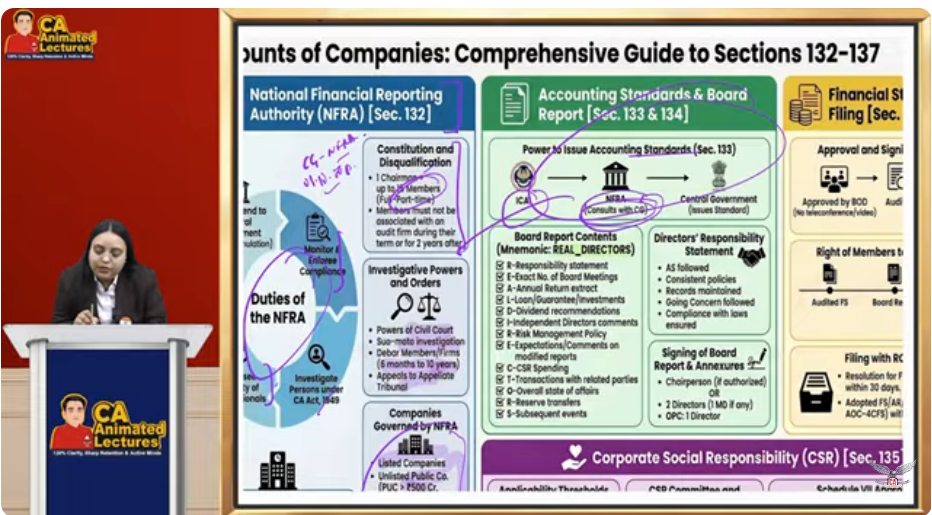
Study Material, Revision and Practice Support
Resources | How to help students |
Class Notes | The important points from the lectures are available in one place, so there is less need to revisit the entire class repeatedly. |
Section-wise material | Organising sections and related provisions makes it easier to quickly refer to a particular topic. |
Case law collection | Important case laws can be revised separately, instead of searching for them across different chapters. |
Amendment updates | Law keeps changing; therefore, updated content helps students avoid confusion between old and latest provisions. |
Question bank | Practising questions from different chapters in one place saves students from wasting time searching for extra questions. |
Revision resources | The syllabus can be revised in comparatively less time by using short notes, summaries, or quick-revision materials close to the exams. |
Practice Tests | Tests help students determine whether their preparation is limited to just reading or if they are also able to attempt questions independently. |
Doubt support | Clarifying specific doubts that arise during preparation prevents students from moving forward while confused. |
How to Match a Faculty with Your Study Requirements
Every student has different preparation needs. Some start studying Law from absolute scratch, while others have clear concepts but struggle with retention or answer writing. Therefore, when selecting faculty, looking only at a teacher’s popularity is not enough; it is crucial first to understand exactly what kind of support you need from them.
If you are starting from scratch, choose faculty who cover the subject in a proper sequence and help build your preparation from basic concepts.
If you understand concepts but forget them easily: Prioritise learning resources and approaches that make revision and retention manageable.
If case-based questions are difficult for you: It would be beneficial to prioritise faculty who emphasise question practice and practical application.
If you have limited study time: Check lecture duration, course validity, and accessibility so you can manage classes according to your daily schedule.
If you prefer studying independently: Recorded lectures and easily accessible study material might be more suitable for your learning style.
If you need regular guidance: Compare aspects such as doubt support, student assistance, and preparation-related guidance.
For exams that are coming up soon: Make sure that there are adequate quick revision aids and enough questions provided by the course.
In the end, the best tutor may not necessarily be the most popular, but someone who matches your preparation level, learning style, and requirements. Thus, before coming up with a conclusion, it is better to match up the demo class, structure of the course, and the support that it provides with your own requirements.
Online CA Inter Law Classes Compared with Classroom Education
Both online and classroom education can be beneficial for CA Inter Law. It all depends on the schedule of the learner and his or her learning style.
Key Differences | Online CA Inter Law Classes | Traditional Classroom Learning |
Flexibility | Students can manage their classes according to their available time. | Fixed class timings have to be followed. |
Lecture Access | Recorded lectures can be revisited as needed. | Catching up on a missed class can be comparatively difficult. |
Study Pace | Students can revisit difficult topics at their own pace. | The pace of the class is generally determined by the faculty’s schedule. |
Travel | Travel time is saved, which can be utilised for studies. | One has to travel to the coaching centre. |
Interaction | Doubts are usually resolved through available support channels. | There is direct face-to-face interaction with teachers and classmates. |
Revision | Revision can be done by revisiting lectures and resources. | Revision usually relies more on class notes and self-study. |
Best Suited For | Students who prefer flexibility, self-paced learning and convenient access. | Students who focus better in a structured classroom environment. |

Mistakes Students Should Avoid When Selecting a Law Faculty
Focusing only on faculty popularity: Don’t make social media followers, recommendations, or popularity the sole measure of teaching quality.
Skipping the demo lecture: Watch a demo lecture before enrolling so you can judge whether the faculty’s teaching style and explanation align with your understanding.
Not checking course details thoroughly: Check the lecture duration, course validity, access period, batch schedule, and other important terms before enrolling.
Ignoring the syllabus and amendments: Updates are crucial in law subjects. Ensure the course is updated according to the relevant syllabus and applicable amendments.
Focusing on fees as the only criterion: You must not make the mistake of equating the lower cost of tuition with the better course for you.
Ignoring your learning style: Never decide to take a particular professor’s course based on how popular he/she is; first evaluate his/her course according to your own learning style.
Making a last-minute decision: Postponing the selection of faculty until just before the exam can impact your preparation. It is better to compare course details and make a decision well in advance.
Not being clear about your actual requirements: Before enrolling, identify the specific area where you need support - whether it is conceptual understanding, practice, revision, flexibility, or guidance.
Questions to Ask Before Enrolling in CA Inter Law Classes
Before enrolling in CA Inter Law classes, students should clarify a few important questions. This ensures clarity in decision-making and minimises confusion regarding the course later on.
Is the faculty suitable for my learning style? Check whether the faculty’s teaching approach resonates with you naturally and if you can comfortably continue learning from them.
Does the course fit my study schedule? Evaluate the lecture duration, course pace, and daily workload against your available study hours.
Will I get enough support for preparation? Check if the classes include essential support features such as study material, practice resources, revision assistance, and doubt-solving facilities.
Is the course updated for my attempt? Ensure that the syllabus, legal provisions, and applicable amendments are covered in accordance with your specific CA Inter attempt.
Is it worth my time and investment? Do not make your ultimate decision just based on the costs. Think about the quality and everything else that this course offers.
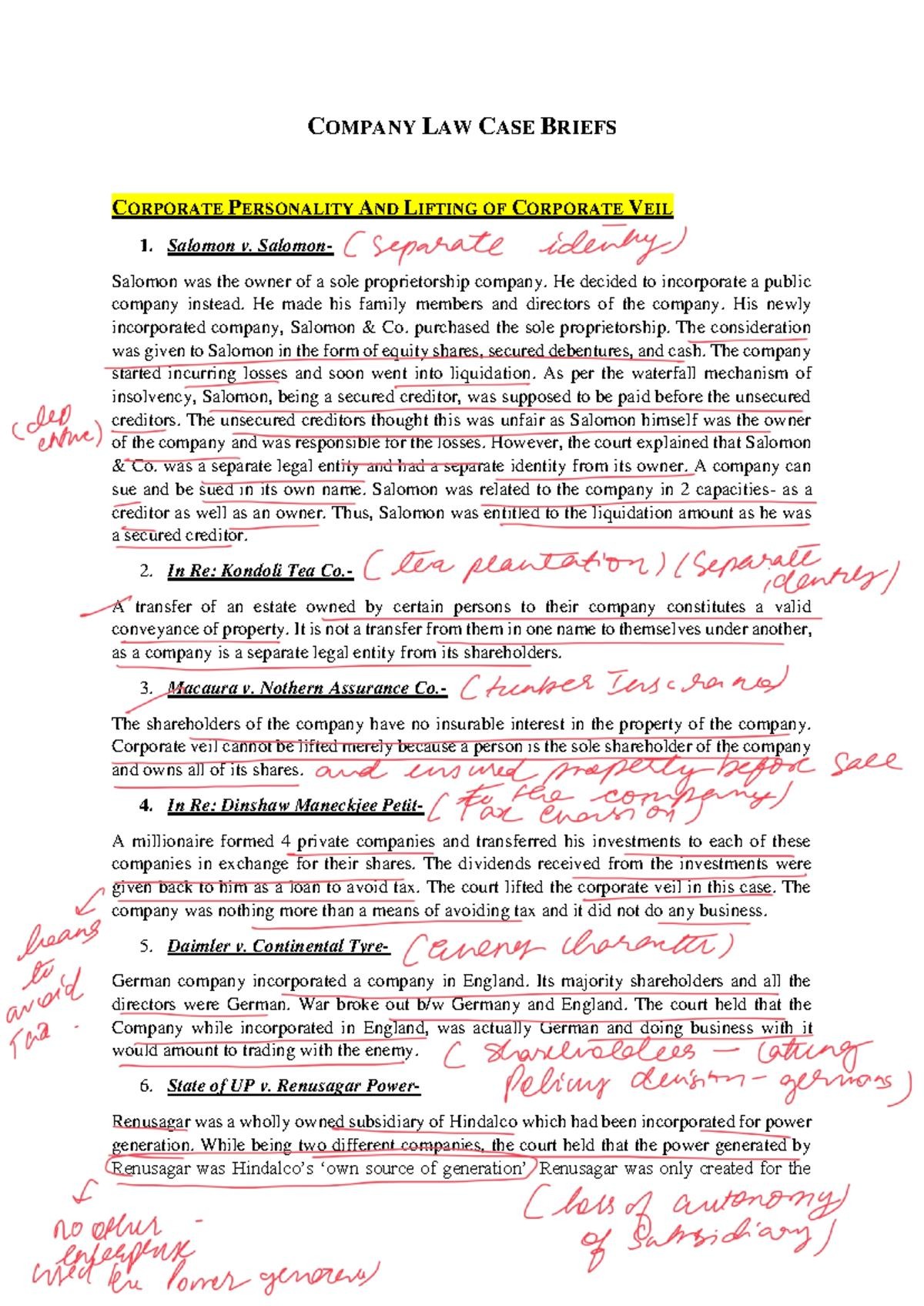
Why Consider CAtestseries.org for Your CA Inter Law Preparation?
Completion of lectures alone will not be enough for CA Inter Law; there is a need for practice, revision, solving doubts, and also exam-oriented feedback. CAtestseries.org tries to incorporate all these aspects at different stages of preparation.
ICAI-Oriented Practice: The test papers are prepared as per the ICAI exam pattern with focus on application questions and proper presentation.
Law-Specific Practice Materials: Various case studies, MCQs, RTPs, answers and other practice materials for CA Inter Corporate & Other Laws.
Performance-Based Feedback: After taking tests, students receive a detailed analysis of their performance and errors, making it easier to identify weak areas.
Doubt-Solving Support: Students can clarify their doubts through available support channels rather than leaving questions unresolved until the exam.
Revision and Planning Support: Resources such as quick revision lectures, cumulative revision, study planners, and mentoring help structure the preparation process more effectively.
Overall, the primary reason to consider CAtestseries.org is not just the classes, but the ability to manage the various stages of preparation—practice, assessment, doubt-solving, revision, and guidance—within a comprehensive learning support system.
Conclusion
Selection of a faculty for CA Inter Law is not about opting for a popular faculty; it depends on many other things, including your learning style, preparation level, available time, and requirements. A good faculty not only helps you in memorizing the legal provisions and sections but also in understanding the topics in easy language and relating them to cases and real-life examples. They will also help you in presenting your answers well in the examination.
While choosing a faculty, make sure you consider aspects like demo lectures, teaching methods, duration of the course, format of the lectures, validity of the course, study material, revision support, question solving, and doubt solving facility. As revision and practicing answers are key for Law subjects, merely taking lectures is not going to be enough. The best faculty for CA Inter Law is one that organizes your preparation, makes you understand the concept, helps in revision, question solving, and attempts the paper confidently.